Some 13 dry cow events are to take place over the late-October, mid-November period, hosted by Teagasc and Animal Health Ireland, with support from a number of co-ops.
There will be a number of topics on the agenda at the meetings:
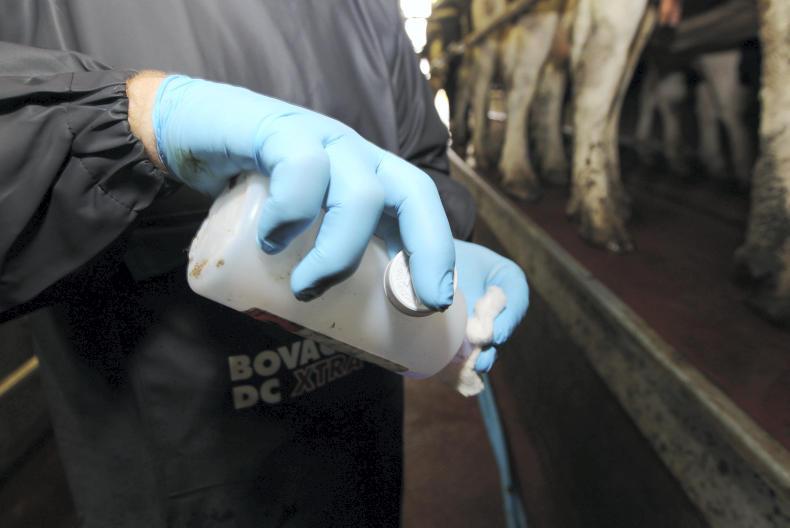
Introducing selective dry cow therapy.Managing in-calf heifers to minimise the risk of mastitis.The skills of drying off cows safely.The nutrition and management of the cow during the dry period for optimum performance in the next lactation.Where will the events take place?
Speaking at the launch of the events, George Ramsbottom, Teagasc, said: “Our research shows us that the foundations of the next lactation are laid down during the previous dry period.
“Cows need a minimum of 60 days dry between successive lactations and even longer where body condition score needs to be built up.
“This winter will prove an especially challenging one for farmers who are short of fodder – at the events we’ll be looking at options that farmers can take to meet the cow’s energy requirements in such situations,” he said.
Meanwhile, addressing the risk of antimicrobial resistance is increasingly an issue of concern, according to Finola McCoy, programme manager with Animal Health Ireland.
“One of the topics presented at these events will be selective dry cow therapy. The practice of only using dry cow antibiotic tubes in cows that have evidence or history of infection is increasing in many countries, including Ireland.
“However, it is not without risk and it’s important to understand what those risks are so we can minimise them, and make sure that we get good results,” she said.
Read more
Dairy management: what to do with empty cows
Dairy management notes: drying off cows
Some 13 dry cow events are to take place over the late-October, mid-November period, hosted by Teagasc and Animal Health Ireland, with support from a number of co-ops.
There will be a number of topics on the agenda at the meetings:
Introducing selective dry cow therapy.Managing in-calf heifers to minimise the risk of mastitis.The skills of drying off cows safely.The nutrition and management of the cow during the dry period for optimum performance in the next lactation.Where will the events take place?
Speaking at the launch of the events, George Ramsbottom, Teagasc, said: “Our research shows us that the foundations of the next lactation are laid down during the previous dry period.
“Cows need a minimum of 60 days dry between successive lactations and even longer where body condition score needs to be built up.
“This winter will prove an especially challenging one for farmers who are short of fodder – at the events we’ll be looking at options that farmers can take to meet the cow’s energy requirements in such situations,” he said.
Meanwhile, addressing the risk of antimicrobial resistance is increasingly an issue of concern, according to Finola McCoy, programme manager with Animal Health Ireland.
“One of the topics presented at these events will be selective dry cow therapy. The practice of only using dry cow antibiotic tubes in cows that have evidence or history of infection is increasing in many countries, including Ireland.
“However, it is not without risk and it’s important to understand what those risks are so we can minimise them, and make sure that we get good results,” she said.
Read more
Dairy management: what to do with empty cows
Dairy management notes: drying off cows





SHARING OPTIONS