Although grazing conditions are good on the farm, we took the decision to house the majority of our store cattle this week.
These animals are a mix of steers and heifers that will be intensively fed for finishing in December and January. Last year, most steers were slaughtered in February and March.
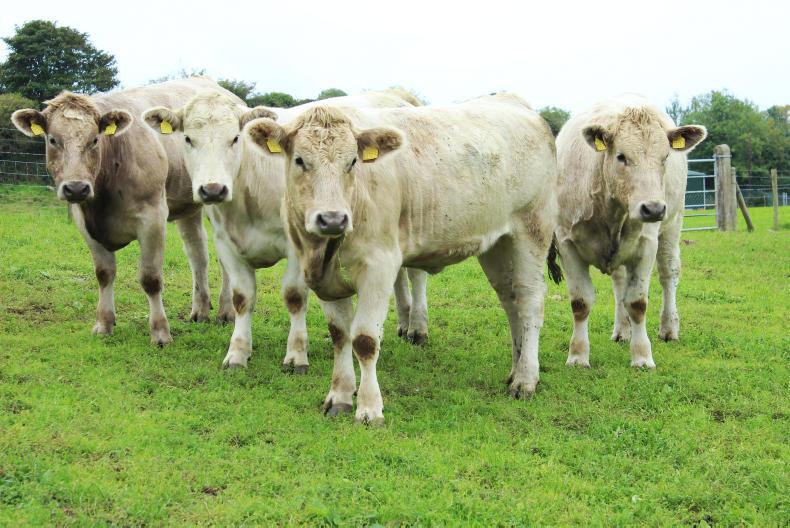
There are 32 steers housed, along with 19 heifers, which are all 2017 spring-born animals. Steers are a mix of Charolais, Angus and Limousin animals. The heifers are all Charolais-bred animals.
We had been feeding meal to these cattle at grass over the past month to stretch grazing and boost performance.
Better off housed
However, with grass growth slowing down and the feed value of swards declining at this time of year, these animals are better off housed and moved on to high-quality silage and meal.
I weighed the bullocks as they were housed and they ranged from 550kg to 600kg. They are being fed round bale silage, which was made from surplus grass on the grazing block in early June.
Along with silage, they are being fed 4kg/day of maize gluten and 1kg/day of homegrown barley.
Feeding levels will be monitored closely and altered to suit different groups of cattle, so that they are finished at the required fat class.
Finishing cattle were also clipped, wormed and treated for fluke as they were housed to ensure they have optimum performance during the intensive finishing period.
Cattle at grass
There are still store cattle at grass. We left six heavy bullocks outside, three of which are Charolais-bred animals weighing 700kg to 780kg. The other three are Angus-bred animals weighing 650kg.
These animals are being fed 4kg/day of meal and are booked for slaughter next week, so they were better off left outside.
We still have a group of 21 heifers grazing on an outfarm. These animals are young and lighter than the rest, so I decided to leave them outside for a few weeks yet.
They are grazing on top-quality ryegrass swards and there is plenty of grass ahead of them.
They are being fed 2kg/day of ration to keep them settled and to maintain a high level of performance.
These heifers will be housed once they have the outfarm grazed and then pushed for slaughter early in the new year.
Spring-calving cows scanned and ready for weaning
All cows were scanned on 15 September and results were good, despite a difficult summer in terms of grass growth. There were 114 cows and heifers bred to a combination of AI and stock bulls.
Scanning results showed there are 102 cows in calf. This breaks down to 16 in-calf heifers and 86 cows.
If they all carry through to calve down next year, this will be an increase of 11 animals on the 91 cows we calved this spring. The 12 cows that were scanned empty have been separated from the main herd. They were fluked and are now getting meal with the aim of finishing them in November.
We also killed six cull cows on Monday. These animals were marked for culling early and not put to the bull.
Their calves were weaned using the QuietWean nose flaps. The calves were weighed and ranged from 240kg to 312kg, with the average just over 260kg liveweight. Therefore, weaning now should not negatively affect future performance.
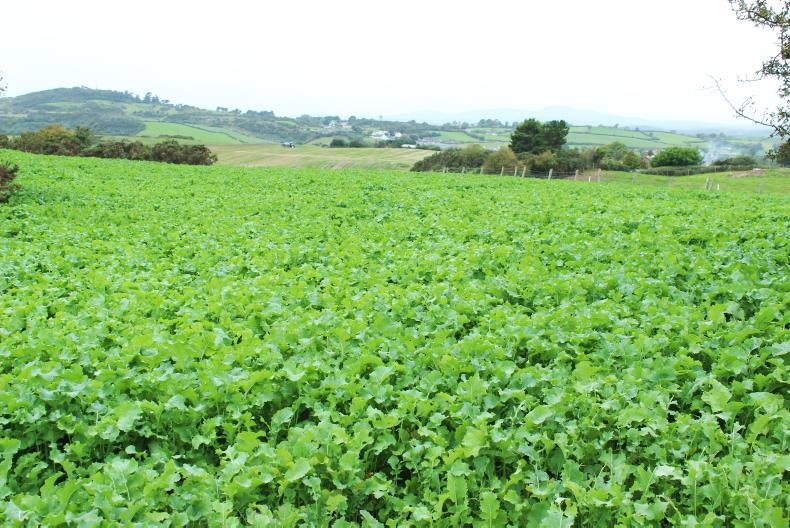
Twenty acres of forage rape was planted in August and will be used to out winter cows.
Preparing for weaning
The rest of the spring-born calves will be weaned shortly and have been wormed using Noromectin. They have also been vaccinated for pneumonia and IBR.
To reduce the stress of weaning, calves have started to forward creep-graze ahead of cows. The electric wire has been raised at various points to allow calves to creep ahead. While some calves were quick to move ahead of cows, others were not.
Therefore, to encourage calves to creep forward, I started feeding 2kg/day of meal to calves in sheep troughs placed ahead of the electric wire and it has worked well.
Cows are also being strip-grazed daily to make the best use of grass and to slow them down in their rotation.
Grazing days ahead are realistically down to three weeks at best. My plan is to wean cows by bringing them inside for a week to dry off.
They will then be put back outside and wintered on 20 acres of Swift from November onwards. The plan is to leave the calves on grass for as long as possible, as silage stocks are limited due to the drought this summer.
Outwintering crops and reseeding
Last year, we wintered the cows on 17 acres of forage rape and kale and it worked extremely well. This year, I have sown out 20 acres of Swift, which is a hybrid crop of kale and forage rape.
Due to the drought, the Swift was not planted until August at a seed rate of 4kg/acre. It was fertilised with three bags per acre of 16:16:16 at planting and top-dressed with one bag per care of 27% CAN.
After a slow start, the crop is now well established and yields are increasing week on week. The 20 acres were planted in four fields. Each field will be used to graze a group of 25 cows from November onwards.
The group of 16 in-calf heifers will be made up to 25 animals with the thinnest cows in the herd. These animals will be supplemented with good-quality silage to ensure they are in good body condition over winter. The rest of the cows will be offered straw while grazing Swift, as silage is limited and primarily being targeted to finishing cattle and weanlings.
Cows will hopefully remain outside until late January, at which point they will be housed in good time for calving next spring.
After the Swift is grazed, the plan is to plant the 20 acres with spring barley next year. Once harvested, these fields will be reseeded in grass next September.
I reseeded the 17 acres used to outwinter cows last year with grass on 5 September, after spring barley had been harvested.
Grass was sown at a rate of 14kg/acre, with the grass mix made up of 3kg Clanrye, 3kg Moira, 3kg Aber Zeus, 3kg Elysium and 2kg Aston Energy.
Read more
Completing an autumn grazing planner
Newford update: excellent grazing conditions and commencement of weaning
Although grazing conditions are good on the farm, we took the decision to house the majority of our store cattle this week.
These animals are a mix of steers and heifers that will be intensively fed for finishing in December and January. Last year, most steers were slaughtered in February and March.
There are 32 steers housed, along with 19 heifers, which are all 2017 spring-born animals. Steers are a mix of Charolais, Angus and Limousin animals. The heifers are all Charolais-bred animals.
We had been feeding meal to these cattle at grass over the past month to stretch grazing and boost performance.
Better off housed
However, with grass growth slowing down and the feed value of swards declining at this time of year, these animals are better off housed and moved on to high-quality silage and meal.
I weighed the bullocks as they were housed and they ranged from 550kg to 600kg. They are being fed round bale silage, which was made from surplus grass on the grazing block in early June.
Along with silage, they are being fed 4kg/day of maize gluten and 1kg/day of homegrown barley.
Feeding levels will be monitored closely and altered to suit different groups of cattle, so that they are finished at the required fat class.
Finishing cattle were also clipped, wormed and treated for fluke as they were housed to ensure they have optimum performance during the intensive finishing period.
Cattle at grass
There are still store cattle at grass. We left six heavy bullocks outside, three of which are Charolais-bred animals weighing 700kg to 780kg. The other three are Angus-bred animals weighing 650kg.
These animals are being fed 4kg/day of meal and are booked for slaughter next week, so they were better off left outside.
We still have a group of 21 heifers grazing on an outfarm. These animals are young and lighter than the rest, so I decided to leave them outside for a few weeks yet.
They are grazing on top-quality ryegrass swards and there is plenty of grass ahead of them.
They are being fed 2kg/day of ration to keep them settled and to maintain a high level of performance.
These heifers will be housed once they have the outfarm grazed and then pushed for slaughter early in the new year.
Spring-calving cows scanned and ready for weaning
All cows were scanned on 15 September and results were good, despite a difficult summer in terms of grass growth. There were 114 cows and heifers bred to a combination of AI and stock bulls.
Scanning results showed there are 102 cows in calf. This breaks down to 16 in-calf heifers and 86 cows.
If they all carry through to calve down next year, this will be an increase of 11 animals on the 91 cows we calved this spring. The 12 cows that were scanned empty have been separated from the main herd. They were fluked and are now getting meal with the aim of finishing them in November.
We also killed six cull cows on Monday. These animals were marked for culling early and not put to the bull.
Their calves were weaned using the QuietWean nose flaps. The calves were weighed and ranged from 240kg to 312kg, with the average just over 260kg liveweight. Therefore, weaning now should not negatively affect future performance.
Twenty acres of forage rape was planted in August and will be used to out winter cows.
Preparing for weaning
The rest of the spring-born calves will be weaned shortly and have been wormed using Noromectin. They have also been vaccinated for pneumonia and IBR.
To reduce the stress of weaning, calves have started to forward creep-graze ahead of cows. The electric wire has been raised at various points to allow calves to creep ahead. While some calves were quick to move ahead of cows, others were not.
Therefore, to encourage calves to creep forward, I started feeding 2kg/day of meal to calves in sheep troughs placed ahead of the electric wire and it has worked well.
Cows are also being strip-grazed daily to make the best use of grass and to slow them down in their rotation.
Grazing days ahead are realistically down to three weeks at best. My plan is to wean cows by bringing them inside for a week to dry off.
They will then be put back outside and wintered on 20 acres of Swift from November onwards. The plan is to leave the calves on grass for as long as possible, as silage stocks are limited due to the drought this summer.
Outwintering crops and reseeding
Last year, we wintered the cows on 17 acres of forage rape and kale and it worked extremely well. This year, I have sown out 20 acres of Swift, which is a hybrid crop of kale and forage rape.
Due to the drought, the Swift was not planted until August at a seed rate of 4kg/acre. It was fertilised with three bags per acre of 16:16:16 at planting and top-dressed with one bag per care of 27% CAN.
After a slow start, the crop is now well established and yields are increasing week on week. The 20 acres were planted in four fields. Each field will be used to graze a group of 25 cows from November onwards.
The group of 16 in-calf heifers will be made up to 25 animals with the thinnest cows in the herd. These animals will be supplemented with good-quality silage to ensure they are in good body condition over winter. The rest of the cows will be offered straw while grazing Swift, as silage is limited and primarily being targeted to finishing cattle and weanlings.
Cows will hopefully remain outside until late January, at which point they will be housed in good time for calving next spring.
After the Swift is grazed, the plan is to plant the 20 acres with spring barley next year. Once harvested, these fields will be reseeded in grass next September.
I reseeded the 17 acres used to outwinter cows last year with grass on 5 September, after spring barley had been harvested.
Grass was sown at a rate of 14kg/acre, with the grass mix made up of 3kg Clanrye, 3kg Moira, 3kg Aber Zeus, 3kg Elysium and 2kg Aston Energy.
Read more
Completing an autumn grazing planner
Newford update: excellent grazing conditions and commencement of weaning






SHARING OPTIONS