Farmers and the wider agri food industry need to accelerate the adoption of new practices and technologies if they are to keep up with the challenge of climate change, according to speakers at last week’s Alltech One Ideas Forum in Dunboyne, Co Meath.
While Irish grassland can remove large amounts of carbon dioxide from the atmosphere, this is currently outstripped by emissions from livestock, slurry and fertiliser spreading, and drainage of carbon-rich peaty soils, said John Muldowney from the climate change section of the Department of Agriculture.
He dismissed claims by the “green lobby” that livestock numbers were too high, as “they have about flatlined since 1990” – but “there is more to do in grass measurement, nitrogen efficiency, silage quality and balancing with other feeds,” he said.
Yet the adoption of new techniques is slow: “It takes the average farmer 20 years to catch up with the top 5%,” Muldowney said.
Meanwhile, agriculture accounts for over 30% of Irish greenhouse gas emissions set to exceed 2020 EU obligations. “It doesn’t look good on what Origin Green is saying,” he warned, adding that efficiency was the best way to engage farmers as it improves their profit.
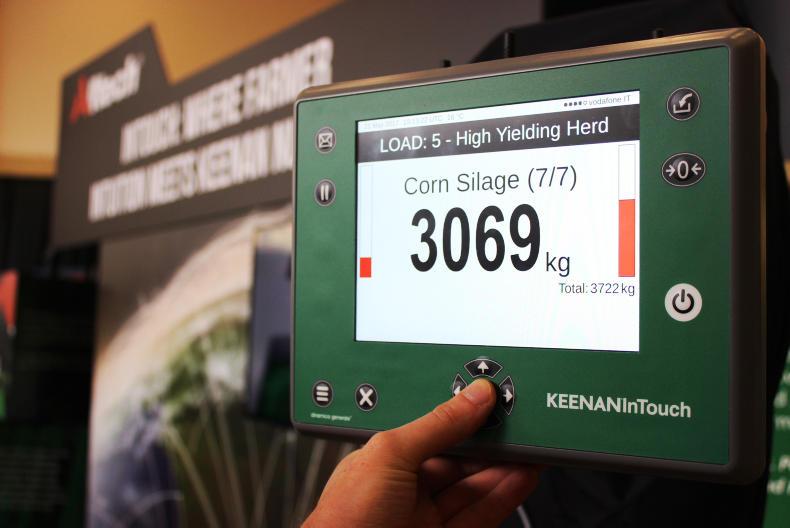
Cathal Bohane of Alltech’s data analysis and advisory service Keenan InTouch gave an example of this, saying that a study of farmers using the service had seen a typical 8% increase in feed efficiency in dairy cows translate into a 9% drop in methane emissions per litre of milk produced.
The company has partnered with Sainsbury’s supermarkets in the UK to measure this carbon footprint on some products and communicate it to consumers, Alltech chief Mark Lyons said. “As a food producing country, there is going to be certain emission levels,” he said. “How do we address this with technology to make Ireland a leader?”
Read more
Biochar: the high-tech charcoal with farming potential
Sustainability and income challenges clash at Alltech conference
Farmers and the wider agri food industry need to accelerate the adoption of new practices and technologies if they are to keep up with the challenge of climate change, according to speakers at last week’s Alltech One Ideas Forum in Dunboyne, Co Meath.
While Irish grassland can remove large amounts of carbon dioxide from the atmosphere, this is currently outstripped by emissions from livestock, slurry and fertiliser spreading, and drainage of carbon-rich peaty soils, said John Muldowney from the climate change section of the Department of Agriculture.
He dismissed claims by the “green lobby” that livestock numbers were too high, as “they have about flatlined since 1990” – but “there is more to do in grass measurement, nitrogen efficiency, silage quality and balancing with other feeds,” he said.
Yet the adoption of new techniques is slow: “It takes the average farmer 20 years to catch up with the top 5%,” Muldowney said.
Meanwhile, agriculture accounts for over 30% of Irish greenhouse gas emissions set to exceed 2020 EU obligations. “It doesn’t look good on what Origin Green is saying,” he warned, adding that efficiency was the best way to engage farmers as it improves their profit.
Cathal Bohane of Alltech’s data analysis and advisory service Keenan InTouch gave an example of this, saying that a study of farmers using the service had seen a typical 8% increase in feed efficiency in dairy cows translate into a 9% drop in methane emissions per litre of milk produced.
The company has partnered with Sainsbury’s supermarkets in the UK to measure this carbon footprint on some products and communicate it to consumers, Alltech chief Mark Lyons said. “As a food producing country, there is going to be certain emission levels,” he said. “How do we address this with technology to make Ireland a leader?”

Read more
Biochar: the high-tech charcoal with farming potential
Sustainability and income challenges clash at Alltech conference
SHARING OPTIONS