The 2018 potato harvest continues, with over 70% of the main crop still be lifted.
While the weekend rain halted progress virtually everywhere, many growers in areas where dry soil conditions were proving an issue will be thankful of the moisture.
Where moisture issues weren’t a problem, despite relatively high rainfall amounts at the weekend, ground conditions remain excellent.
Wait continues
However, for many growers the wait continues, as crops remain slow to mature.
There is now real concern as to the potential lateness of the main-crop potato harvest for some growers this year.
Of the crops already lifted, yields are proven to be extremely variable.
Soil type, variety and whether crops were irrigated or not are playing a key role in harvest yields.
Yields with extremes of as low as 9t/ac and, on the other end of the spectrum, 20t/ac have been reported.
However, there is a general acceptance that the country’s average yields will see a significant reduction.
Conducting yield digs is particularly important this year.
Why conduct a yield dig?
Due to the consequences of the difficult growing year, the planning of harvest logistics, field orders and box and storage requirements may prove a challenge this year.
Therefore, it is particularly important that growers conduct yield digs in each field in order to assist in planning their harvest.
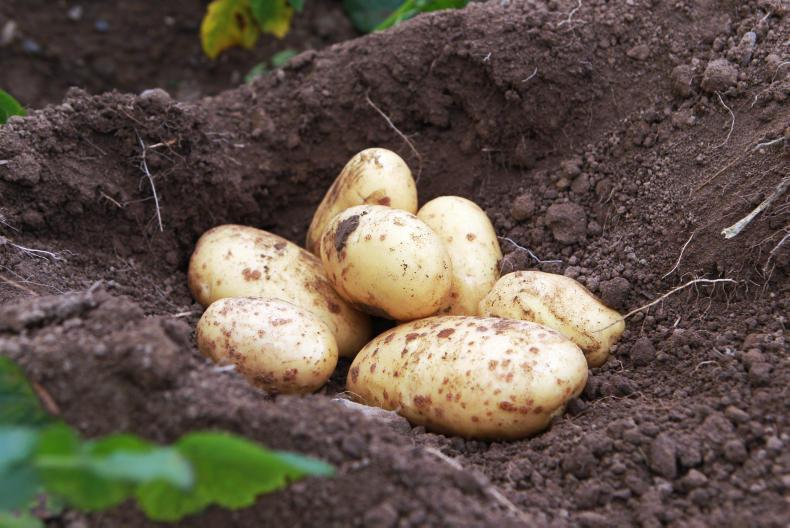
In-field yield digs are a quick, effective method of helping to assess the marketable yield of a potato crop.
As well as this, a yield dig can help to identify crops with a problem, or a particular skin disease, which may get worse with late harvesting. This can help prioritise the order of fields for harvest.
A yield dig can also be tied in with collecting samples for dry matter testing.
Potato yield dig calculations
Potato and tillage adviser Shane Kennedy was on hand at the recent Teagasc/IFA potato walk in Balrothery, Co Dublin, to give growers a demonstration on how to conduct a yield dig. The steps for conducting a yield dig are as follows:
Find a representative area in the field to conduct the yield dig – avoid headlands and tramlines. Choose one drill and measure the length of 2m in that drill.Using a spade, dig and collect the potatoes from that 2m-strip and remove any haulm. Ensure to get all the potatoes in this section of the drill.Separate the marketable fraction of potatoes from the sample (generally 45mm to 80mm).Weigh the marketable fraction on a set of scales. Divide the weight of the marketable fraction from that section of the drill by the bed width (in metres).Multiple this figure by 10.This is the estimated tonnes per hectare of the crop, so divide by 2.471 to get the amount in tonnes/acre. Subtract 15% of this figure in order to account for losses in headlands and tramlines. This figure is the estimated yield per acre. Repeat this process in a number of locations to increase yield estimation accuracy. Field example
Take a marketable weight of 8kg of potatoes from the test dig. Divide this figure by the bed width in metres.
A bed width of 70in equates to 1.78m.
Divide 8 by 1.78 and then multiply this by 10 to get 44.9t/ha.
Divide 44.9 by 2.471 to equal 18t/ac. Take 15% of this figure to account for losses.
This equates to an estimated marketable yield of 15.4t/ac.

Read more
Main potato harvest under way
From the tramlines: ground conditions remain good as sowing gathers pace (video)
The 2018 potato harvest continues, with over 70% of the main crop still be lifted.
While the weekend rain halted progress virtually everywhere, many growers in areas where dry soil conditions were proving an issue will be thankful of the moisture.
Where moisture issues weren’t a problem, despite relatively high rainfall amounts at the weekend, ground conditions remain excellent.
Wait continues
However, for many growers the wait continues, as crops remain slow to mature.
There is now real concern as to the potential lateness of the main-crop potato harvest for some growers this year.
Of the crops already lifted, yields are proven to be extremely variable.
Soil type, variety and whether crops were irrigated or not are playing a key role in harvest yields.
Yields with extremes of as low as 9t/ac and, on the other end of the spectrum, 20t/ac have been reported.
However, there is a general acceptance that the country’s average yields will see a significant reduction.
Conducting yield digs is particularly important this year.
Why conduct a yield dig?
Due to the consequences of the difficult growing year, the planning of harvest logistics, field orders and box and storage requirements may prove a challenge this year.
Therefore, it is particularly important that growers conduct yield digs in each field in order to assist in planning their harvest.
In-field yield digs are a quick, effective method of helping to assess the marketable yield of a potato crop.
As well as this, a yield dig can help to identify crops with a problem, or a particular skin disease, which may get worse with late harvesting. This can help prioritise the order of fields for harvest.
A yield dig can also be tied in with collecting samples for dry matter testing.
Potato yield dig calculations
Potato and tillage adviser Shane Kennedy was on hand at the recent Teagasc/IFA potato walk in Balrothery, Co Dublin, to give growers a demonstration on how to conduct a yield dig. The steps for conducting a yield dig are as follows:
Find a representative area in the field to conduct the yield dig – avoid headlands and tramlines. Choose one drill and measure the length of 2m in that drill.Using a spade, dig and collect the potatoes from that 2m-strip and remove any haulm. Ensure to get all the potatoes in this section of the drill.Separate the marketable fraction of potatoes from the sample (generally 45mm to 80mm).Weigh the marketable fraction on a set of scales. Divide the weight of the marketable fraction from that section of the drill by the bed width (in metres).Multiple this figure by 10.This is the estimated tonnes per hectare of the crop, so divide by 2.471 to get the amount in tonnes/acre. Subtract 15% of this figure in order to account for losses in headlands and tramlines. This figure is the estimated yield per acre. Repeat this process in a number of locations to increase yield estimation accuracy. Field example
Take a marketable weight of 8kg of potatoes from the test dig. Divide this figure by the bed width in metres.
A bed width of 70in equates to 1.78m.
Divide 8 by 1.78 and then multiply this by 10 to get 44.9t/ha.
Divide 44.9 by 2.471 to equal 18t/ac. Take 15% of this figure to account for losses.
This equates to an estimated marketable yield of 15.4t/ac.
Read more
Main potato harvest under way
From the tramlines: ground conditions remain good as sowing gathers pace (video)
SHARING OPTIONS