


The planned exit of the UK, our biggest trading partner, from the EU in the spring of 2019 is fast approaching, with the prospect of a bad or no-deal still a worrying possibility. In this environment, the Government went for a balanced budget.
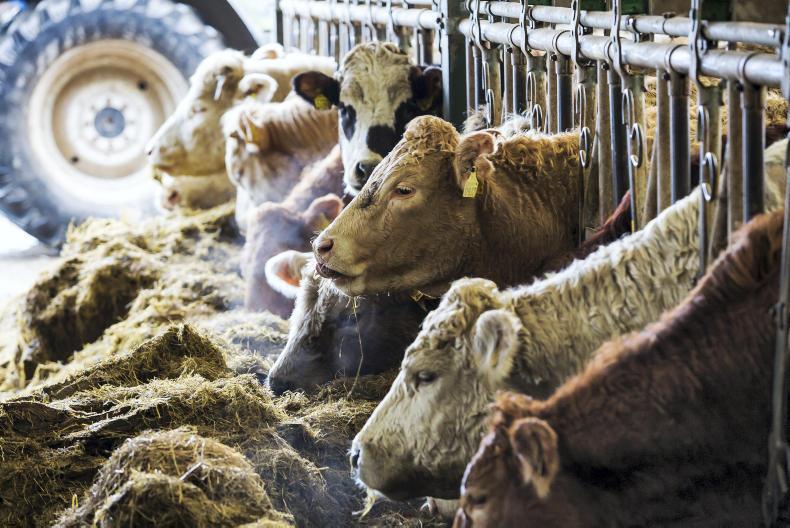
There were some positives for beef and sheep farmers, with the Beef Environmental Efficiency Pilot (BEEP) and Areas of Natural Constraint (ANC) announcements. These farm enterprises have low incomes and significant challenges ahead. The average ANC payment in 2017 was €2,139, with 95,550 beneficiaries. Based on figures to date in 2018, this has increased to €2,411, reflecting a €25m increase in allocation in last year’s budget.
If the same criteria apply in 2019 and with an additional €23m announced last week, this could result in an average payment of €2,617. This will depend on the impending ANC review.
While this is welcome for farmers who struggle to farm on lands which have natural constraints, farmers feel more support is required to assist struggling sectors – but it is something we can build on.
What do the BEEP and ANC mean?
For a farmer with 20 suckler cows, the newly introduced BEEP scheme will mean an additional €800. If their land also qualifies for the ANC scheme, assuming the status quo criteria and distribution of payments, mountain, more severely handicapped or less severely handicapped areas, could gain €670, €270 and €210 respectively, on farms with maximum hectares in each category. While the increases over the last two years will not change the state of play within the sector, they are welcomed.
The €200 increase in the earned income tax credit is a positive for all self-employed businesses, including farmers. This still falls €300 short of the Government commitment to eliminate this discrimination.
The removal of restrictions to income averaging is also extremely welcome. All farmers can now avail of this volatility measure costing €2.5m. In the past, farmers with a small contracting business were restricted from entering income averaging.
Three main stock reliefs – 25% general stock relief on income tax, 100% stock relief for young trained farmers and 50% stock relief for registered farm partnerships – were due to expire at the end of 2018 but were extended for an additional three years, saving farmers €8m.
The increase in the threshold limit on inheritance tax means that agricultural assets can be transferred from parent to child before capital acquisitions tax applies up to a total value of €3.2m over their lifetime.
These reliefs are fundamentally important for intergenerational transfer of family farms.
Other measures included Brexit response supports and in the new year the Future Growth Loan Scheme. It would appear that this will be funded from the €25m for low-cost loans announced in last year’s budget. The final terms are yet to be announced but it is expected to benefit younger farmers with unsecured loans available up to €500,000.
Environment
In terms of future taxation, no carbon tax was introduced. There is no available environmentally friendly substitute for this input at the moment. Until technology moves to give farmers more options, the impact such a tax would have on demand is questionable. This is something the sector needs to be supported in, to make itself more resilient to future changes.
One area lacking funding is farm-scale renewables. It has the potential to increase farm income and make positive contribution to the environment. These win-win scenarios should form part of future funding programmes.






SHARING OPTIONS