The poultry industry is constantly growing and evolving. In recent years, output from the sector has soared as the industry expands to keep pace with demand from consumers for a high-value protein that delivers a healthy product at an affordable price.
It is for these reasons (among several others) that poultry now accounts for over half of the meat eaten in the UK.
Even with this recent expansion, the UK still imports around 35% of its poultry meat and 14% of its egg consumption. Given this, it comes as no surprise that producers in both sectors have a predominantly positive outlook for their businesses for the coming years. However, the next challenge is never far away.
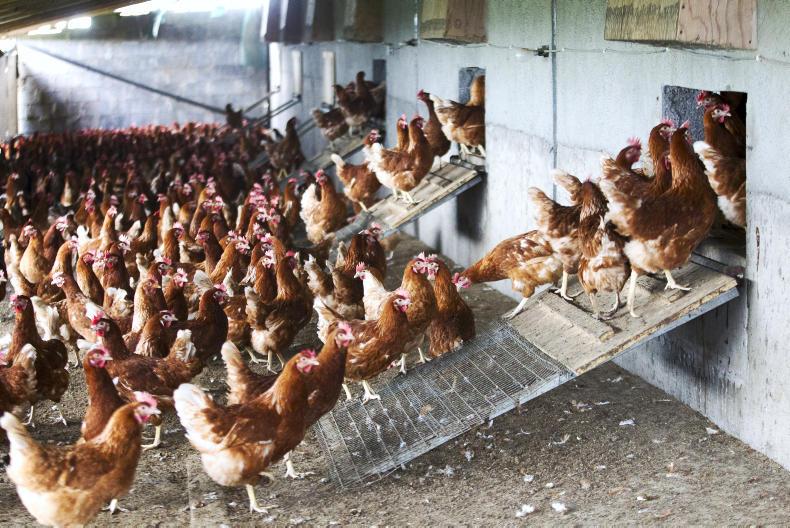
At present, colony egg producers in Northern Ireland (NI) are still grappling with the UK retailers’ move towards “cage-free” egg production by 2025. To date, not all retailers have provided a clear message of what it is they want producers to deliver.
In the absence of a clear vision, there is confusion among producers and there is a risk that the whole industry will rush headlong toward free-range production. That could throw the supply and demand equation out of balance and erode the premium that free-range production has historically commanded.
Some retailers have indicated that barn production could be used as a value line on supermarket shelves. However, this is a conversation that is continuing to develop and very much depends on the individual supply chains of each retailer and what their customer base demands.
Broilers
Within the broiler sector, the immediate concern continues to revolve around the Renewable Heat Incentive (RHI) debacle in NI. Many producers were encouraged to join up to the scheme in order to reduce the sector’s environmental footprint and improve bird performance via hot water heating to the houses. However, with the extension of the emergency interim tariffs now in place, many producers are finding their incomes significantly reduced and are having to find the shortfall from other parts of their businesses.
Brexit
Issues around Brexit also continue to be a priority. In the short term, weaker sterling against the euro has benefited NI producers as imports are more expensive. However, in the longer term, the UK’s eventual trade stance will have a significant impact on margins throughout the supply chain.
One of the more immediate impacts, partly related to Brexit, is labour availability in processing plants, bird-catching teams and on-farm.
In addition, the movement of poultry litter from NI to arable land in ROI may become more problematic after Brexit, depending on eventual movement licensing requirements. However, the recently opened AD plant near Ballymena in Co Antrim is continuing to process large quantities of litter and this technology may offer a long-term solution to the issue.
Ammonia
In keeping with the environmental theme, ammonia has recently emerged as potentially the largest constraint to the growth of NI agriculture. At present, around 91% of NI ammonia emissions come from agriculture. However, there is a misguided perception that the majority of these emissions are produced by the intensive sectors. In reality, less than 13% of these emissions emanate from the poultry sector.
Welfare
Animal welfare continues to be a key concern among consumers. However, poultry production in the UK operates to extremely high standards. This will continue to improve with the introduction of DEFRA’s updated welfare code.
There is, however, always a risk from militant animal welfare groups. Thankfully, in this area retailers seem to understand that the standards that the poultry industry works to are world leading. However, this position is not something that we should take for granted, and all producers have a responsibility to maintain these standards and our reputation.
Influenza
The final major threat facing the sector is Avian Influenza (AI). In line with the scale of the risk, producers are continuing to take biosecurity extremely seriously.
Overall, the poultry sector remains in a strong position, and is an incredibly rewarding and innovative sector that can offer fantastic opportunities to those who prioritise efficient production and keep the focus firmly on delivering what the consumer wants.
Read more
Meet the woman who hatched her egg business, starting with just 10 hens
Brexit is good news for Irish poultry
The poultry industry is constantly growing and evolving. In recent years, output from the sector has soared as the industry expands to keep pace with demand from consumers for a high-value protein that delivers a healthy product at an affordable price.
It is for these reasons (among several others) that poultry now accounts for over half of the meat eaten in the UK.
Even with this recent expansion, the UK still imports around 35% of its poultry meat and 14% of its egg consumption. Given this, it comes as no surprise that producers in both sectors have a predominantly positive outlook for their businesses for the coming years. However, the next challenge is never far away.
At present, colony egg producers in Northern Ireland (NI) are still grappling with the UK retailers’ move towards “cage-free” egg production by 2025. To date, not all retailers have provided a clear message of what it is they want producers to deliver.
In the absence of a clear vision, there is confusion among producers and there is a risk that the whole industry will rush headlong toward free-range production. That could throw the supply and demand equation out of balance and erode the premium that free-range production has historically commanded.
Some retailers have indicated that barn production could be used as a value line on supermarket shelves. However, this is a conversation that is continuing to develop and very much depends on the individual supply chains of each retailer and what their customer base demands.
Broilers
Within the broiler sector, the immediate concern continues to revolve around the Renewable Heat Incentive (RHI) debacle in NI. Many producers were encouraged to join up to the scheme in order to reduce the sector’s environmental footprint and improve bird performance via hot water heating to the houses. However, with the extension of the emergency interim tariffs now in place, many producers are finding their incomes significantly reduced and are having to find the shortfall from other parts of their businesses.
Brexit
Issues around Brexit also continue to be a priority. In the short term, weaker sterling against the euro has benefited NI producers as imports are more expensive. However, in the longer term, the UK’s eventual trade stance will have a significant impact on margins throughout the supply chain.
One of the more immediate impacts, partly related to Brexit, is labour availability in processing plants, bird-catching teams and on-farm.
In addition, the movement of poultry litter from NI to arable land in ROI may become more problematic after Brexit, depending on eventual movement licensing requirements. However, the recently opened AD plant near Ballymena in Co Antrim is continuing to process large quantities of litter and this technology may offer a long-term solution to the issue.
Ammonia
In keeping with the environmental theme, ammonia has recently emerged as potentially the largest constraint to the growth of NI agriculture. At present, around 91% of NI ammonia emissions come from agriculture. However, there is a misguided perception that the majority of these emissions are produced by the intensive sectors. In reality, less than 13% of these emissions emanate from the poultry sector.
Welfare
Animal welfare continues to be a key concern among consumers. However, poultry production in the UK operates to extremely high standards. This will continue to improve with the introduction of DEFRA’s updated welfare code.
There is, however, always a risk from militant animal welfare groups. Thankfully, in this area retailers seem to understand that the standards that the poultry industry works to are world leading. However, this position is not something that we should take for granted, and all producers have a responsibility to maintain these standards and our reputation.
Influenza
The final major threat facing the sector is Avian Influenza (AI). In line with the scale of the risk, producers are continuing to take biosecurity extremely seriously.
Overall, the poultry sector remains in a strong position, and is an incredibly rewarding and innovative sector that can offer fantastic opportunities to those who prioritise efficient production and keep the focus firmly on delivering what the consumer wants.
Read more
Meet the woman who hatched her egg business, starting with just 10 hens
Brexit is good news for Irish poultry





SHARING OPTIONS