


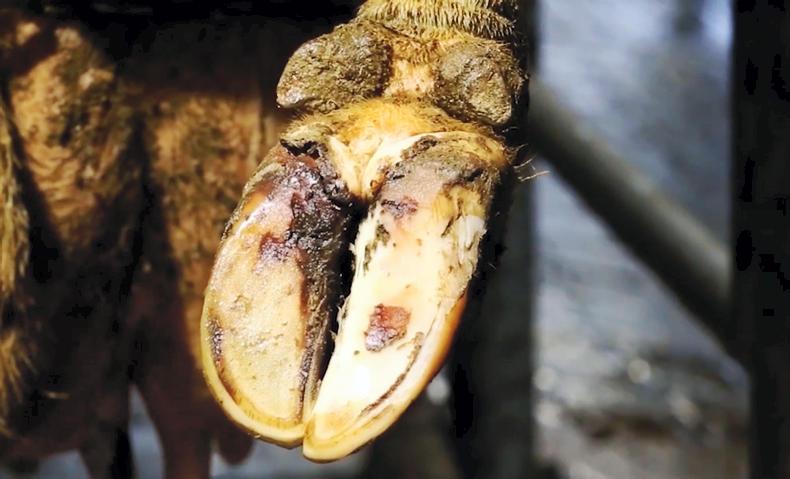
As cattle are housed, there is an increased risk of infectious lameness. This is the case because the bugs that cause lameness survive better indoors in wet and mucky conditions. The two main ones are fouls and mortellaro (digital dermatitis). It is always better to have a control plan when trying to manage both of these conditions.
These infections can cause severe pain and lack of performance. The more chronic or long-standing they are, the harder they are to treat.
Cost of lameness
Treating lameness does come with a cost but what should be factored in is the reduced performance of lame animals and the cost of premature culling and buying replacements. Cases of lameness can cost between €180-€300 in treatments and lost performance. With a lame bull causing infertility, this can be even more costly or in some herds disastrous.
Not all lameness is infectious, of course. With cattle going indoors, we have increased risk of injuries and mechanical lameness. Lame feet should be lifted as soon as possible to make a diagnosis. This leads to much better treatment results and can also help you determine why it’s happening and identify underlying risk factors. Naturally in houses we have slippery surfaces which can lead to more injuries. But foot hygiene – or a lack of it – can also lead to problems.
Fouls in the feet are caused by fusobacterium, which is found in slurry. This often occurs when the foot suffers trauma, first breaking the skin. It causes swelling often in between the feet and can often be quite smelly.
Systemic antibiotics, antibiotic sprays and pain killers work well but the earlier the treatment the better. There is often no need to reach for the top shelf with fouls with penicillin often being effective.
Mortellaro (DD) is a growing infectious cause of lameness and usually starts at the back of the claw as a red circular lesion. This can progress to hairy brown or black lesions. The longer these spirochete bacteria are there, the deeper the infection and the harder it is to treat.
Early treatment where the foot is cleaned (get rid of dead tissue) and dried with topical preparation works best. Some people will use wraps but a good spray of antibiotics on a freshly cleaned lesion works well when identified early. The source of this infection is other cows; it is often referred to as mastitis of the feet (the source of new infections is other cows’ feet). When diagnosed, especially indoors, you need a herd plan to reduce the spread.
Chronic lesions, while being hard to treat, are also a source for infection, particularly for young animals coming into the herd. Never buy in lame animals. When you buy in mortellaro to a herd it can be devastating.
Foot-bathing
The first thing to think about when designing a foot bath is that it’s easy to use. This means having the correct size foot bath in a place that allows cows to flow through easily. I recommend two regimes: one for control and one which is during a treatment programme. In a control programme, I usually just recommend zinc sulphate or copper sulphate every two to three weeks over the winter months. Run cattle through fresh solution each time.
When dealing with a treatment plan, it is advisable to give three to four baths weekly for three to four weeks until infections are under control. This is while aggressively treating infected animals.
The ideal foot bath will allow three to four foot passes through clean solution, meaning it needs to be greater than two metres long but ideally less than four metres (to prevent contamination). This means cows flowing at their own pace.
Cows don’t like plastic baths so ideally build a bath that is permanent. What I’ve found to work well is making a cheap concrete structure that can be easily filled/ drained in a place where cattle can flow through.
In my experience, the biggest thing we can do to reduce the risk of infectious lameness in cattle is to manage the hygiene of the environment the foot is in and treat infections early.






SHARING OPTIONS