


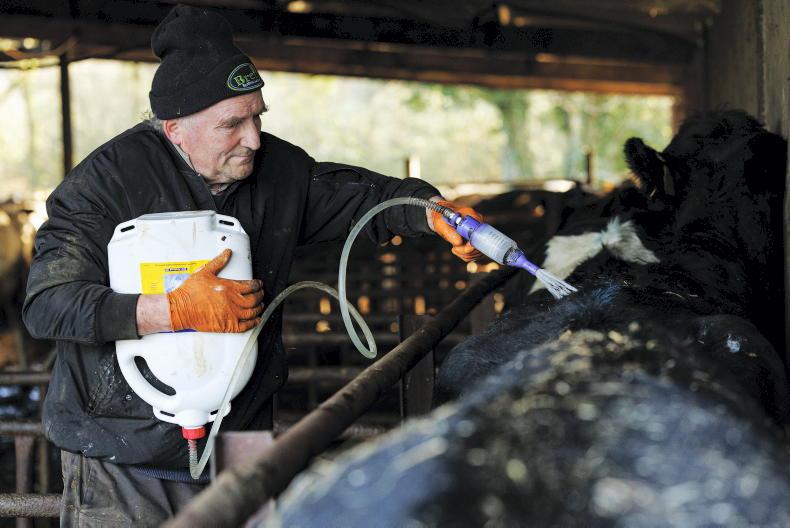
Housing time provides the ideal opportunity to control worms in stock, particularly roundworms and lung worms. A good housing dose should clear out any roundworm parasites. Take care when deciding which dose to use – it is not solely about convenience and price. The dearest dose you will use is the one that doesn’t work.
If going down the route of a pour-on, make sure you use the correct dose and also apply it carefully and correctly. When using a pour-on at housing, I recommend clipping cattle’s backs first and then applying pour-on.
Lice and mites are a real problem in some farms at housing at winter time. These lice and mites don’t like UV light (sunlight) and love wet humid conditions. This means it has become a real problem in some herds when indoors during winter.
Lice are small skin parasites and there are two types: biting and suckling lice. Mites are parasites that invade the skin. Both parasites cause itching, biting and irritation in cattle. When infestations are severe you can have reduced performance and stress.
Most lice and mite issues develop later at housing. I strongly recommend not waiting for symptoms but being proactive around reducing numbers of these parasites early on.
With lice, I find clipping backs helps with controls and early application of an effective spot-on.
Over the last number of years I’ve investigated a number of treatment failures with lice and mites. Different mites require slightly different treatments. If cattle are continuing to scratch, it may be worth having your vet carry out skin scrapes to get a diagnosis of which mite it is.
So remember, get your lice and mite treatments on or in cattle early this year.
Lameness in sheep
Most lameness in sheep is infectious (scald, foot-rot and CODD) and is transferred from one sheep to another. This infectious spread really ramps up once inside; wet damp conditions with lots of sheep being housed together are the perfect conditions for spread of infectious lameness.
So before or at housing is a good time to review a lameness control plan in your flock. When taking sheep in, it’s a good time to separate out lame sheep, turn them over and see what you’re dealing with.
This lame group should be marked and treated appropriately for what ever infections are there – only being introduced back when recovered three weeks later. Then regular foot-bathing over the winter can really help reduce the spread of disease in the flock. I find zinc sulphate at 10% solution works well for this.
When dealing with foot-rot in the winter time, I would strongly advise sheep farmers to consider vaccination. It is one vaccine that can really help reduce infection pressure for the risk period of winter housing. This shot should be timed ahead of housing and be careful to use clean needles and not inject sheep when wool is wet.
Don’t forget how painful this lameness can be. Pain affects performance, opening the door to many other diseases. Have a lameness treatment protocol, deciding which treatments you’re using and reviewing how effective they are.
Now is the time to start planning to tackle the lame sheep ahead of housing.
Bedding options
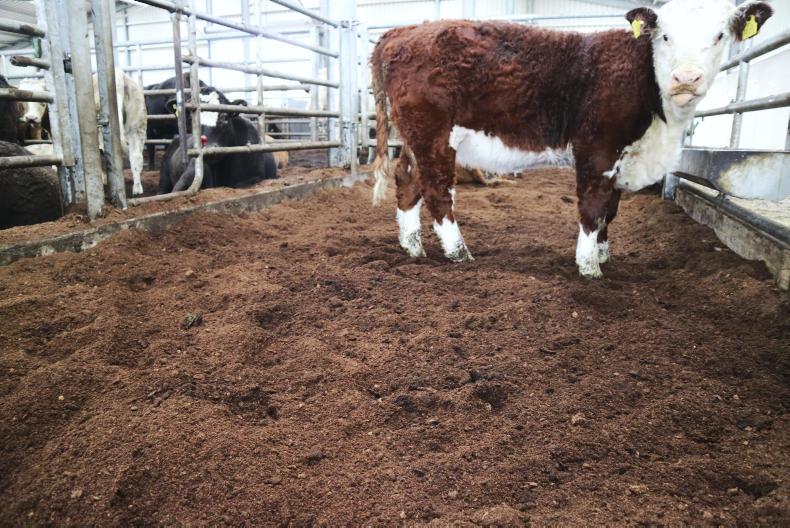
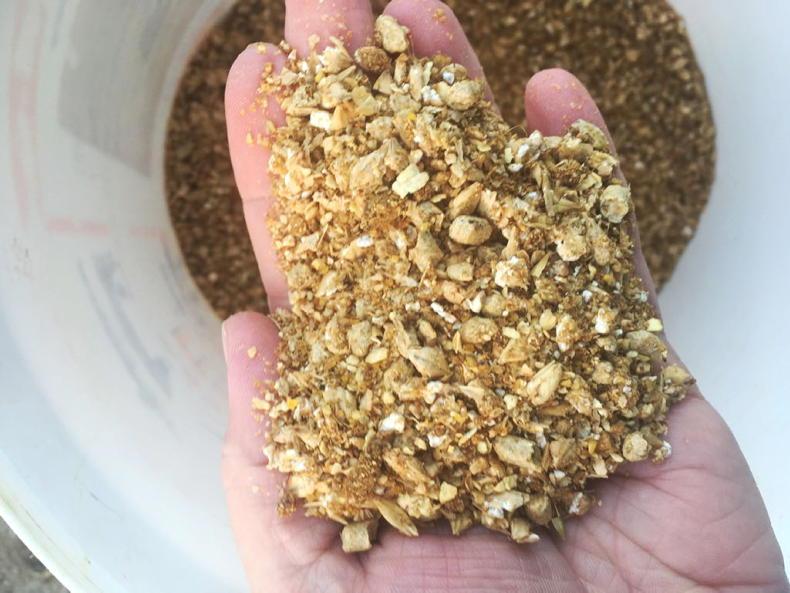
With straw in short supply on some farms, there are many farms considering other options. Where straw is hard to beat is for calving/lambing pens and certainly for calf/lamb accommodation. So when in short supply, alternatives like peat, wood chip and sand are being considered.
With all of these, it is important to try to reduce moisture build-up and keep animals clean and comfortable. Straw still has the best insulation properties, which makes it ideal for younger animals to keep them warm.
One warning when using wood chip: ensure no foreign objects are present in it.
From a hygiene point of view, I’ve seen matting being used for high-pressure areas such as calving boxes. Make sure these can be easily cleaned out and that drainage is adequate.
Peat is being used very successfully on many farms as an alternative bedding option. It is key to manage it correctly but where this is done, it works very well as comfortable bedding for livestock.
For areas where hygiene is a priority, such as calving/lambing pens and for youngstock, my recommendation is to continue to use straw, as it allows regular cleaning out in high-pressure areas.
A dairy calf is not a cow when it comes to housing
When looking at calf accommodation this winter, it’s really important to remember cows and calves have different requirements. Remember, calves have less fat cover and ability to stay warm – they are much more prone to cold. Also, calves are still building their immune systems up so keep them away from older stock in a separate airspace.
Faecal scoring
Who would have thought that sometimes we get so much information from the simplest of things? One thing we should always listen for and watch is faeces at housing time. They talk about the sound of healthy faeces hitting the ground being like a slow clapping noise.
The next thing to look at faeces is scoring or the consistency of dung using a scale from one to five. If you really want to look in more detail, you can use a faecal sieve.
We are aiming for well-formed dung with very little fibre or undigested materials. At winter housing time, it is a good time to look at dung and make sure at herd level there is consistency. The most common causes, particularly for loose faeces, is acidosis or potential parasites.
You can never make a diagnosis from faeces alone but it is a good indicator of a problem.
Feed space: it’s the simple things
I remember walking on to a dairy farm two years ago and looked at a TMR diet being fed to the cows. I counted 15 things included in the cows’ diet – not including minerals. The obvious question was what were these cows producing on this mixture? Was this the magic diet for the high-producing cow?
Firstly, these cows weren’t producing anywhere near their potential and one thing was the nutrition had become overly complicated. Unfortunately, there was one more glaring problem on the farm. The cows didn’t have enough access to their feed, the feed rail was too low and often when the cows wanted this feed, it wasn’t there. This was a classic example of a herd getting overly preoccupied by what was in the feed and forgetting about how to feed.
All animals require sufficient space to feed. Remember, cows are herd animals and will often feed as a group. Where we restrict space, we restrict feed access. Even when feeding to reduce BCS we still need every animal being able to feed at the one time.
So, have enough space for cows (600-700cm). For ewes (60-70cm) it is equally important, particularly as they come up to lambing. The neck rail height is also really important. Animals should be able to feed without having to force or put pressure on their necks. Watch animals feeding this winter and see if space and feeding table are doing there job.



SHARING OPTIONS