


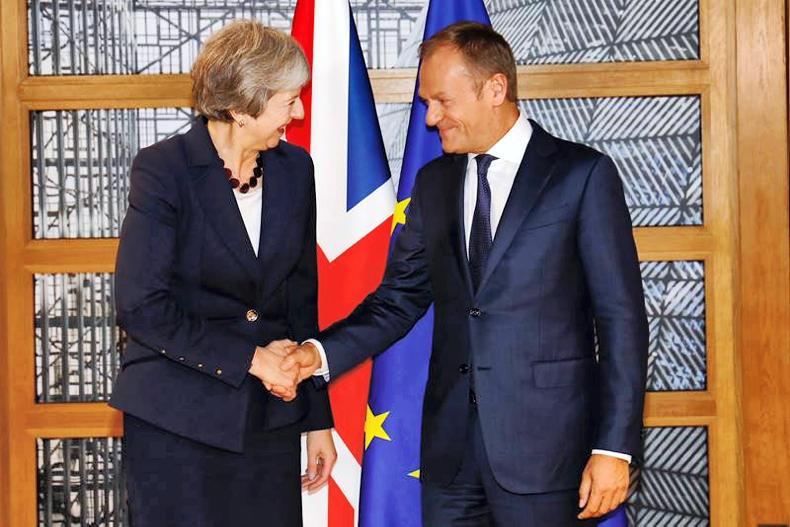
EU and UK negotiators go into what is described as the tunnel this week again to see if a withdrawal agreement can be hammered out. The tunnel refers to what is essentially a media blackout until the end is reached and a final proposal is worked up that will then seek political approval. In the best case scenario, this will be achieved before Friday this week which is considered as the latest day on which a special one off leaders Council could be summoned for November.
Political engagement
There is much speculation on where the talks stand. While the talks in Brussels are formally underway this week, there was a flurry of political activity at the end of last week with two British ministers – David Liddington who is effectively deputy PM and Karen Bradley, NI secretary in Dublin while Dominic Rabb, the UK Brexit minister was in the north. While the negotiations take place in Brussels, it is likely that the latest thinking was shared during these visits.
The Irish border and backstop still remains the sticking point. The Financial Times is reporting this morning that the Brexit minister is looking for a review of any backstop for the border after either three or six months, meaning that a backstop could only be in place by mutual consent between the EU and UK.
Ultimate backstop is no deal
This aligned with the prospect of the entire UK being part of a customs union with the UK may create the necessary fudge to allow all parties sign off on the withdrawal agreement and allow progression to the even more complicated future trading relationship negotiation. The EU and Irish position has been that a backstop arrangement that kept Northern Ireland aligned with the EU in the event that Britain went its own way, had to be unconditional. While a review process may suggest that it isn’t unconditional in this way, the reality is that the UK can disengage from any part of the process at any time should it choose to do so. In the longer term, if the UK were through a review or any other process walk away from the backstop then the ultimate fall-back position of a no deal situation would arise.
Best for farmers
The negotiators and political leaders realise that a no deal Brexit is the ultimate outcome of absolute or red line negotiating positions being maintained. Perhaps by emphasising the right of the UK having the option of doing whatever it wants once it leaves will give them the necessary space to “choose” a particularly close arrangement with the EU. That means taking the backstop with the right to leave it and in the longer term negotiations, “choosing” to keeping the UK aligned which in itself would make the backstop irrelevant. That would work particularly well for Irish farmers either side of the border because it would mean that trade could continue as it is at present both on a north south and east west basis.




SHARING OPTIONS