Our farmer-owned co-operative model now has an annual turnover of over €15bn per annum, ranging from multibillion euro dairy processing businesses to local livestock marts.
Alongside this sits our farm organisations, which play a critical role in ensuring that policy at national and EU level underpins the economic viability of our family farms – not only through CAP but also by protecting farmer interests in international trade negotiations.
Over the years, a key ingredient to the establishment and success of both the co-op model and representative organisations has been the central involvement of farmers – farmers who not only displayed great foresight and leadership but also recognised the value and importance of giving their time to becoming actively involved in shaping the future of their industry, whether it was recognising the need to come together to process and market milk more efficiently, the need to establish livestock marts to provide farmers with a secure and transparent trading platform, or, in the case of standing up for farmers’ rights, the establishment of the National Farmers’ Association (NFA) in 1955.
Undoubtedly a challenge facing our industry is to make sure that farmers remain at the core of these businesses and organisations. While executive management teams within co-ops have responsibility for the day-to-day management of the business, the farmers sitting around the board tables play a critical role setting the strategic vision and ensuring it is aligned to the long-term interests of its farmer shareholders. Similarly, within farm organisations, policy designed by farmers and lobbied for by farmers will always deliver the most impactful outcome.
The recycling of prominent members across various committees and senior positions creates the impression of a closed shop
The question is: where are the farmer leaders of the future? As an industry, are we doing enough to ensure we are attracting the younger farmers into the co-operative structure or on to the various committees within the farm organisations? While recognising the role of the IFA’s future leaders programme and the work organisations such as Nuffield, Macra and ICOS do, we only have to look at the age profile of the members of the various co-op boards and the committees within the farm organisations to realise that much more is needed.
Ultimately, every co-op board should have a succession strategy in place that identifies and up-skills future leaders at an early stage in their farming careers. There is no need to reinvent the wheel with plenty of examples of how such models work well in co-ops across the EU.
Alongside this, we should also question if it is time to look at the need to introduce different structures for attracting young people on to boards or committees. Farm organisations have a particular challenge in this regard with the continuous recycling of prominent members across the various committees and senior positions – creating the impression of a closed shop. A one-way policy of upward-only progression deserves consideration.
There is, of course, an onus on young farmers themselves to recognise the need to engage outside of the farm gate and become active in the development of their industry. The structures put in place over the past 50 to 60 years, and which are currently yielding dividends for all, will need continuous development and modification to ensure that they remain fit for purpose into the future.
It is not an easy sell. The changes taking place both in terms of farm and family structures has left farmers time-poor. At the same time, the world of social media has seen leadership no longer measured by actions but instead the number of retweets and likes secured by those posting comments on the leadership shown by others. To date, the discussion around succession has largely been limited to inside the farm gate. But there is clearly a need to extend it far beyond if we are to ensure that farmers with the right skillsets necessary remain in control of our co-ops and that our farm organisations continue to be led by farmers.
CAP: European Court of Auditors not happy with CAP proposals
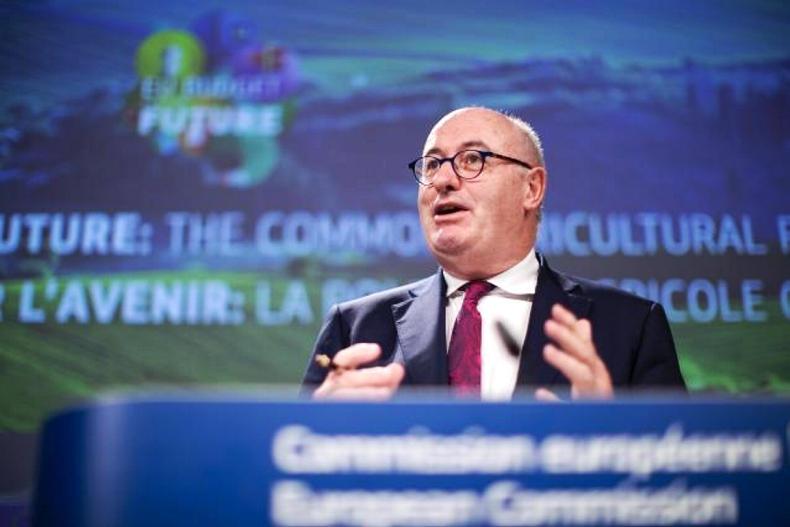
European Commissioner for Agriculture Phil Hogan.
The European Court of Auditors (ECA) has published a report this week that is very critical of the European Commission proposals for the reform of CAP after 2020.
For the ECA, European Commission for Agriculture Phil Hogan’s proposals are too close to the existing CAP and don’t go far enough.
The comments on climate and direct payments will be of particular concern for farmers in the Republic of Ireland as CAP won’t apply in the UK regions after Brexit. The auditors are convinced that the tools to address the climate and environmental objectives are not sufficiently defined. Irish farmers will feel they are sufficiently measured and inspected.
What will be of even more concern to farmers is the ECA view that direct payments aren’t the most efficient way of supporting viable income. There are very few if any farmers in Ireland or elsewhere who don’t treasure the direct payment and in many cases it is the difference in the farm being viable or not.
It is positive that Commissioner Hogan has pushed back against the report, and while his proposals may not be perfect in the eyes of Irish farmers, it is clear that the ECA would offer a CAP that would be even further removed from practical farming.
CAP: pressure rising to increase CAP budget
Irish farmers will welcome proposals from the European Parliament to back an increase in the CAP budget. The move is highly significant and the IFA has been quick to highlight that payments have been eroded by inflation. Let’s be clear: the proposal to reduce the existing CAP from €350m to €336m is unacceptable to farmers. The Parliament position suggesting a figure of €408m is closer to what farmers need to at least maintain significance, factor in inflation, and a just reward for greater demands on food security and transparency. The political pressure is rising on member states to increase contributions and Commissioner Hogan will welcome any further investment in CAP.
Pedigree: sales figures point to worrying trend
Shane Murphy’s sale reports in our Pedigree section point to a worrying trend for pedigree breeders for sale average prices over the last four years.
Poor sale clearances and a reduction in sale averages are hallmarks of a beef sector lacking confidence. The uncertainty around the future of our suckler beef industry and reducing cow numbers are undoubtedly factors. This, coupled with the fact that 2018 has been an extremely tough year on farm finances given the weather extremes, means that the investment in a pedigree bull is being postponed for many.
Irish pedigree breeders are renowned for the quality of stock they produce and, at current prices, breeders are losing money. It begs the question: is enough being done to promote Irish genetics and stock to attract foreign customers? Some commercial producers may look at this as an opportunity to purchase quality stock in a depressed market.
Patrick Drohan: BETTER farmer dies after tragic accident
It was with deep shock and sadness that we learned of the tragic death of Patrick Drohan, Scrahan, Kilmactomas, Co Waterford, on Monday evening after an accident.
Patrick was the Waterford participant in phase two of the Teagasc / Irish Farmers Journal BETTER farm beef programme, which ran from 2012-2016.
He was regularly featured on our BETTER farm pages and embraced the programme fully, developing his herd, making great progress over the duration of the programme, culminating in a very successful open day held on his farm in March 2015.
We would like to extend our sincerest sympathies to his wife and young family at this difficult time.
Our farmer-owned co-operative model now has an annual turnover of over €15bn per annum, ranging from multibillion euro dairy processing businesses to local livestock marts.
Alongside this sits our farm organisations, which play a critical role in ensuring that policy at national and EU level underpins the economic viability of our family farms – not only through CAP but also by protecting farmer interests in international trade negotiations.
Over the years, a key ingredient to the establishment and success of both the co-op model and representative organisations has been the central involvement of farmers – farmers who not only displayed great foresight and leadership but also recognised the value and importance of giving their time to becoming actively involved in shaping the future of their industry, whether it was recognising the need to come together to process and market milk more efficiently, the need to establish livestock marts to provide farmers with a secure and transparent trading platform, or, in the case of standing up for farmers’ rights, the establishment of the National Farmers’ Association (NFA) in 1955.
Undoubtedly a challenge facing our industry is to make sure that farmers remain at the core of these businesses and organisations. While executive management teams within co-ops have responsibility for the day-to-day management of the business, the farmers sitting around the board tables play a critical role setting the strategic vision and ensuring it is aligned to the long-term interests of its farmer shareholders. Similarly, within farm organisations, policy designed by farmers and lobbied for by farmers will always deliver the most impactful outcome.
The recycling of prominent members across various committees and senior positions creates the impression of a closed shop
The question is: where are the farmer leaders of the future? As an industry, are we doing enough to ensure we are attracting the younger farmers into the co-operative structure or on to the various committees within the farm organisations? While recognising the role of the IFA’s future leaders programme and the work organisations such as Nuffield, Macra and ICOS do, we only have to look at the age profile of the members of the various co-op boards and the committees within the farm organisations to realise that much more is needed.
Ultimately, every co-op board should have a succession strategy in place that identifies and up-skills future leaders at an early stage in their farming careers. There is no need to reinvent the wheel with plenty of examples of how such models work well in co-ops across the EU.
Alongside this, we should also question if it is time to look at the need to introduce different structures for attracting young people on to boards or committees. Farm organisations have a particular challenge in this regard with the continuous recycling of prominent members across the various committees and senior positions – creating the impression of a closed shop. A one-way policy of upward-only progression deserves consideration.
There is, of course, an onus on young farmers themselves to recognise the need to engage outside of the farm gate and become active in the development of their industry. The structures put in place over the past 50 to 60 years, and which are currently yielding dividends for all, will need continuous development and modification to ensure that they remain fit for purpose into the future.
It is not an easy sell. The changes taking place both in terms of farm and family structures has left farmers time-poor. At the same time, the world of social media has seen leadership no longer measured by actions but instead the number of retweets and likes secured by those posting comments on the leadership shown by others. To date, the discussion around succession has largely been limited to inside the farm gate. But there is clearly a need to extend it far beyond if we are to ensure that farmers with the right skillsets necessary remain in control of our co-ops and that our farm organisations continue to be led by farmers.
CAP: European Court of Auditors not happy with CAP proposals
European Commissioner for Agriculture Phil Hogan.
The European Court of Auditors (ECA) has published a report this week that is very critical of the European Commission proposals for the reform of CAP after 2020.
For the ECA, European Commission for Agriculture Phil Hogan’s proposals are too close to the existing CAP and don’t go far enough.
The comments on climate and direct payments will be of particular concern for farmers in the Republic of Ireland as CAP won’t apply in the UK regions after Brexit. The auditors are convinced that the tools to address the climate and environmental objectives are not sufficiently defined. Irish farmers will feel they are sufficiently measured and inspected.
What will be of even more concern to farmers is the ECA view that direct payments aren’t the most efficient way of supporting viable income. There are very few if any farmers in Ireland or elsewhere who don’t treasure the direct payment and in many cases it is the difference in the farm being viable or not.
It is positive that Commissioner Hogan has pushed back against the report, and while his proposals may not be perfect in the eyes of Irish farmers, it is clear that the ECA would offer a CAP that would be even further removed from practical farming.
CAP: pressure rising to increase CAP budget
Irish farmers will welcome proposals from the European Parliament to back an increase in the CAP budget. The move is highly significant and the IFA has been quick to highlight that payments have been eroded by inflation. Let’s be clear: the proposal to reduce the existing CAP from €350m to €336m is unacceptable to farmers. The Parliament position suggesting a figure of €408m is closer to what farmers need to at least maintain significance, factor in inflation, and a just reward for greater demands on food security and transparency. The political pressure is rising on member states to increase contributions and Commissioner Hogan will welcome any further investment in CAP.
Pedigree: sales figures point to worrying trend
Shane Murphy’s sale reports in our Pedigree section point to a worrying trend for pedigree breeders for sale average prices over the last four years.
Poor sale clearances and a reduction in sale averages are hallmarks of a beef sector lacking confidence. The uncertainty around the future of our suckler beef industry and reducing cow numbers are undoubtedly factors. This, coupled with the fact that 2018 has been an extremely tough year on farm finances given the weather extremes, means that the investment in a pedigree bull is being postponed for many.
Irish pedigree breeders are renowned for the quality of stock they produce and, at current prices, breeders are losing money. It begs the question: is enough being done to promote Irish genetics and stock to attract foreign customers? Some commercial producers may look at this as an opportunity to purchase quality stock in a depressed market.
Patrick Drohan: BETTER farmer dies after tragic accident
It was with deep shock and sadness that we learned of the tragic death of Patrick Drohan, Scrahan, Kilmactomas, Co Waterford, on Monday evening after an accident.
Patrick was the Waterford participant in phase two of the Teagasc / Irish Farmers Journal BETTER farm beef programme, which ran from 2012-2016.
He was regularly featured on our BETTER farm pages and embraced the programme fully, developing his herd, making great progress over the duration of the programme, culminating in a very successful open day held on his farm in March 2015.
We would like to extend our sincerest sympathies to his wife and young family at this difficult time.





SHARING OPTIONS