At the start of this week, we still had 22 cows and calves at grass. They entered their last paddock on Sunday and will be housed by this weekend.
Once these animals are housed, that will be the end of the grazing season for 2018. After a difficult start to the year, it turned out to be an excellent grazing season, despite drought hindering grass growth in July.
During this period, we fed 20 bales of silage to cows to stretch grass covers. The bales were made from surplus grass on grazing paddocks in May and June.
Since then, grass growth has been excellent and enabled us to make 15 acres of third-cut silage in September and take out six acres for reseeding in late August.
Normally, this ground is required to extend grazing in autumn. But this year, we were able to go without it and still have sufficient grass for cows.
Housing
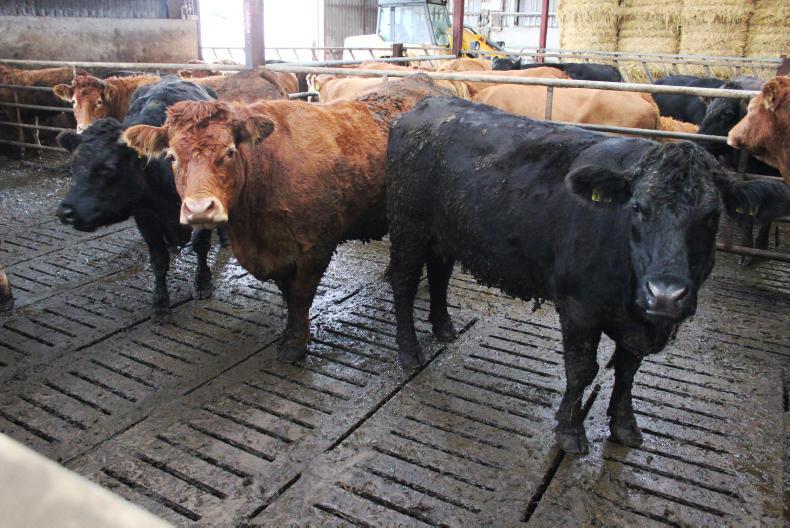
Cows have been housed in batches over the past week. We find it easier to bring in smaller groups at a time and allow them to settle in the shed, rather than housing everything on the one day.
With a staggered approach to housing, there is less stress on animals and we can be more vigilant against a possible pneumonia outbreak when working in smaller groups.
All calves were vaccinated for pneumonia in late August, as well as IBR. They were also wormed and will get follow-up treatments for live, worms and fluke around three to four weeks post-housing.
Bull calves
At the start of the week, we had 61 cows and in-calf heifers housed, along with most of the 2018 calf crop.
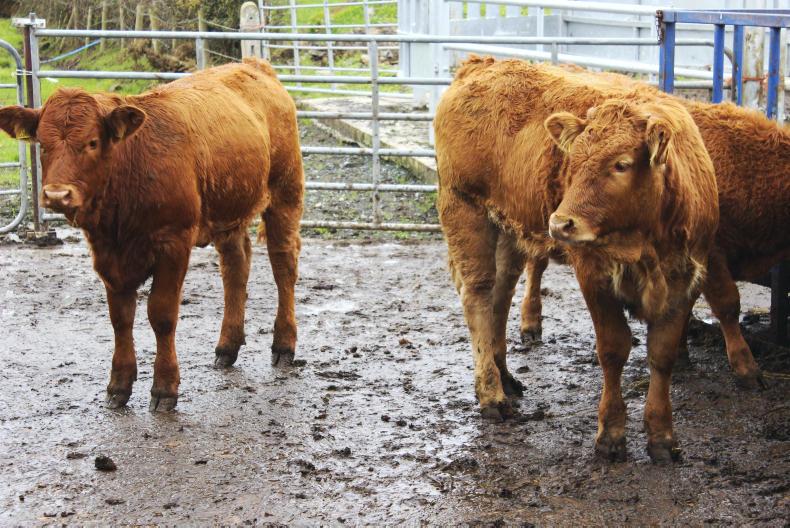
While the majority of cows have been housed in the past week, we did bring in 12 cows with the strongest bull calves at foot in mid-October and weaned them.
These calves were weighed and averaged just over 300kg liveweight. Calf weights ranged from 280kg to 390kg.
With most of these calves born in late March to early April, they would be approximately 180 to 190 days old.
Making an allowance for birth weight, the bull calves will have gained approximately 1.37kg/day to weaning. Calves were fed 1kg/day of concentrate through the creep feeder since late July and this also had a positive effect on weight gains.
Compared with last year, bull calves are 30kg heavier at this point of the year. It took the 2017-born calves another eight weeks to reach the same weight as this year’s calves.
Finishing
The reason the bulls were weaned and housed was to get them on to a growing ration for finishing next year. They are currently on 4kg/day of a growing ration and top-quality silage.
The remaining bull calves currently weigh 280kg to 300kg liveweight and will be weaned this weekend. Once weaned, they will be moved on to the same level of growing ration.
Meal levels will be increased by Christmas and built up to ad-lib levels by March. The target is to get bulls to a finishing weight of 680kg liveweight to produce a 400kg carcase.
Mixed scanning results for spring-calving cows
Cows were scanned in early September. Stock bulls were running with 60 cows and 20 heifers from 15 May.
At scanning, there were 15 cows not in-calf. However, these animals had all been running in one group with a new Simmental stock bull. Unfortunately, the bull was injured and had to be culled in mid-July.
Scanning shows he served eight cows before he was injured. We sourced a second Simmental bull to cover cows, but there was a gap of nine days between the first bull being injured and the second being sourced.
Therefore, we will rescan the empty cows in the coming week, as it would have been too early to determine if they are settled in-calf to the second Simmental bull.
Slip in calving pattern
Unfortunately, this means there will be a slip in the calving spread this year. We had been making great strides to bring calving dates forward into March and April.
However, some of the cows that calved in March 2018 will now have slipped and will most likely calve in April 2019. This isn’t a huge problem and I think we will be able to pull these cows forward again.
Replacements
Out of the 20 heifers marked for breeding this year, 16 are scanned in-calf. To help build numbers and safeguard the possibility of a higher culling rate, we have also purchased 12 in-calf heifers from a farmer previously involved in the programme.
Once the second scanning has been completed and cull cows have been removed from the herd, we are hoping to have approximately 75 cows settled in calf for next spring.
This should increase the chance of hitting our target of weaning 70 calves next autumn. We have four cows to cull before Christmas and five cows were killed off grass in September.
Cows are being culled mainly due to old age. One cow that was culled was 16 years old, yet still made £1,140 when sold. Other cows are being culled due to a lack of milk.
With cull cows worth a lot of money, they are covering the cost of rearing replacement heifers within the herd.
Date for diary
Autumn farm walk on the farm of Fionbharr Hamill, 18 Bannaghan Road, Downpatrick, BT30 7JR, on Thursday 29 November at 2pm.
Topics covered include winter feeding, grazing forage brassicas and finishing systems.
Read more
Housing coincides with heavy rainfall in Newford Farm
Watch: winter feed budgets – calculating demand
At the start of this week, we still had 22 cows and calves at grass. They entered their last paddock on Sunday and will be housed by this weekend.
Once these animals are housed, that will be the end of the grazing season for 2018. After a difficult start to the year, it turned out to be an excellent grazing season, despite drought hindering grass growth in July.
During this period, we fed 20 bales of silage to cows to stretch grass covers. The bales were made from surplus grass on grazing paddocks in May and June.
Since then, grass growth has been excellent and enabled us to make 15 acres of third-cut silage in September and take out six acres for reseeding in late August.
Normally, this ground is required to extend grazing in autumn. But this year, we were able to go without it and still have sufficient grass for cows.
Housing
Cows have been housed in batches over the past week. We find it easier to bring in smaller groups at a time and allow them to settle in the shed, rather than housing everything on the one day.
With a staggered approach to housing, there is less stress on animals and we can be more vigilant against a possible pneumonia outbreak when working in smaller groups.
All calves were vaccinated for pneumonia in late August, as well as IBR. They were also wormed and will get follow-up treatments for live, worms and fluke around three to four weeks post-housing.
Bull calves
At the start of the week, we had 61 cows and in-calf heifers housed, along with most of the 2018 calf crop.
While the majority of cows have been housed in the past week, we did bring in 12 cows with the strongest bull calves at foot in mid-October and weaned them.
These calves were weighed and averaged just over 300kg liveweight. Calf weights ranged from 280kg to 390kg.
With most of these calves born in late March to early April, they would be approximately 180 to 190 days old.
Making an allowance for birth weight, the bull calves will have gained approximately 1.37kg/day to weaning. Calves were fed 1kg/day of concentrate through the creep feeder since late July and this also had a positive effect on weight gains.
Compared with last year, bull calves are 30kg heavier at this point of the year. It took the 2017-born calves another eight weeks to reach the same weight as this year’s calves.
Finishing
The reason the bulls were weaned and housed was to get them on to a growing ration for finishing next year. They are currently on 4kg/day of a growing ration and top-quality silage.
The remaining bull calves currently weigh 280kg to 300kg liveweight and will be weaned this weekend. Once weaned, they will be moved on to the same level of growing ration.
Meal levels will be increased by Christmas and built up to ad-lib levels by March. The target is to get bulls to a finishing weight of 680kg liveweight to produce a 400kg carcase.
Mixed scanning results for spring-calving cows
Cows were scanned in early September. Stock bulls were running with 60 cows and 20 heifers from 15 May.
At scanning, there were 15 cows not in-calf. However, these animals had all been running in one group with a new Simmental stock bull. Unfortunately, the bull was injured and had to be culled in mid-July.
Scanning shows he served eight cows before he was injured. We sourced a second Simmental bull to cover cows, but there was a gap of nine days between the first bull being injured and the second being sourced.
Therefore, we will rescan the empty cows in the coming week, as it would have been too early to determine if they are settled in-calf to the second Simmental bull.
Slip in calving pattern
Unfortunately, this means there will be a slip in the calving spread this year. We had been making great strides to bring calving dates forward into March and April.
However, some of the cows that calved in March 2018 will now have slipped and will most likely calve in April 2019. This isn’t a huge problem and I think we will be able to pull these cows forward again.
Replacements
Out of the 20 heifers marked for breeding this year, 16 are scanned in-calf. To help build numbers and safeguard the possibility of a higher culling rate, we have also purchased 12 in-calf heifers from a farmer previously involved in the programme.
Once the second scanning has been completed and cull cows have been removed from the herd, we are hoping to have approximately 75 cows settled in calf for next spring.
This should increase the chance of hitting our target of weaning 70 calves next autumn. We have four cows to cull before Christmas and five cows were killed off grass in September.
Cows are being culled mainly due to old age. One cow that was culled was 16 years old, yet still made £1,140 when sold. Other cows are being culled due to a lack of milk.
With cull cows worth a lot of money, they are covering the cost of rearing replacement heifers within the herd.
Date for diary
Autumn farm walk on the farm of Fionbharr Hamill, 18 Bannaghan Road, Downpatrick, BT30 7JR, on Thursday 29 November at 2pm.
Topics covered include winter feeding, grazing forage brassicas and finishing systems.
Read more
Housing coincides with heavy rainfall in Newford Farm
Watch: winter feed budgets – calculating demand





SHARING OPTIONS