


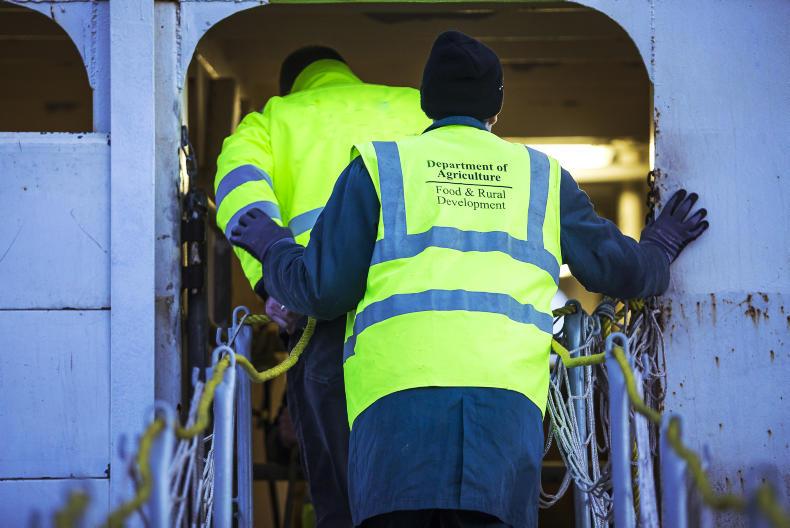
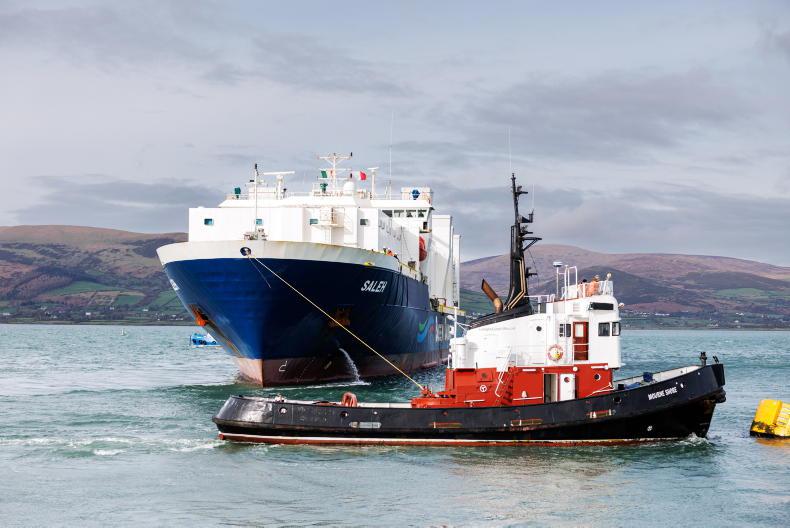
Live cattle exports to non-EU markets are resuming after a three-month lull. A boatload of slaughter weight bulls will leave Cork Port for Libya in three weeks’ time. The order is being filled by Curzon Livestock, which sent a number of boatloads to Libya during the summer.
The shipment will include Friesian, Angus, Hereford and continental breed bulls in the weight range of 400kg to 460kg.
The firm says it has bought a significant share of the cattle already. It hopes to send further boatloads over the coming months.
Exports from Ireland to the bigger Turkish market remain stalled following the weakening of the Turkish lira against the euro in August.
Turkish buyers switched to buying from Brazil – the Brazilian real also weakened – and continue to buy there. While the lira is strengthening against the euro, there is no indication of contracts for Irish cattle before year end.
Spanish demand high
However, while exports of Irish cattle to non-EU markets have now fallen behind 2017 levels, exports to EU markets are buoyant and running well ahead of last year.
Demand for Irish cattle has been particularly high in Spain this year.
Total exports to Spain for 2018 now stand at 87,954 head. That is almost double the 49,850 head exported in the same period last year.
There is no sign of this strong demand falling off. Over the last five weeks, the number of Irish cattle going to Spain averaged 1,147 head per week – compared to just 256 per week for the corresponding week of 2017.
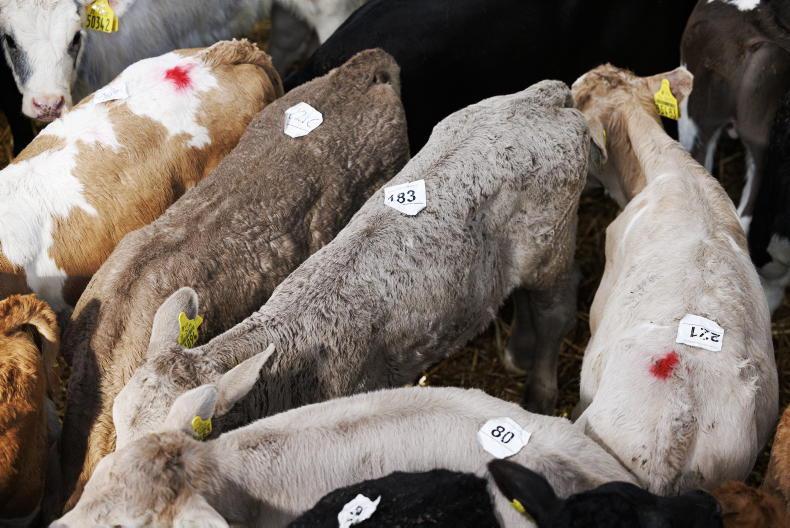
For most of the year, the higher exports to Spain have been driven by strong calf numbers. However, since mid-August, demand for weanlings has increased. This has helped bring the total number of weanlings exported for the year to date to 28,898, up by 2,640 head on 2017.
In the week ending 18 November 2018, exports to Spain included 594 calves (517 males and 77 females), 380 weanlings (288 male and 92 female), 125 stores (58 males and 67 females) and 18 animals over 21 months.
Exports of calves have been a mixture of Friesian, Angus and Hereford. Exports of weanlings have been similar and also included some plainer-type continental cross bulls.


SHARING OPTIONS