


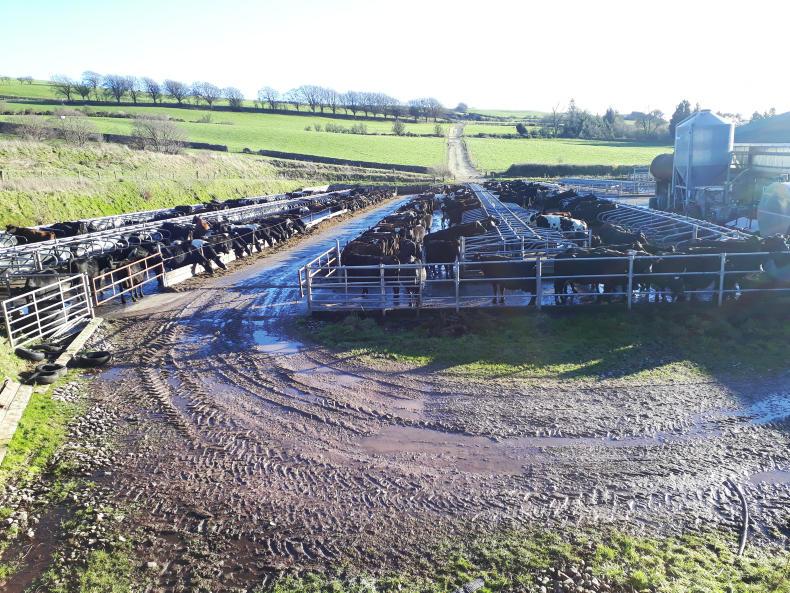
After a terrible spring, followed by a very dry summer, finally we have had a good autumn.
Milk is currently up 20% on the same time last year and cow condition is very good for 80% of the herd. The other 20% have been dry for some three weeks and hopefully this will give them time to calve down in good shape.
We have about 50 cows that are overfat and I have selected these to be wintered on rougher ground. This should keep them in check and it means we have less feed to find, less slurry, work, etc. On the issue of winter fodder, there should be enough feed to last into early April, but certainly nothing to spare.
We are drying off the remainder of the heifers this week. That means there will be 390 or so milking for the next two to three weeks, with all cows to be dried off by 20 December.
We are starting to think about not using antibiotic dry cow tubes on cell count cows under 50. This will be us dipping our toes in the water slightly, but it seems to be the way forward.
We have all but weaned ourselves off using antibiotics in calves, just by changing our management strategy, so the less used going forward the better – it will save a lot of money, if nothing else.
Once cows are dry, on 4 January they will get a six-month high selenium/high iodine bolus and a drench for fluke at the same time.
Stocking
We are proceeding down the route of lowering stocking rate to the good old cow to the acre or 2.5 to the hectare. What we have found in recent years is production off-farm is actually better from fewer cows.
In reality, it is probably just the fact that we have been a bit more pro-active in getting rid of under-performing cows, resulting in less pressure on cows and man alike.
The plan going forward in 2019 is to get 4,800 litres per head from 700 cows, feeding 675kg concentrate.
Youngstock are now on their winter regime. We have 190 heifers in total, with 75 of these slightly behind target weight. They are being housed in a slatted shed and receiving good-quality silage and 2.5kg/head of cake. The remainder are on a 150-day rotation on grass, and are being allocated 0.4-0.5ha/day.
This grazing should last until the end of March, at which point we will start the spring round of grazing again. In addition, the heifers are getting 1kg of cake to make sure they maintain their weight.
Even though they are well on target, we are taking no chances. The heifers will all be weighed again mid-January and, if necessary, adjustments will be made.



SHARING OPTIONS