


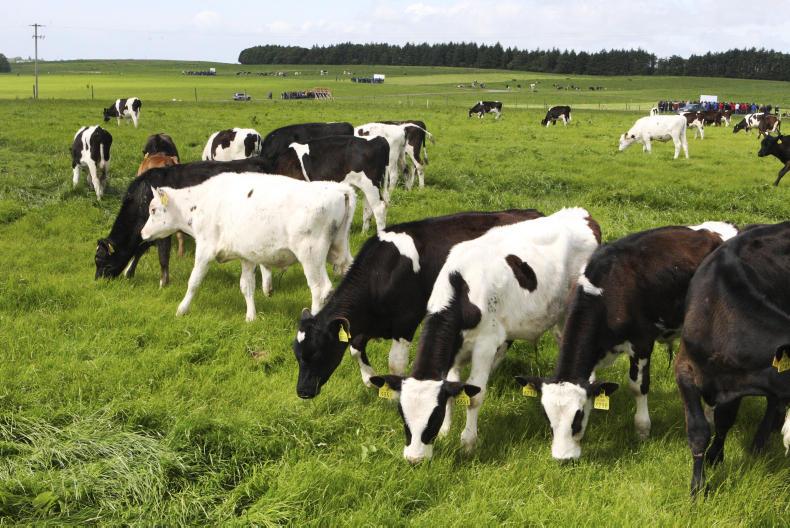
Dairy beef animals have an advantage over suckler-bred animals in the targets set by retailers, a commercial manager with Dawn Meats has said.
Speaking at a conference at the Lismullin Institute, Richard Booth, commercial manager with Dawn Meats, said when it comes to servicing their main retail markets, processors are seeking a beef carcase of 280kg to 360kg and grades of O= or better.
Booth said that below that weight and grade meat was considered poor and traded into commodity markets, which gave a poor return. Above the weight, steaks would not fit into predetermined pack sizes and had to be sold at a discounted price.
He said processors were driven by retailers who sought products that could fit in predetermined pack sizes with a set price, rather than on a per-kilo basis.
While farmers may define quality based on size, conformation and grade, he said, consumers bought with their eyes and determined meat quality mainly on tenderness, as well as marbling and colour.
Dairy beef
On dairy beef, Booth said that, with the right genetics, dairy beef often gave a product closer to what the market wanted than what the suckler animal provided. Along with the carcase weight, he said dairy breeds such as Angus usually marbled better than their continental counterparts.
However, he emphasised that there was too much variability in calf quality. Booth said there had been a 13kg drop in the average carcase weight in recent years, driven primarily by underweight animals.
Booth said the challenge would be to find a way to incentivise dairy farmers to use better beef genetics. At present, many dairy farmers are selecting sires primarily for easy calving and shorter gestation length.
He concluded by saying Ireland was trading into high-price markets based on its reputation. Damage to this reputation would push Irish products back in commodity markets, which would be bad for beef and dairy.




SHARING OPTIONS