


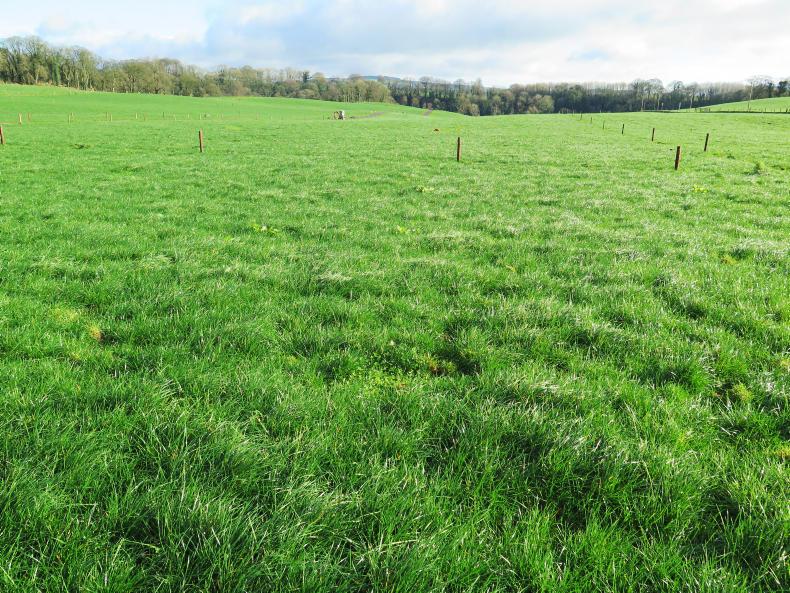
I was in Moorepark on Monday morning. Average farm cover on some of the trial plots was over 1,200kg/ha – the highest opening farm cover in years. In a nutshell, it means there is more than enough grass.
Researcher Mike Egan went through some of the practicalities of managing such high covers. He says that heavy covers (over 1,800kg) should be grazed by the first week of March, otherwise their quality will deteriorate, with less tillering.
Most farmers should wait until they have a number of cows calved and have an appetite built up before putting animals on these heavy covers. The best time to graze is probably the end of February, according to Mike.
February plans
Mike believes that the more ground grazed in February the better. He has looked at two grazing speeds in February, a high (40% grazed) and a low (30%). His research shows that grazing more in February leads to higher overall grass growth in March.
Mike says that farmers should do a minimum of five grass walks between now and the end of March. Just using the spring rotation planner is not good enough, as you need to know average farm cover and growth rates.
Covers should not dip below 500kg/ha between now and early April.
Post-grazing height
Mike says that post-grazing height is critically important, especially in spring and autumn. A high post-grazing height will lead to a higher growing point.
When the grass tillers, new tillers emerge from the growing point. If the growing point is above 1.5cm from the soil, then the tiller will die as the root needs to be in contact with soil.
The target post-grazing height should be 3.5cm in the first rotation.



SHARING OPTIONS