The first cow calved on Tullamore farm this week and we talked to Shaun Diver to see what else has been happening on the Irish Farmers Journal demo farm.
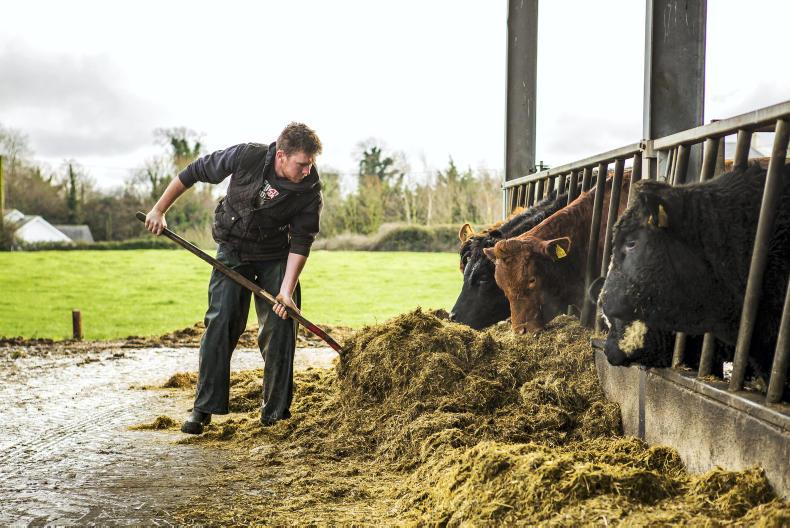
Farm manager Shaun Diver at Tullamore farm feeding silage to cows ready to calve in the next month. \ Philip Doyle
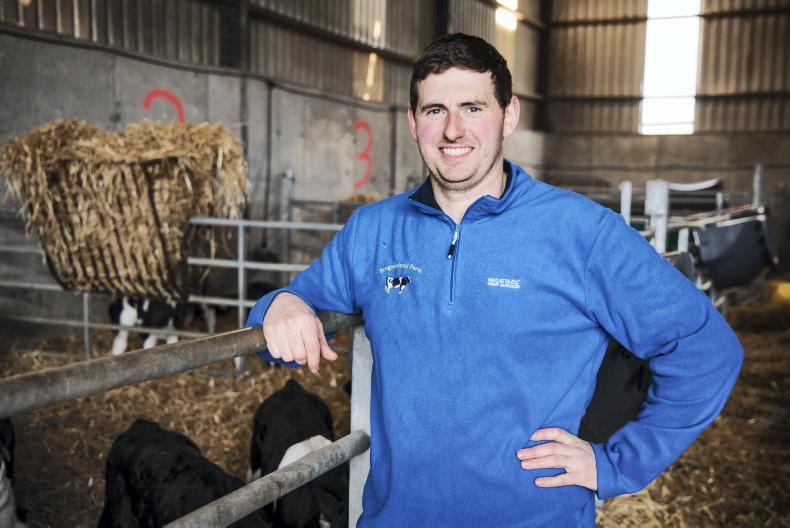
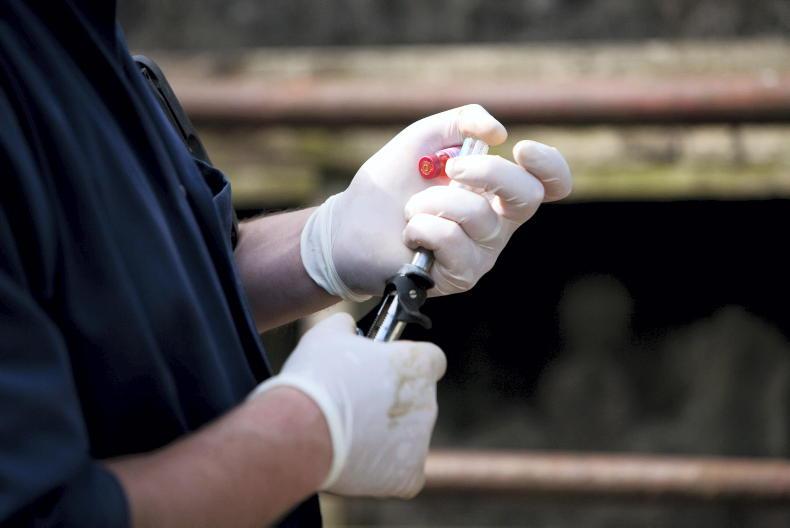
Pictured at the Irish Farmers Journal farm in Tullamore at a Beef Health Masterclass Farm Walk and Talk are Donal Lynch and Shaun Diver. \ Patrick Browne
The first grass walk took place last week on Tullamore Farm. Farm manager Shaun Diver is very happy with grass growth over the winter months. Average farm cover at closing on 19 November was 819 kg/DM/ha. 190 ewes continued to graze over the winter months. All ewes were grazing off heavy covers of grass on the wettest areas of the farm until scanning on 14 January. They were then closed up on a paddock and fed silage and hay until this week when any triplet-bearing ewes were housed. Twins and singles remain outdoors.
Winter growth
Average farm cover on 1 February was 1,020 kg/DM/ha. This meant average growth over the winter period was 2.75kg/DM/ha/day. Growth was actually higher as sheep were grazing during the winter months. The highest growth recorded was 15kg/DM/ha/day on a sheltered paddock closed at 825kg/DM/ha/day on 11 November and it had 2,050 kg/DM/ha on 1 February.
ADVERTISEMENT
Fertiliser
Four tonnes of urea is in the yard ready for application as soon as the weather allows. Weanling heifers have about two weeks left grazing the forage crop (Interval) and will move to grass once the crop is finished. With the heavy covers of grass, it would probably be better to move these to grass straight away but there is a risk of Interval flowering so we will graze it as quick as possible. The first cow calved on Tuesday night - a QCD heifer calf - and with the calving pens full, we are looking at a busy few weeks on Tullamore farm.
The plan is that, weather permitting, cows and calves will be turned out as soon as possible into sheltered paddocks around the yard area. Cows will receive a magnesium bolus at turnout to prevent tetany and calves will be tagged and brought in at a later date for dehorning. If weather conditions don’t allow turnout, a temporary creep will be constructed on a centre passage on one of the slatted sheds. Other jobs this week include applying for the BEEP scheme - it will be worth close to €4,000 to Tullamore Farm and we can't ignore that amount given the tight margins the farm is operating on.
This content is available to digital subscribers and loyalty code users only. Sign in to your account, use the code or subscribe to get unlimited access.
The reader loyalty code gives you full access to the site from when you enter it until the following Wednesday at 9pm. Find your unique code on the back page of Irish Country Living every week.
CODE ACCEPTED
You have full access to the site until next Wednesday at 9pm.
CODE NOT VALID
Please try again or contact support.
The first grass walk took place last week on Tullamore Farm. Farm manager Shaun Diver is very happy with grass growth over the winter months. Average farm cover at closing on 19 November was 819 kg/DM/ha. 190 ewes continued to graze over the winter months. All ewes were grazing off heavy covers of grass on the wettest areas of the farm until scanning on 14 January. They were then closed up on a paddock and fed silage and hay until this week when any triplet-bearing ewes were housed. Twins and singles remain outdoors.
Winter growth
Average farm cover on 1 February was 1,020 kg/DM/ha. This meant average growth over the winter period was 2.75kg/DM/ha/day. Growth was actually higher as sheep were grazing during the winter months. The highest growth recorded was 15kg/DM/ha/day on a sheltered paddock closed at 825kg/DM/ha/day on 11 November and it had 2,050 kg/DM/ha on 1 February.
Fertiliser
Four tonnes of urea is in the yard ready for application as soon as the weather allows. Weanling heifers have about two weeks left grazing the forage crop (Interval) and will move to grass once the crop is finished. With the heavy covers of grass, it would probably be better to move these to grass straight away but there is a risk of Interval flowering so we will graze it as quick as possible. The first cow calved on Tuesday night - a QCD heifer calf - and with the calving pens full, we are looking at a busy few weeks on Tullamore farm.
The plan is that, weather permitting, cows and calves will be turned out as soon as possible into sheltered paddocks around the yard area. Cows will receive a magnesium bolus at turnout to prevent tetany and calves will be tagged and brought in at a later date for dehorning. If weather conditions don’t allow turnout, a temporary creep will be constructed on a centre passage on one of the slatted sheds. Other jobs this week include applying for the BEEP scheme - it will be worth close to €4,000 to Tullamore Farm and we can't ignore that amount given the tight margins the farm is operating on.
If you would like to speak to a member of our team, please call us on 01-4199525.
Link sent to your email address
We have sent an email to your address. Please click on the link in this email to reset your password. If you can't find it in your inbox, please check your spam folder. If you can't find the email, please call us on 01-4199525.
ENTER YOUR LOYALTY CODE:
The reader loyalty code gives you full access to the site from when you enter it until the following Wednesday at 9pm. Find your unique code on the back page of Irish Country Living every week.







SHARING OPTIONS