



Last week, the Irish Farmers Journal published the British government’s plans in relation to trade of agricultural products in the event of a no-deal Brexit.
It makes for difficult reading for farmers in Ireland and here is what it will mean, sector by sector.
Dairy exports were worth €4bn to the Irish economy in 2018, with 26% going to the UK. The main Irish export to the UK is cheddar, which accounts for €800m of the €4m total.
If the UK was to impose full WTO tariff which it has the option to do. Irish cheddar, which is currently worth approximately €3,000/t would have the WTO tariff of €1,671/t applied, increasing its cost on the UK market to €4,671/t.
This would hit dairy prices in the Republic of Ireland, though with the industry already selling 75% of its output outside the UK and 40% outside the EU it is likely that alternative markets could be developed in the medium term. For dairy farmers in the North, for the 33% who send their milk south for processing, it would put an end to that business.
However, with sufficient drying capacity in Northern Ireland (NI), milk could be processed locally and sold as powder.
It is likely that this would reduce the value in pence per litre paid to farmers, though in time they could exploit the cheddar opportunity previously filled by Republic of Ireland exporters. If (as it is thought to be under consideration) the UK was to add a tariff of 5-15% it would be more manageable, though still a cost to trade.
Verdict – survival, but at a cost.
The UK market takes 56% of Irish pig exports and 466,000 pigs went to NI last year for processing. Irish pigmeat is sold at global market prices, so if the UK was to establish a tariff-free quota on pigmeat then Ireland could still compete in the UK market. If it imposes a full WTO tariff, then it would effectively exclude Irish pig meat.
However, as it is produced at around global market price, then after a period of horrendous disruption alternative markets are likely to be found; especially in China, if as forecast demand grows there in the second half of this year.
If the full WTO tariff is imposed on live pigs then the movement of pigs to the north would cease after Brexit.
For the industry in the north, the issue will be getting non-EU health certificates recognised in other export markets which is likely to take some time and frustrate exports. Like with dairy, if it is a tariff of 5-15%, it would be more manageable
Verdict – again survival, but at a cost and with major market disruption.
A no-deal Brexit will have opposite effects either side of the Irish border for sheep farmers.
The UK is the third biggest exporter of sheep meat in the world, after Australia and New Zealand (NZ), with the main market being the EU. Also, NI sent half its lamb crop (423,000) across the border for processing in 2018.
This would all end with the application of WTO tariffs, and in addition the UK market will be committed to accepting a huge tranche of the NZ lamb quota that it brought into the EU when it joined in 1973.
South of the border it is the opposite picture, as with the UK effectively out of the EU market and perhaps 100,000t of the NZ lamb quota gone with it, there will be considerable market opportunity for Irish sheep meat exports in the EU, particularly as the EU was already a net importer of sheep meat when the UK was a member.
Verdict – collapse in Northern Ireland, opportunity for the Republic of Ireland.
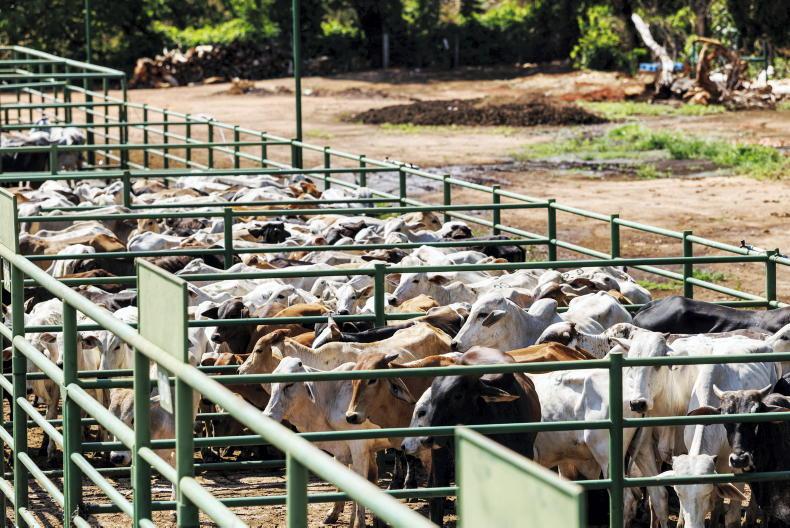
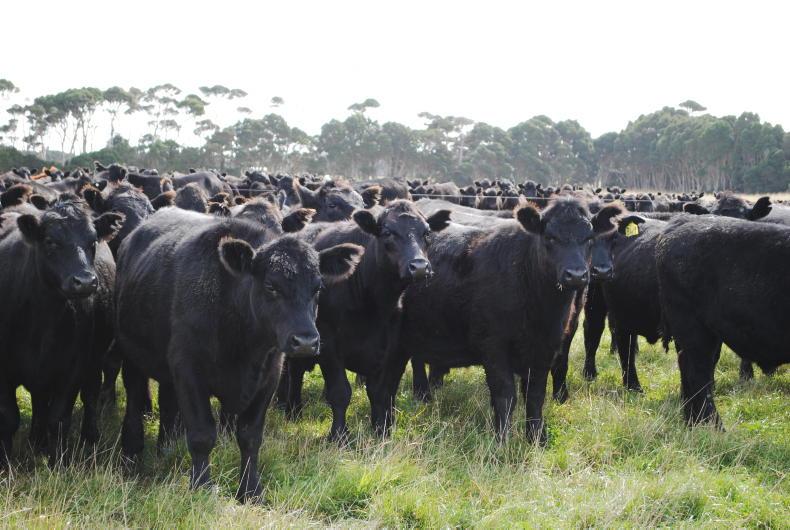
A proposal by the UK to create a tariff-free or low-tariff quota, similar to its annual import requirement for beef, is very bad news for Irish exports.
The UK produces approximately 70% of the beef that it consumes, with three quarters of the 30% imported coming from Ireland. British, and to a slightly lesser extent NI, farmers get approximately a 10% premium on the Irish price.
In the event of a tariff-free quota post-Brexit, the 300,000t of the UK beef import currently supplied by the EU will be open to all beef exporting countries in the world, becoming an attractive market for Brazil, Argentina and Uruguay, that between them exported 250,000t of beef to the EU in 2018.
Argentina and Brazil produce similar beef to EU R3 steers for €2.20/kg, and this could displace Irish beef as the preferred import.
The problem for Irish farmers is that unlike dairy or pigmeat, world market prices are so far below Irish prices that alternative markets cannot be developed outside the EU for anything but a tiny fraction of production.
This means that Irish exports destined for the UK will go to the EU, collapsing prices there as well as in Ireland.
Northern Irish and British beef will still command a premium over imports and if the imports are really cheap, coming from Brazil or Argentina, the premium could rise to 15% or 20%, much more than the 10% premium on Irish imports.
However, even a 20% premium on beef from a carcase that is produced at €2.20/kg would represent a serious fall in British beef prices.
Verdict – Irish beef price will collapse. NI and Britain will also collapse, but to a lesser extent because of the Red Tractor premium.



SHARING OPTIONS