In a typical spring, grass grows slowly during February and early March and usually only increases in late March.
But this spring seems to be different; that’s if the forecasters are to be believed.
The traditional target is to have 30% of the farm grazed by the end of February.
This to ensure sufficient regrowth on the land you will be grazing at the start of the second rotation.
Target
But with higher than normal growth rates this year, is 30% grazed in February still the target?
I think it is, because you still need land to graze at the start of the second rotation.
If only 20% of the farm is grazed, it means you will have a high average farm cover in late March, because the grass that wasn’t grazed in February will have continued to grow.
To work out if you will hit the target, calculate how much of the farm you have grazed to date
A high average farm cover in March should be avoided, as it means a surplus of grass in early April.
This means paddocks will be skipped over for silage, thus increasing the stocking rate and the demand.
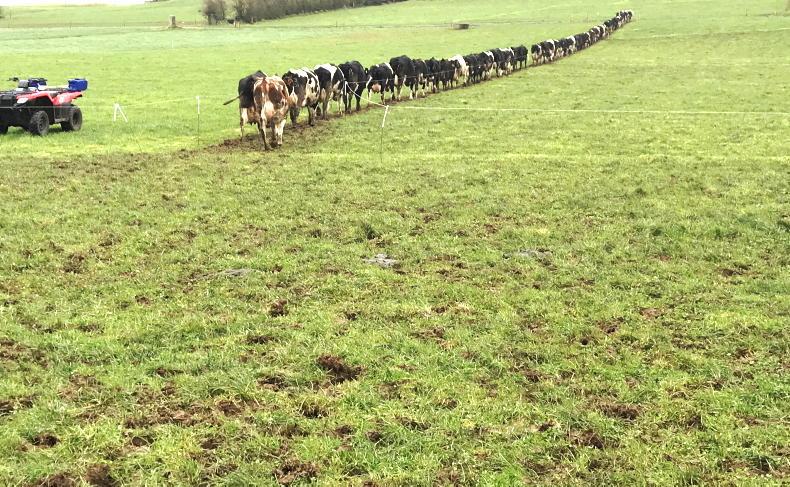
In practice, this means that the area for the cows to graze will be reduced, and if the cover of grass in that area is not high enough to sustain the herd for an 18- to 20-day rotation length, there will be a grass shortage. I think this is a very real risk this April.
Hit the target
To work out if you will hit the target, calculate how much of the farm you have grazed to date.
Do this by adding up all the paddocks grazed and dividing by the total area of the farm.
Next, work out how much of the farm you will graze over the next 10 days.
Calculate this by dividing the expected area that will be grazed by the total farm area.
How much area will be grazed per day is governed by the number of cows and the cover of grass.
There are only 10 days left to get it right
Take an average for the next 10 days. Add the two together to work out the total area to be grazed in February.
If less than 30%, ask yourself what you can do to get it up.
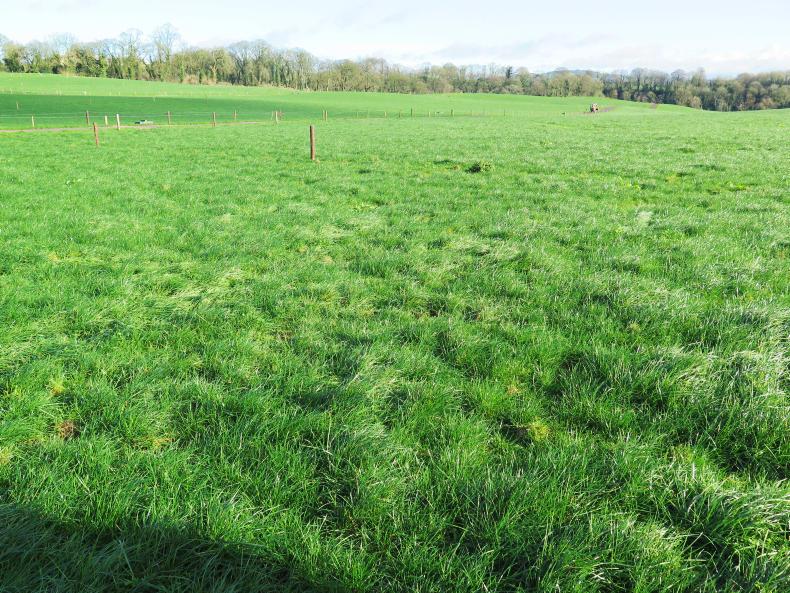
This should be looked at alongside the average farm cover. If the cover is lower than target (less than 900kg/ha) then grazing grass with other stock may not be good.
If, as is more likely the case, there is more grass than normal on the farm, then dry cows or maiden heifers should be let out.
There are only 10 days left to get it right; you can’t go back in late March and say I wished I grazed more of the land.
Read more
€500,000 in grant funding announced for milk pumps
Greenfield: milk collections start
In a typical spring, grass grows slowly during February and early March and usually only increases in late March.
But this spring seems to be different; that’s if the forecasters are to be believed.
The traditional target is to have 30% of the farm grazed by the end of February.
This to ensure sufficient regrowth on the land you will be grazing at the start of the second rotation.
Target
But with higher than normal growth rates this year, is 30% grazed in February still the target?
I think it is, because you still need land to graze at the start of the second rotation.
If only 20% of the farm is grazed, it means you will have a high average farm cover in late March, because the grass that wasn’t grazed in February will have continued to grow.
To work out if you will hit the target, calculate how much of the farm you have grazed to date
A high average farm cover in March should be avoided, as it means a surplus of grass in early April.
This means paddocks will be skipped over for silage, thus increasing the stocking rate and the demand.
In practice, this means that the area for the cows to graze will be reduced, and if the cover of grass in that area is not high enough to sustain the herd for an 18- to 20-day rotation length, there will be a grass shortage. I think this is a very real risk this April.
Hit the target
To work out if you will hit the target, calculate how much of the farm you have grazed to date.
Do this by adding up all the paddocks grazed and dividing by the total area of the farm.
Next, work out how much of the farm you will graze over the next 10 days.
Calculate this by dividing the expected area that will be grazed by the total farm area.
How much area will be grazed per day is governed by the number of cows and the cover of grass.
There are only 10 days left to get it right
Take an average for the next 10 days. Add the two together to work out the total area to be grazed in February.
If less than 30%, ask yourself what you can do to get it up.
This should be looked at alongside the average farm cover. If the cover is lower than target (less than 900kg/ha) then grazing grass with other stock may not be good.
If, as is more likely the case, there is more grass than normal on the farm, then dry cows or maiden heifers should be let out.
There are only 10 days left to get it right; you can’t go back in late March and say I wished I grazed more of the land.
Read more
€500,000 in grant funding announced for milk pumps
Greenfield: milk collections start







SHARING OPTIONS