


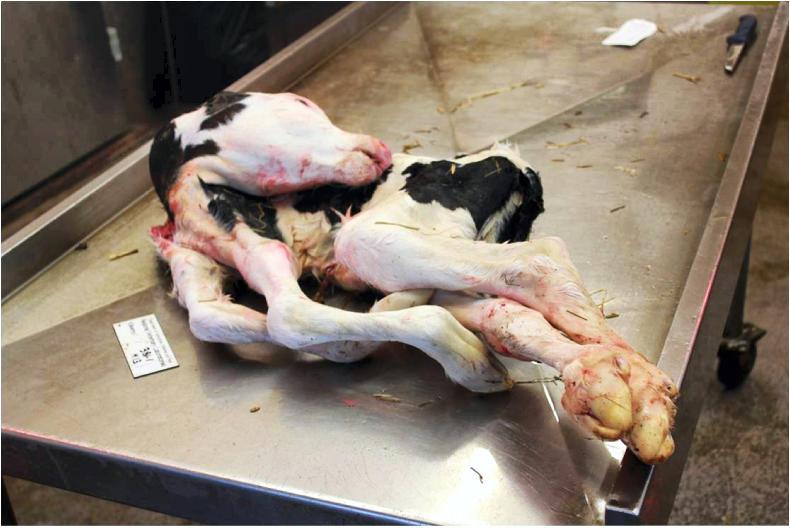
There was a sharp drop in the number of cattle testing positive for Schmallenberg (SBV) last year.
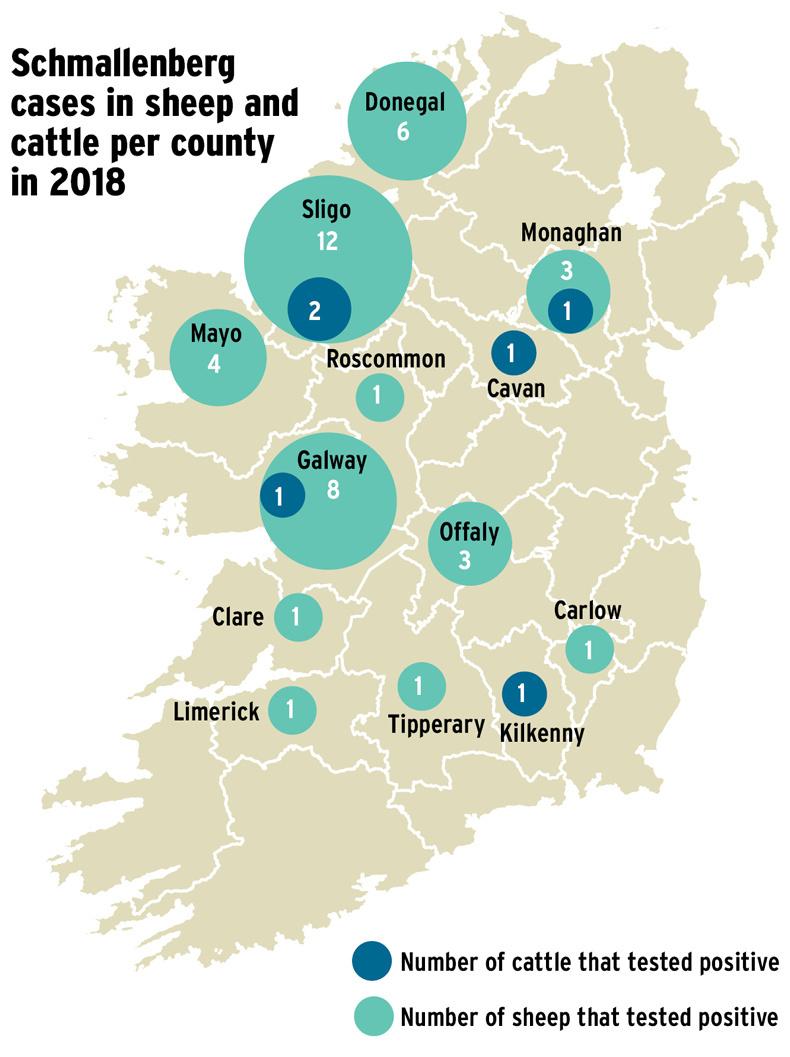
Just six cattle tested positive for the disease last year, according to the Department of Agriculture.
This marked a drop of 79% from the 28 cattle that tested positive for the disease in 2017.
Sligo recorded two cases of SBV in cattle, while Cavan, Galway, Kilkenny and Monaghan each recorded one case.
However, the number of cattle tested between 2017 and 2018 dropped substantially. Some 267 cattle were tested in 2018 compared with 915 in 2017.
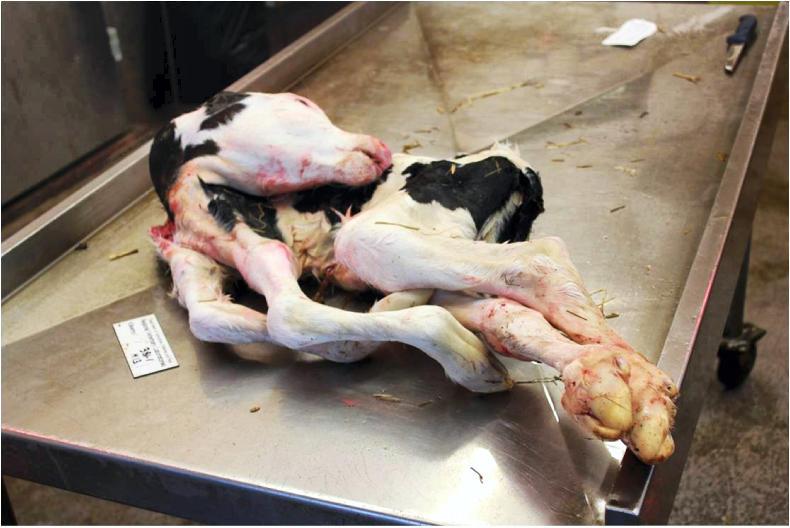
The disease can cause severe deformities and late-stage abortions in both cattle and sheep and is spread through midge saliva.
Sheep
The number of sheep testing positive for SBV has increased, with 41 cases in 2018 and 32 cases in 2017.
The number of sheep tested also increased, with 179 tested in 2017 and 309 tested in 2018.
Sligo recorded the highest number of SBV incidences in sheep, with 12 cases.
The county with the second highest number of incidences was Galway with eight cases and Donegal with six.
The disease can be highly localised and some farmers whose flocks were hit reported losing up to one-third of their spring lambs to the virus.
The greatest losses are associated with the development of deformed foetuses.
The period of susceptibility to infected midges in sheep is between days 28 and 56 of pregnancy, while in cattle it is between days 62 and 170 of gestation.
A vaccine for SBV is available in Northern Ireland and the UK, but not in the Republic.


SHARING OPTIONS