


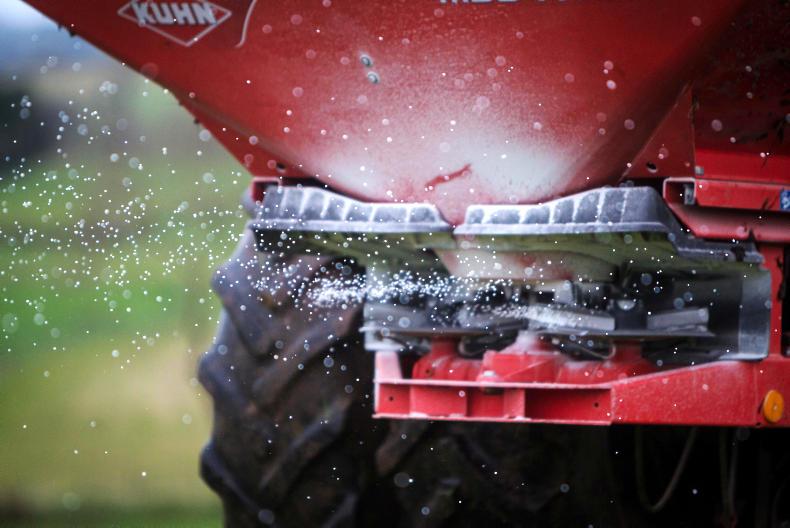
The use of artificial nitrogen, phosphorus and potassium jumped by more than 10% in 2018, figures from the Department of Agriculture have revealed.
Nitrogen use increased by 10.6% from 369,089t to 408,495t during the 12 months to October 2018.
For reporting purposes, the Department’s year runs from 1 October to 30 September, as opposed to the calendar year.
Phosphorus use increased to 46,387t (up 10.7%), while potassium use reached 120,267t, an increase of 10.6%.
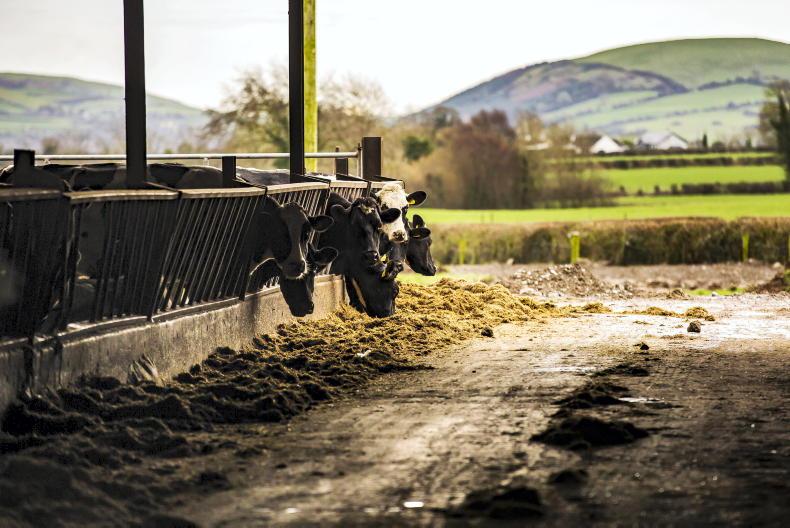
Dairy intensification and a push by farmers to grow extra grass following the 2018 drought are believed to be behind the jump.
The figures were presented by the Department of Agriculture at a recent Agricultural Consultants Association (ACA) environmental training day.
Emissions
Emissions from Irish agriculture require a 30% reduction by 2030 and new fertiliser formulations are part of the strategy to cost-effectively cut emissions.
Of the total nitrogen use in 2018, only 3,241t was protected urea, which represents less than 1%.
In research carried out by Teagasc, protected urea reduced losses of the GHG, nitrous oxide (N2O), by approximately 70% compared to CAN.
Leanne Roche from the Department of Agriculture pointed out that from 1 January 2021, the Minister for Agriculture can dictate what fertiliser derogation farmers can use, such as protected urea.
Nitrogen use in 2018 was 38% higher than 2011, when the lowest use of nitrogen by Irish farmers was recorded at 295,795t. However, 1999 holds the record for highest use of nitrogen, at 442,916t.





SHARING OPTIONS