



The European Commission has adopted revised rules on state aid to farmers allowing governments to provide support up to €25,000.
The maximum aid amount that can be distributed per farm over three years will rise from €15,000 to €20,000.
If a country does not spend more than 50% of its total national aid envelope on one particular agricultural sector, it may increase aid per farm to €25,000.
Flexibility
The increased ceiling for de minimus aid will allow for greater flexibility and efficiency by public authorities in times of crisis, most notably a no-deal Brexit.
Breaking: I Welcome confirmation from @PhilHoganEU of flexibilities on State aids limits for farmers and processors. This is an important first step and a clear signal of intent! pic.twitter.com/EV7hGRp5zv
— Michael Creed TD (@creedcnw) February 22, 2019
Under EU state aid rules, countries are required to notify the Commission when they intend to provide state aid and may not do so until authorised by the Commission. If amounts are small enough, as is the case for de minimus aid, EU countries do not need authorisation.
Urgent
De minimis aid is typically used when urgent action is required to support farmers in times of crisis.
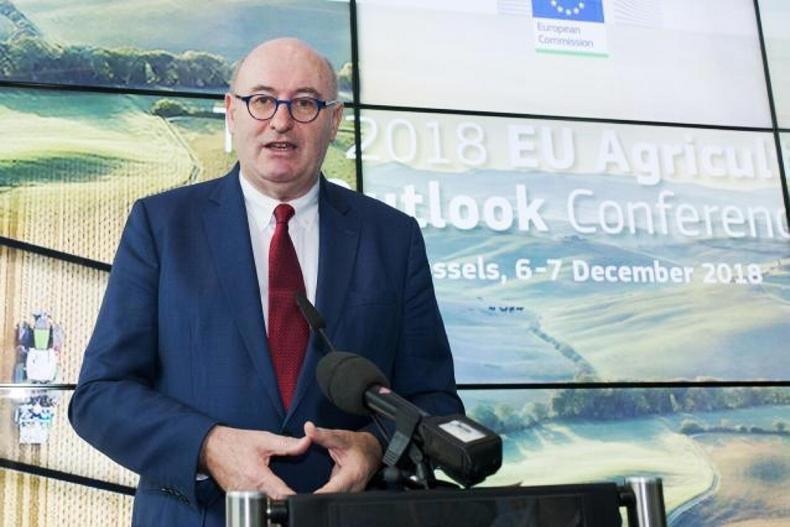
European Commissioner for Agriculture and Rural Development Phil Hogan said: “The Commission’s proposal for new state aid rules for the agricultural sector reflects the value of this form of support in times of crisis.”
To prevent any potential distortion of competition, each EU country has a maximum amount they cannot exceed. This ceiling will be set at 1.25% of the country’s agricultural output, up from 1% under current rules.
Output
In 2017, Ireland produced €8.4bn in agricultural output, meaning Ireland can provide up to €84m in de minimis aid. If countries qualify for the highest rate of support allowable, the national maximum increases to 1.5% of the annual output.
The increased ceilings come into force on 14 March and can apply retroactively.


SHARING OPTIONS