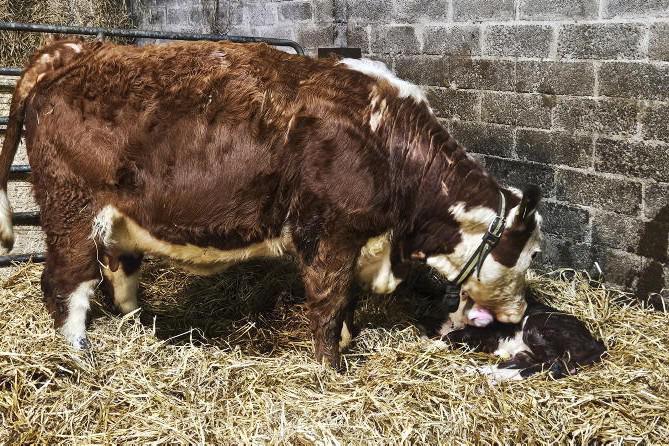
Calving has begun, with a grand total of one heifer having calved.
It’s a marked change from 2015, when over 50% of the herd calved at the end of February.
This resulted in a busier yard as invariably weather wasn’t great and stock couldn’t all get out.
As bad as the weather was last year, the workload was more relaxed. It was still compact calving, but a few weeks later. It will be the same this year.
The heifers ended up with an 11-week breeding season and there were seven weeks for the cows.
There are another five heifers due in early March and, from St Patrick’s Day onwards, things crank into overdrive, with over half of the herd due to calve in the last two weeks of the month.
As she calved late at night, I was tempted to give the calf powdered colostrum but I saw the heifer making moves to lick the calf so I went to bed and kept an eye on them via the camera
I prefer to calve the heifers before the cows. It allows a bit more time to be spent on them and, on occasion, they can be slow to take to their calves. In some cases, they don’t want to know about the calf at all.
This results in a bigger workload and space in the calving area gets tighter as the pair are left in the same pen to see if they will bond.
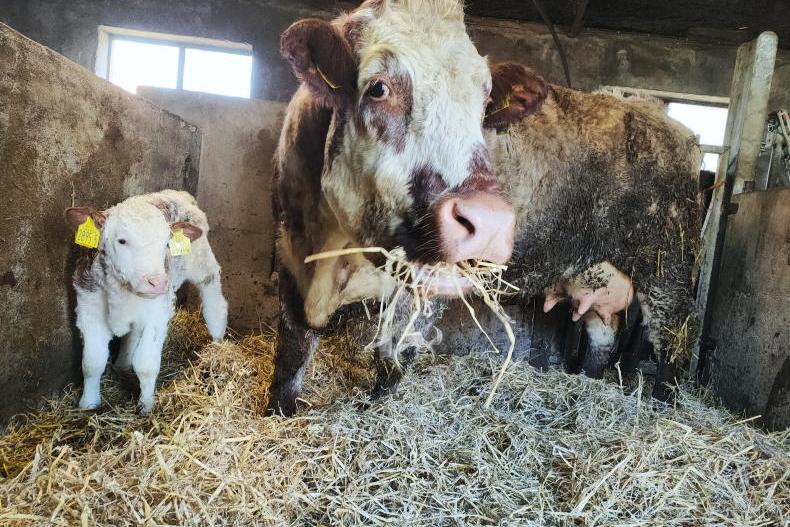
The heifer that calved was a little edgy and nervous. As she calved late at night, I was tempted to give the calf powdered colostrum but I saw the heifer making moves to lick the calf so I went to bed and kept an eye on them via the camera.
I didn’t want to spook the heifer and end up with her not taking the calf.
During the night, I could see the calf was helping himself to a feed so I could relax, knowing I had one less job to be concerned about. Hopefully, the other heifers will go the same way.
The out-wintered cows came in from the forage rape a few weeks ago and my neighbour kindly asked if I wanted to leave them back out again, as it had grown so well in the mild weather. I put the later-calving cows back out on it, which should reduce straw and silage demands for a week or two.
On the grazing front, the smaller heifers have been left off to grass.
They have access to a covered area for water and I’m also throwing them a small bit of ration to keep them on side. This helps train them into coming into the yard by following me rather than having to round them up.
It will be a case of playing the weather with them.
Next step
The next step will be to train the replacement heifers to on-off grazing. The first day out is the hardest.
That’s when the potential for bovine over-enthusiasm and broken fences is at its highest.
Thankfully, the genomic tags arrived at the start of the week, just in the nick of time. I will put these in while all the heifers are within easy reach.
The replacement heifers will also get their BVD booster. With these jobs done, it will give a bit more flexibility as to when these cattle can go to the out-farm.
I’d be hoping the next time this group will need to be in a yard will be for TB-testing during the summer. That’s the plan anyway, but everyone knows plans tend to take a mind of their own when dealing with animals.
Read more
Farmer writes: has spring sprung?
Farmer Writes: back to reality with spring calving
Calving has begun, with a grand total of one heifer having calved.
It’s a marked change from 2015, when over 50% of the herd calved at the end of February.
This resulted in a busier yard as invariably weather wasn’t great and stock couldn’t all get out.
As bad as the weather was last year, the workload was more relaxed. It was still compact calving, but a few weeks later. It will be the same this year.
The heifers ended up with an 11-week breeding season and there were seven weeks for the cows.
There are another five heifers due in early March and, from St Patrick’s Day onwards, things crank into overdrive, with over half of the herd due to calve in the last two weeks of the month.
As she calved late at night, I was tempted to give the calf powdered colostrum but I saw the heifer making moves to lick the calf so I went to bed and kept an eye on them via the camera
I prefer to calve the heifers before the cows. It allows a bit more time to be spent on them and, on occasion, they can be slow to take to their calves. In some cases, they don’t want to know about the calf at all.
This results in a bigger workload and space in the calving area gets tighter as the pair are left in the same pen to see if they will bond.
The heifer that calved was a little edgy and nervous. As she calved late at night, I was tempted to give the calf powdered colostrum but I saw the heifer making moves to lick the calf so I went to bed and kept an eye on them via the camera.
I didn’t want to spook the heifer and end up with her not taking the calf.
During the night, I could see the calf was helping himself to a feed so I could relax, knowing I had one less job to be concerned about. Hopefully, the other heifers will go the same way.
The out-wintered cows came in from the forage rape a few weeks ago and my neighbour kindly asked if I wanted to leave them back out again, as it had grown so well in the mild weather. I put the later-calving cows back out on it, which should reduce straw and silage demands for a week or two.
On the grazing front, the smaller heifers have been left off to grass.
They have access to a covered area for water and I’m also throwing them a small bit of ration to keep them on side. This helps train them into coming into the yard by following me rather than having to round them up.
It will be a case of playing the weather with them.
Next step
The next step will be to train the replacement heifers to on-off grazing. The first day out is the hardest.
That’s when the potential for bovine over-enthusiasm and broken fences is at its highest.
Thankfully, the genomic tags arrived at the start of the week, just in the nick of time. I will put these in while all the heifers are within easy reach.
The replacement heifers will also get their BVD booster. With these jobs done, it will give a bit more flexibility as to when these cattle can go to the out-farm.
I’d be hoping the next time this group will need to be in a yard will be for TB-testing during the summer. That’s the plan anyway, but everyone knows plans tend to take a mind of their own when dealing with animals.
Read more
Farmer writes: has spring sprung?
Farmer Writes: back to reality with spring calving






SHARING OPTIONS