



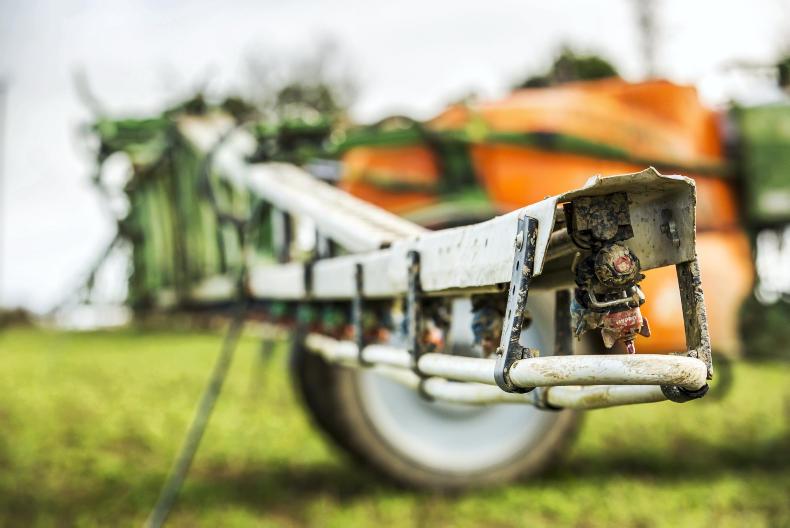
The ban on fungicide active chlorothalonil will cost €23.75m in combinable crops output every year, the Irish Farmers Journal estimates.
The European Commission decided not to re-register the active on Thursday last week.
For Irish wheat and barley growers the active is important for resistance management, as well as its direct activity against septoria and ramularia.
Without chlorothalonil, yield losses to combinable crops could be around 0.5t/ha on average. This equates to a loss of 125,000t from the national wheat and barley crop – €23.75m in value. There will be other products used which will at least partially do the job that chlorothalonil did, but it is difficult to get a handle on this in terms of value.
The timing of chlorothalonil’s removal from the market remains uncertain, but current indications suggest the end of May 2020.
IFA grain committee chair Mark Browne said the loss of the active is going to compound the income crisis in the sector.
“Grain farmers have already experienced successive years of poor returns, which has resulted in a 20% reduction of 67,500ha in the total area planted to the main cereal crops over the past 10 years,” Browne said.
Reacting to the news, the IFA and Irish Grain Growers Group (IGGG) said that countries using chlorothalonil should not be allowed to export grains to the EU, where farmers do not have the ingredient in the toolbox.
“The one good thing about Bravo [a brand of chlorothalonil] is that it is a cost-efficient product. There will be alternatives available in the future, but will be they be as cost-effective for the farmer and will they be as effective as Bravo?” IGGG chair Bobby Miller asked.
Stephen Collins, Co Cork
“I am disappointed but not surprised. The writing was on the wall for a long time. I was resigned to the fact that it was going to be gone before now. It’s a big loss and will make it more challenging to control disease in barley. I’d be worried about the impact of resistance. I don’t think there’s any great alternative to chlorothalonil.”
Jamie Rankin, Co Donegal
“It’s another one of the few effective products in our armoury gone, especially in the northwest of Ireland where it’s very wet. With an average rainfall of 1,400mm you don’t get those dry periods to dry out any diseases. These things don’t seem to be replaced. They just seem to go.”




SHARING OPTIONS