The Irish Farmers Journal’s new dairy calf to beef programme, Thrive, was launched last week with the support of industry partners ICBF and Bord Bia, dairy companies Aurivo and Kerry, and AI companies Dovea Genetics, Munster Cattle Breeding Group and Progressive Genetics.
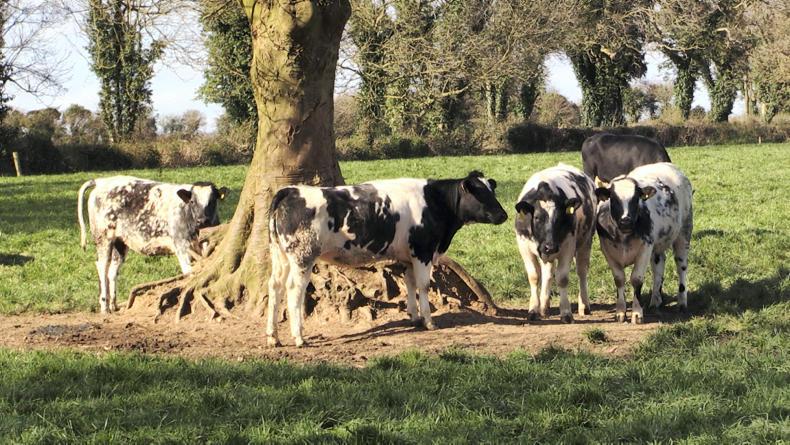
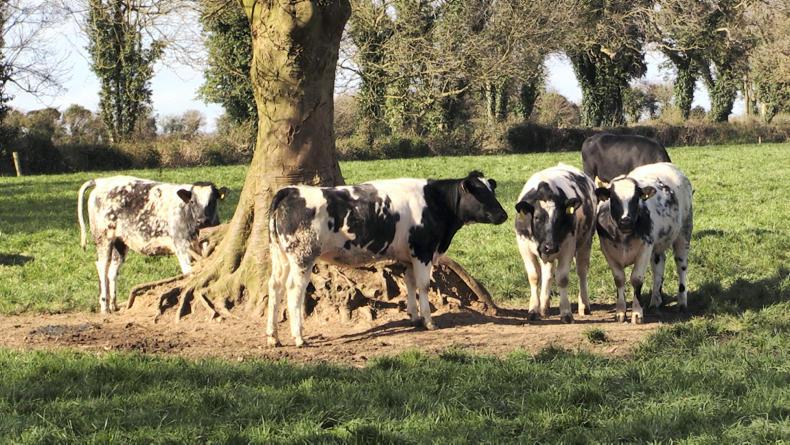
There will be eight to 10 demonstration farms involved with the programme, who will each rear between 20 to 60 calves in the first year. All calves purchased for the programme will be from AI-sired bulls. There will be a mix of Aberdeen Angus, Hereford, Limousin and Belgian Blue calves. Work is ongoing to source these calves and move them on to farms.
Twelve bulls have been chosen for the project. All of these bulls have easy-calving characteristics coupled with short gestation along with good carcase weight and conformation traits. Calves will be brought through to slaughter on the demo farms and there will be regular updates on animal performance in the Irish Farmers Journal and at farmersjournal.ie.
The aim of the programme is to showcase to both beef and dairy farmers the advantages of using bulls with high genetic merit that can produce a calf that is suitable for the market.
Steady expansion is expected for the dairy industry moving forward. In the not too distant future there could be over 1m beef-bred cattle available for processing from the dairy herd. Ensuring sufficient markets for these calves is crucial for the industry.
The experiences of those farmers involved in the programme will hopefully encourage rearing farms to develop relationships with dairy farmers to use the genetics they want. This not only provides the dairy farmer with a guaranteed outlet for their calves, but will provide the beef farmer with stock that will produce a good carcase.
Pilot phase
A pilot phase of the project was initiated by the Irish Farmers Journal in 2018 with the purchase of 102 calves. These calves were then contract-reared on the farm of John Hally just outside Cashel in Co Tipperary. Calves were male and female, Hereford, Aberdeen Angus, Limousin and Belgian Blue. They were sired by seven different sires. All physical and financial data on these calves has been collected and will be featured in the Irish Farmers Journal in the coming weeks, including the impressive growth rates for the first year.
Technical focus
Over the course of the four-year programme, we will focus on a number of key areas including grassland management and concentrate supplementation required both at grass and during the housing periods.
There will also be work done on calf housing and what can be done to improve calf health and reduce disease pressures, particularly in the first few months of the calves’ lives.
The majority of farmers involved in the programme will be operating a dairy calf to beef system alongside current systems, including sucklers, run on the farm, with many of the farms already rearing dairy-bred calves.
The systems operated by farmers will vary but the aim will be to slaughter all heifers off grass before the second winter, with steers being finished at 23 to 24 months of age.
A viable, sustainable system for beef farmers is central to the programme.
One of the major barriers to beef farmers operating a dairy calf to beef system is a lack of skills when it comes to the rearing phase, so throughout the programme we will be working with farmers who are rearing calves for the first time and will highlight the issues they encounter.
Sourcing calves and
cold weather
A lot of farmers who operate a dairy calf to beef system will already have calves purchased, or will be in the process of sourcing calves over the next couple of weeks.
Where possible, farmers should try to buy calves from as few sources as possible. The more farms that calves come from, the more chance there is of disease coming into your yard.
The greatest level of management of calves will be required pre-weaning, so limiting contact with other animals during this time is a good preventative technique.
Calf housing will be vital for recently purchased calves. A clean dry bed should be provided for calves, with straw by far the best option for bedding material. This will allow calves to nest in straw to keep warm.
Over the coming few days temperatures are expected to stay below 10°C. The lower critical temperature for calves less than three weeks of age is 10-15°C. Below this temperature, calves require more energy to keep warm.
The Irish Farmers Journal’s new dairy calf to beef programme, Thrive, was launched last week with the support of industry partners ICBF and Bord Bia, dairy companies Aurivo and Kerry, and AI companies Dovea Genetics, Munster Cattle Breeding Group and Progressive Genetics.
There will be eight to 10 demonstration farms involved with the programme, who will each rear between 20 to 60 calves in the first year. All calves purchased for the programme will be from AI-sired bulls. There will be a mix of Aberdeen Angus, Hereford, Limousin and Belgian Blue calves. Work is ongoing to source these calves and move them on to farms.
Twelve bulls have been chosen for the project. All of these bulls have easy-calving characteristics coupled with short gestation along with good carcase weight and conformation traits. Calves will be brought through to slaughter on the demo farms and there will be regular updates on animal performance in the Irish Farmers Journal and at farmersjournal.ie.
The aim of the programme is to showcase to both beef and dairy farmers the advantages of using bulls with high genetic merit that can produce a calf that is suitable for the market.
Steady expansion is expected for the dairy industry moving forward. In the not too distant future there could be over 1m beef-bred cattle available for processing from the dairy herd. Ensuring sufficient markets for these calves is crucial for the industry.
The experiences of those farmers involved in the programme will hopefully encourage rearing farms to develop relationships with dairy farmers to use the genetics they want. This not only provides the dairy farmer with a guaranteed outlet for their calves, but will provide the beef farmer with stock that will produce a good carcase.
Pilot phase
A pilot phase of the project was initiated by the Irish Farmers Journal in 2018 with the purchase of 102 calves. These calves were then contract-reared on the farm of John Hally just outside Cashel in Co Tipperary. Calves were male and female, Hereford, Aberdeen Angus, Limousin and Belgian Blue. They were sired by seven different sires. All physical and financial data on these calves has been collected and will be featured in the Irish Farmers Journal in the coming weeks, including the impressive growth rates for the first year.
Technical focus
Over the course of the four-year programme, we will focus on a number of key areas including grassland management and concentrate supplementation required both at grass and during the housing periods.
There will also be work done on calf housing and what can be done to improve calf health and reduce disease pressures, particularly in the first few months of the calves’ lives.
The majority of farmers involved in the programme will be operating a dairy calf to beef system alongside current systems, including sucklers, run on the farm, with many of the farms already rearing dairy-bred calves.
The systems operated by farmers will vary but the aim will be to slaughter all heifers off grass before the second winter, with steers being finished at 23 to 24 months of age.
A viable, sustainable system for beef farmers is central to the programme.
One of the major barriers to beef farmers operating a dairy calf to beef system is a lack of skills when it comes to the rearing phase, so throughout the programme we will be working with farmers who are rearing calves for the first time and will highlight the issues they encounter.
Sourcing calves and
cold weather
A lot of farmers who operate a dairy calf to beef system will already have calves purchased, or will be in the process of sourcing calves over the next couple of weeks.
Where possible, farmers should try to buy calves from as few sources as possible. The more farms that calves come from, the more chance there is of disease coming into your yard.
The greatest level of management of calves will be required pre-weaning, so limiting contact with other animals during this time is a good preventative technique.
Calf housing will be vital for recently purchased calves. A clean dry bed should be provided for calves, with straw by far the best option for bedding material. This will allow calves to nest in straw to keep warm.
Over the coming few days temperatures are expected to stay below 10°C. The lower critical temperature for calves less than three weeks of age is 10-15°C. Below this temperature, calves require more energy to keep warm.






SHARING OPTIONS