


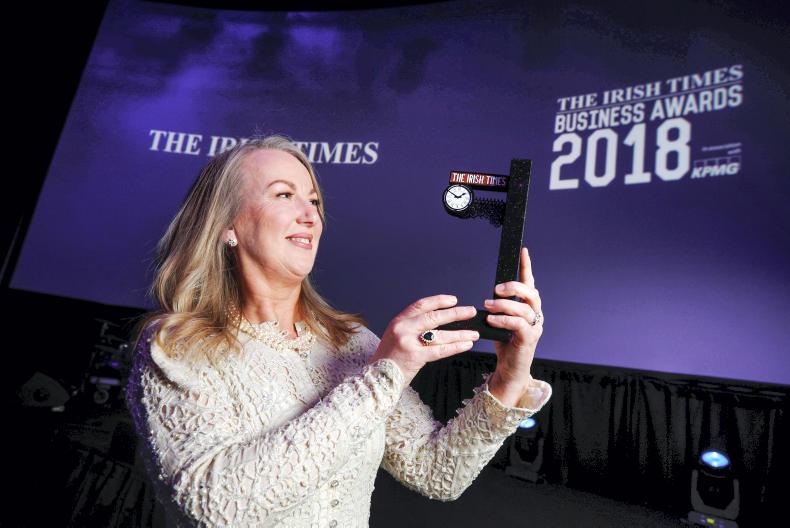
At last week’s Glanbia AGM, one in five Glanbia shareholders voted against a 22% hike in managing director Siobhan Talbot’s remuneration package. The new three-year pay deal includes a substantial increase which will see her base salary rise from €860,000 in 2018 to more than €1m a year.
It will also change the bonus schemes and perks for the group managing director. For hitting performance targets, she can earn a bonus of up to 1.5 times her base annual salary. She can also receive a cash pension contribution of 26.5% of salary. There is also a long-time incentive plan that can see shares awarded to a maximum of 2.5 times her salary. Long-term targets have also been lowered. She can also earn up to 30% of her annual salary, which amounts to more than €300,000 next year, for meeting personal objectives.
Shares in Glanbia fell over 6% last week, wiping more than €300m off the valuation of the company
Talbot’s total remuneration for 2018 came to just over €2.3m, which included her base salary (€860,000), a €645,000 cash bonus, along with share bonuses and other benefits valued at €836,000.
Shares in Glanbia fell over 6% last week, wiping more than €300m off the valuation of the company. While many might link the share price dip to the new pay deal for senior executives Talbot and financial controller Mark Garvey, the drop is more likely as a result of shareholder disappointment around weaker numbers. In its first quarter update, sales in its strategically important performance nutrition division fell 17%.
There appeared to be two types of dissatisfied shareholders regarding the proposed pay changes – fund managers and farmers. Farmers inevitably linked it to the price of milk, which Glanbia dropped by almost 2c/l in the last two months.
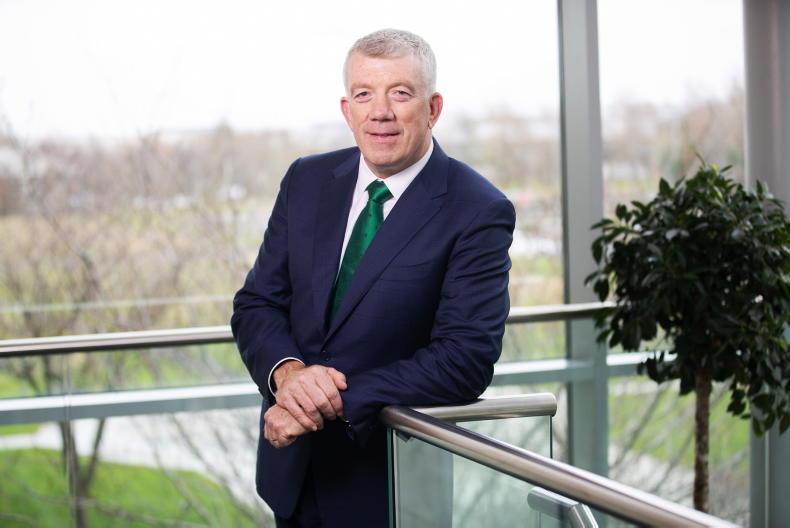
Glanbia chair Martin Keane, who gets €90,000 for chairing the plc, has promised that the company would engage with shareholders on executive pay following the vote on Talbot’s pay
However, prior to the AGM, two share adviser and research firms – Glass Lewis and ISS – had recommended that shareholders vote against the proposal, with one saying that there is “no compelling reason” for the increases in pay. Talbot’s predecessor John Moloney took home a basic salary of €506,000 when he stepped down in 2013 and €581,000 in 2012. Talbot’s base pay in 2019 will be almost double this.
Glanbia chair Martin Keane, who gets €90,000 for chairing the plc, has promised that the company would engage with shareholders on executive pay following the vote on Talbot’s pay.
Kerry Group
At Kerry Group, chief executive Edmond Scanlon, took home a package worth €2.6m last year and is Ireland’s highest-paid agri-food executive in a public limited company. His remuneration included a base salary of €1.05m, short- and long-term performance bonuses of €1.3m and a pension contribution of €200,000. On appointment, Scanlon’s base salary was 20% lower than predecessor Stan McCarthy, as it was expected that it would increase over time in line with his performance and development in the role. The base salary has been increased by 10.5% for 2019.
Aryzta
Kevin Toland commenced his role as CEO of Aryzta in 2017. He received a base salary of €772,000 in the 2018 financial year along with a pension contribution of €154,000. He received no bonuses during the year. This brought his total package to €962,000.
Greencore
Just over two years ago, four out of 10 Greencore shareholders voted to reject a pay deal for top managers including chief executive Patrick Coveney. Coveney receives a taxable non-pensionable cash allowance equivalent to 35% of his salary. According to the Greencore annual report, the chief executive was paid a base salary is €850,000 and he received a pension contribution of €314,000 last year along with bonuses of €228,000, bringing his total package to €1.45m. Coveney can earn a bonus of up to 1.5 times salary upon hitting agreed annual targets and up to twice salary on hitting longer-term targets.
Origin Enterprises
Origin Enterprises CEO Tom O’Mahony received a total pay packet of €1.1m last year. This was made up of a basic salary of €500,000, a pension contribution of €175,000 and an annual bonus which can be up to 100% of annual salary of €435,000. Up to 20% of this bonus can be for meeting personal objectives. As targets are commercially sensitive, they are not disclosed.
FBD
FBD chief executive Fiona Muldoon received a total package of €933,000 last year. This comprised a base salary of €450,000, a pension contribution of €90,000 and bonuses of €354,000. She is rewarded with annual bonuses based on the profitability of the insurance business along with growing premiums. As the gross written premium growth measure came in below the minimum threshold target of €6m, no bonus was deemed payable relating to 2018. Therefore the bonus relates to improving profitability. In March this year, she was awarded almost 85,000 shares in FBD, which were valued at €740,000, for hitting performance targets.


SHARING OPTIONS