



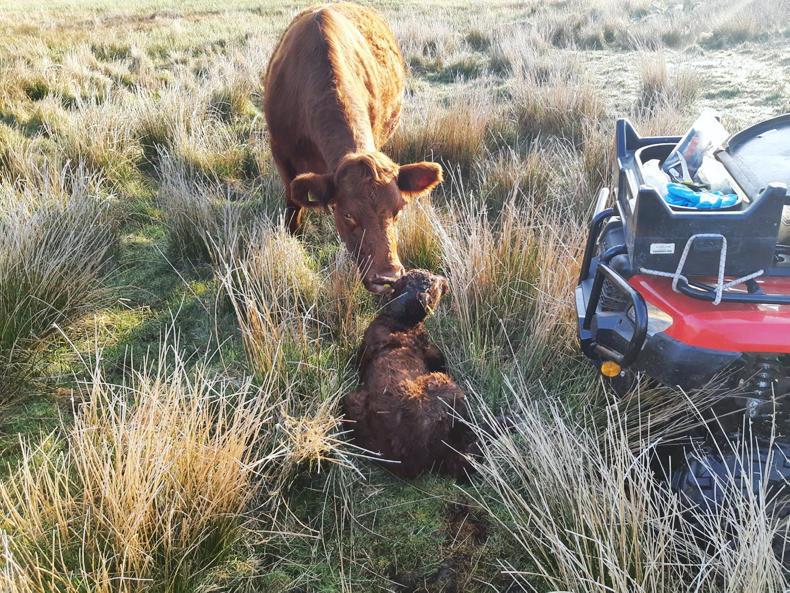
Over half the ewes have been lambed and cows have been calving in the sunshine and, at times, in 20°C heat. It’s incredible the difference a year can make. It also reiterates how volatile the conditions are in this part of the world and how we must get better at planning for all eventualities.
Lambing is progressing well and although we are battling the usual issues and lost some lambs due to the cold easterly wind in April, we are happy with how they are performing.
We are also starting to see a distinct difference in genetics coming through, with our Aberfield ewes (put to Highlander rams) giving far less problems and being much better suited to our low-input system.
These are our A flock, and are out performing our Texel cross B flock. The key to us improving our technical performance definitely lies with increasing lambing percentages, and the genetics which we are selecting for (maternal and survivability traits) are making a notable difference. Put simply, the Aberfields (a Bluefaced Leicester cross Texel stabilised breed) have fewer losses during lambing due to better maternal traits.
Winter
The ewes made it through the winter mainly on grazed grass, with a small amount of silage and five tonnes of concentrates, used to fill the gap.
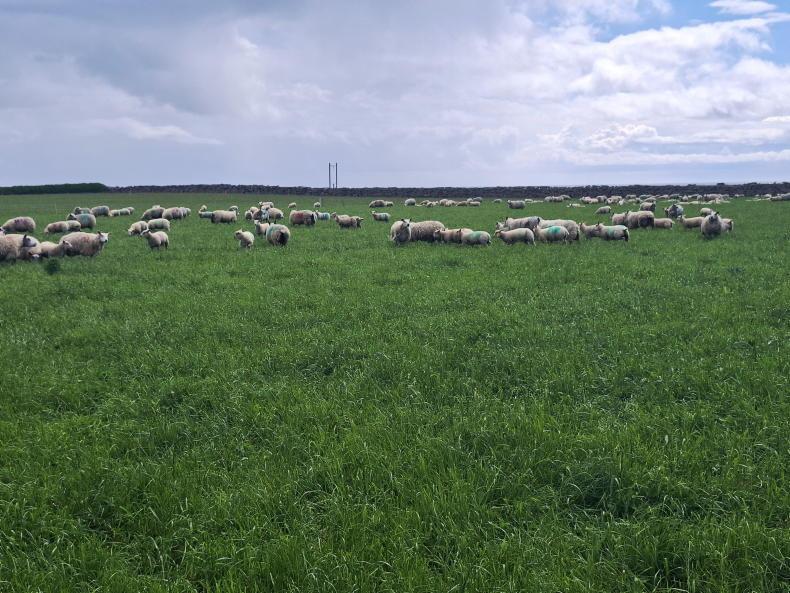
This spring, they were set stocked on to lambing fields at between three to four ewes/acre, depending on how many lambs they were carrying and what the grass covers on the fields were in the first week in April. We have stocked the ewes in smaller groups for lambing this year, and so far it seems to have helped with mis-mothering and generally ewes seem more content.
Calving
We have brought the calving forward this year to get the bulk of it done at the same time as lambing. We find we are through the fields regularly anyway, so hopefully problems can be picked up quicker.
Calving has started well and, as with the sheep, the maternal attributes of the Luing cows are the key to outside calving, although tagging calves can be a challenge.
Grass
The other focus for us is grass. We are in a good position at the moment with grass covers, having spread some urea this year on some of our better-performing fields. I have been really impressed with how it’s worked.
We will be looking to mob ewes and lambs up into larger groups by mid-May and close fields for silage at the same time, so it’s important to plan for that now by trying to close off some grazing ground.
Hinds
The hinds have wintered well outside and are around a month away from calving. We have some more fencing to complete before then to allow a bit more flexibility and to accommodate the increase in numbers. The 2018-born calves are still in the shed and will be turned out onto a reseeded field this week. This can be a bit nerve-racking as they tend to kick their heels up a bit when they first get out.



SHARING OPTIONS