


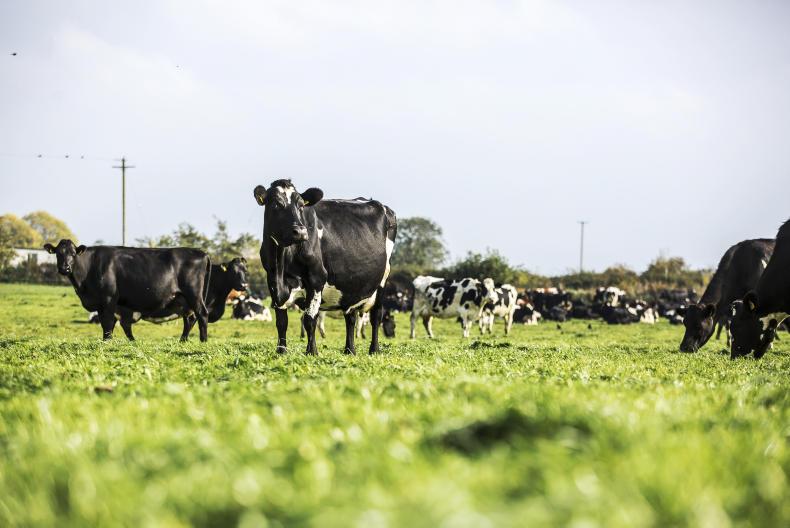
Emissions from agriculture are projected to increase by 4% up to 2030 as a result of rising animal numbers in the dairy herd.
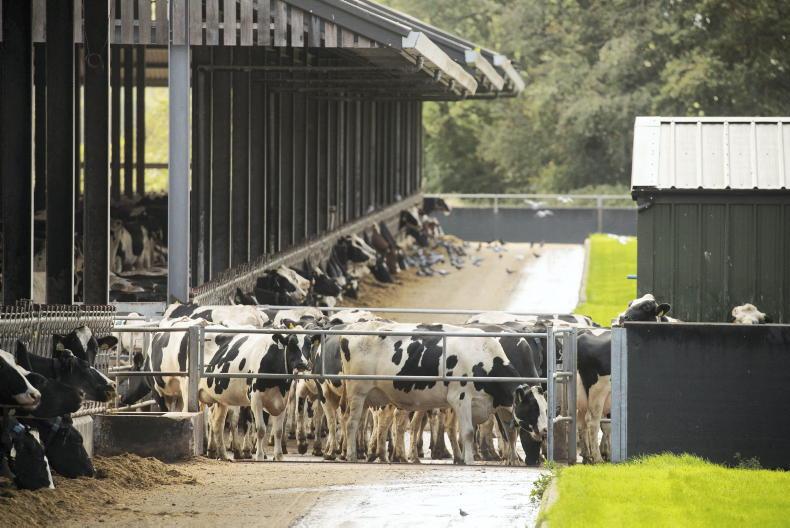
Figures provided to the Environmental Protection Agency (EPA) by Teagasc predict the dairy herd to increase by 7% by 2020 and by a further 11% by 2030. It is estimated Ireland will have a dairy herd of 1.63 million cows by 2030, up from 1.38 million cows today.
By comparison, Teagasc projects a 3.2% contraction in animal numbers from less-profitable other cattle sectors.
The figures are included in the latest report by the EPA on Ireland’s progress across all sectors towards meet emission reduction targets out to 2020 and 2030.
Contributors
Agriculture is the single largest contributor to Ireland’s total emissions at 33%, followed by transport (20%) and energy industries (19%). These three sectors account for 72% of the approximately 61.5m tonnes CO2eq emitted by Ireland annually.
By 2030, it is expected that agriculture will contribute 38% of total emissions while energy’s contribution will fall to 16% and transport will marginally increase to 22%.
The report found that without significant new measures across all sectors Ireland will miss its emissions reduction target. The EPA’s projections do not take into account the measures contained in the Teagasc roadmap which would see agriculture’s emissions reduced by over 18m tonnes CO2eq by 2030.
Breakdown
Methane produced during the fermentation process of ruminating animals accounts for 57% of total agriculture emissions of 20m tonnes CO2eq. Soils (28%), manure (10%), fuel use (3%), liming (2%) and urea application (0.2%) are the other contributors.
Nitrogen fertiliser use is expected to rise by 11% up to 2030 on the back of rising cow numbers. Total usage is expected to jump to 410,400t by 2030 from 369,000t in 2017. However, fertiliser use is subject to considerable fluctuations as a result of changing prices and weather conditions.
The report showed that cutting the national herd by 10% would reduce agricultural emissions by 18m tonnes CO2eq between 2018 and 2030.


SHARING OPTIONS