


Next Wednesday sees the Kerry co-op AGM take place. Alongside it, a special general meeting (SGM) will consider a proposal that would see over 96% of the co-op’s shareholding set aside solely for distribution among the co-op’s 13,300 shareholders. The value is close to €2.5bn, so this is a hugely important moment in the co-op’s life.
The board has delivered the first event that will see the initial tranche of this shareholding transferred to shareholders. A voluntary scheme, offering cash for co-op shares, was closed for applications on 5 June.
Some 5.9 Kerry Group plc shares will be sold for each co-op share surrendered, with the money transferred directly to the shareholder.
A recent round of meetings saw a lot of criticism for the board over its plans. But is the Shareholders Alliance a vocal minority or representative of the majority of Kerry co-op’s 13,300 shareholders?
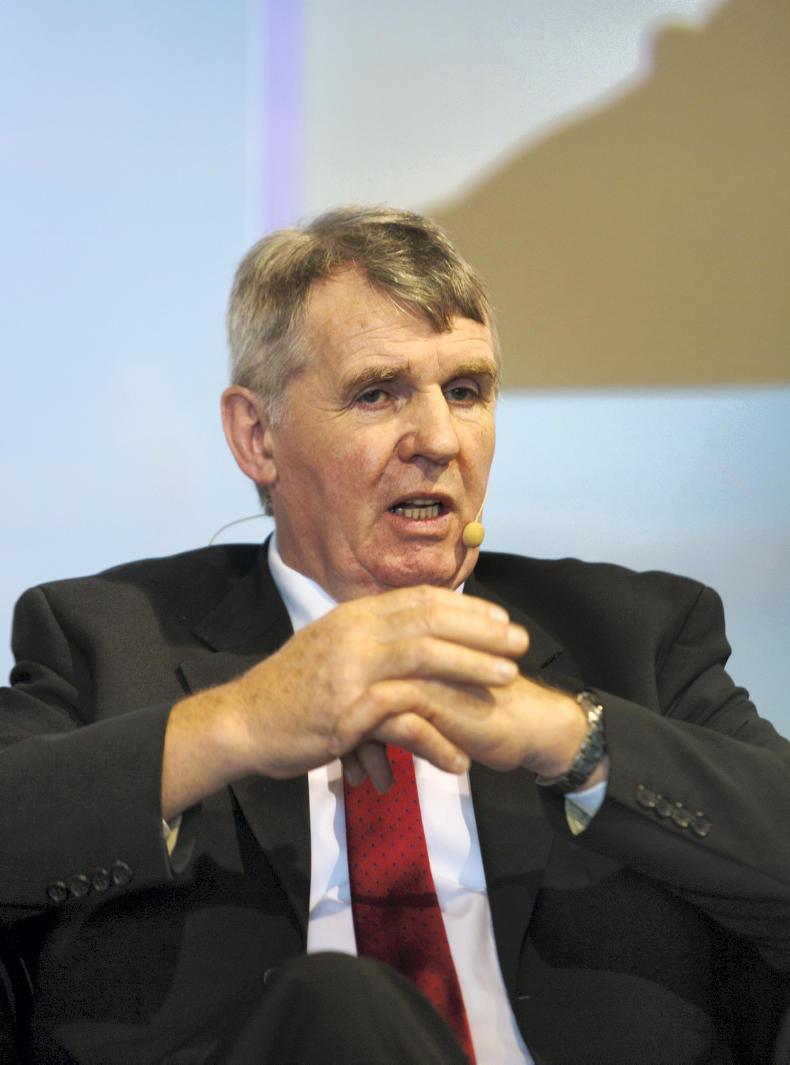
Kerry co-op chair Mundy Hayes sat down with the Irish Farmers Journal to consider the key issues.
Mundy Hayes is glad in one way that there has been so much focus on the often fractious debate in Kerry co-op over the last 12 months.
“A lot of Kerry shareholders have been totally unaware of the value of the co-op shares. They’re sitting in drawers or up on shelves, and people see the face value of €1.25 and think they can’t be worth much.”
To put it in context, each Kerry co-op share equates to 6.1 plc shares. Kerry plc shares are currently worth €105. These shares have a latent value of way over €600.
Best alternative
Hayes confirmed that the “cash for shares” scheme does not require shareholder approval and will be taking place irrespective of the result of the SGM vote.
“The scheme is voluntary, and it is the best alternative at this time,” he said. He acknowledges that it doesn’t suit everyone, but says there is no downside to it taking place for those it does suit.
The Shareholders Alliance has expressed concern that the board could be locked into all future schemes mirroring this one. Hayes rejects this concern as unfounded.
“We intend to hold these type of schemes twice a year, but we reserve the right to introduce different schemes when we can. It’s clear in the terms and conditions.”
Hayes believes that in any event, the upcoming scheme will be more cost-effective for many shareholders.
“The lower rate of income tax is 20%, whereas the capital gains tax (CGT) rate is 33%, so good tax planning can help people minimise their bill.”
He emphasises the importance of every shareholder getting independent tax advice.
Achieving 701 status would allow the co-op to spin out shares to its members. CGT would then apply rather than income tax. Kerry lost this facility because Revenue requires that a majority of shareholders must be active farmers.
Mundy believes that over time, the “cash for shares” scheme will help regain 701 status. Currently over 5,000 B and C shareholders have less than 100 shares.
The hope is that a series of these “cash-for-shares” events could see the co-op shareholder register evolve so that 701 status can be regained.
“Any shareholder with less than 10 shares can only avail of the scheme if they sell all their shares.”
Bringing liquidity to the shares was one of the three core objectives identifed by the Kerry board.
The Shareholders Alliance did suggest a full liquidation of the co-op, setting up a new co-op for milk producers and putting some funding into it.
Mundy Hayes says the board completely opposes this idea.
“At one board meeting, we divided up into small groups, with each group made up of people from different regions. Each group was asked to come up with objectives for the co-op. Every single one of the 28 board members said that the co-op should continue, so liquidating the co-op could never be an option for me.”
He points out one risk he sees from that proposal. “If we were to fully liquidate the co-op, there would be an immediate CGT bill for every share. That’s 24m plc shares, and for many people shares would have to be sold to pay that bill. Were millions of shares to appear on the market together, it could affect the Kerry Group share price. That’s something I could never do.”
Hayes is keen to stress that the relationship between the co-op and the plc is healthy.
“I have nothing but the height of respect for the current, and past , management of Kerry. Their hard work, alongside that of the farmers who milked the cows, built this wealth over the generations. We are not going to waste it.”
The board also has decided to grant a single co-op share to any milk supplier who had no shareholding, Hayes confirms. He says the number of suppliers involved is lower than has been reported.
“A lot of suppliers without shares are in partnership with shareholders, the overall number will be around 100,” he says.
“This will also be a further small step to achieving 701 status.”
Hayes believes that more unites Kerry shareholders than divides them. “I hope in time the Shareholders Alliance can support this scheme.”





SHARING OPTIONS