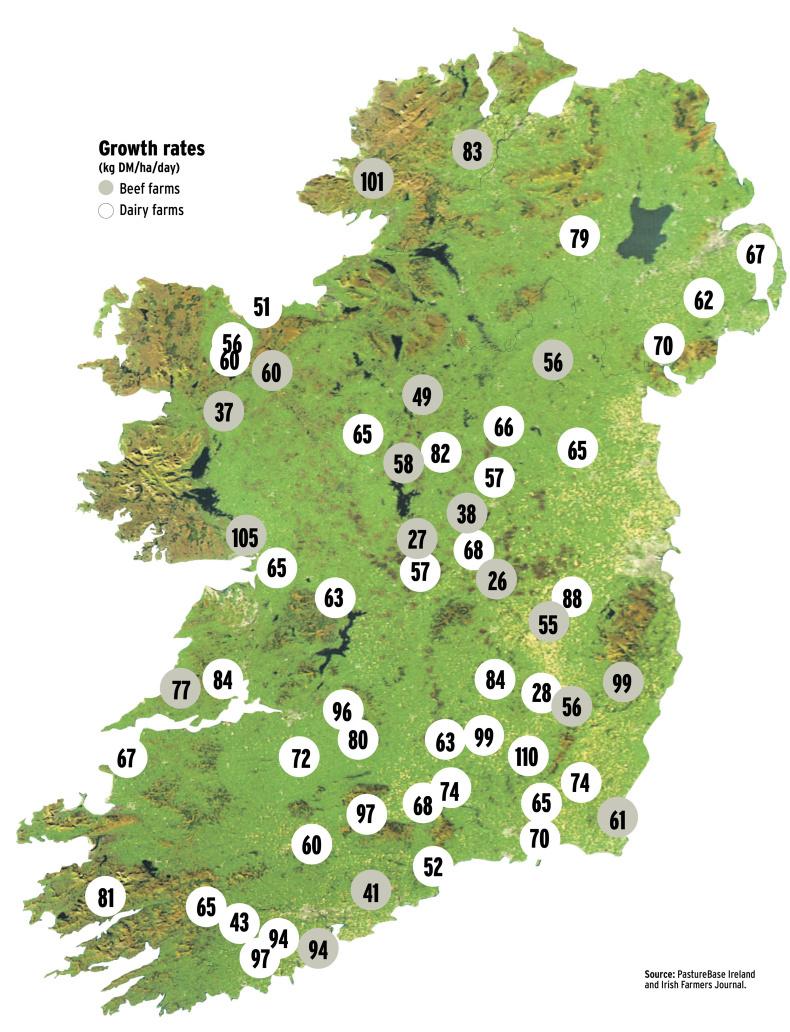
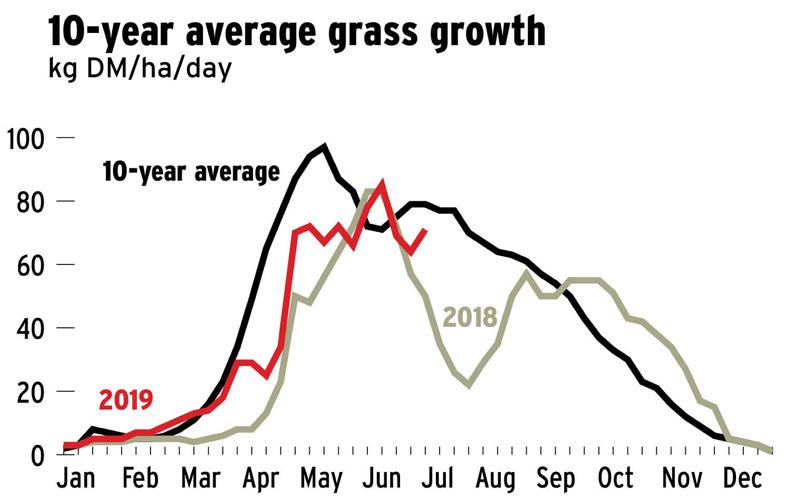
Average grass growth rates are set to bounce this week after a big increase in air and soil temperatures. Widespread rain last weekend, followed by warm and humid weather this week, is creating tropical-like conditions in many areas. I would expect growth rates to exceed 80kg/day on many farms.
This burst in growth is a call to action. Farmers need to walk their farms and assess grass covers. Strong paddocks should be skipped over and baled. How many paddocks can you afford to take out? This all depends on your demand, growth rate and how much grass is on the farm. Demand is how much grass you need to grow to feed the herd. This depends on stocking rate and how much meal is being fed, if any. A farm stocked at 3.8 cows/ha with no meal being fed has a demand of 68kg/day.
ADVERTISEMENT
The next step is to work out how much grass you have on the farm. Cover per cow is the average farm cover per hectare divided by the stocking rate. The target is to be between 160kg/cow and 180kg/cow. By knowing these three things you can make good decisions about how many paddocks can be skipped over. Every time you skip a paddock you increase the demand. Play around with paddocks until you find your comfort zone.
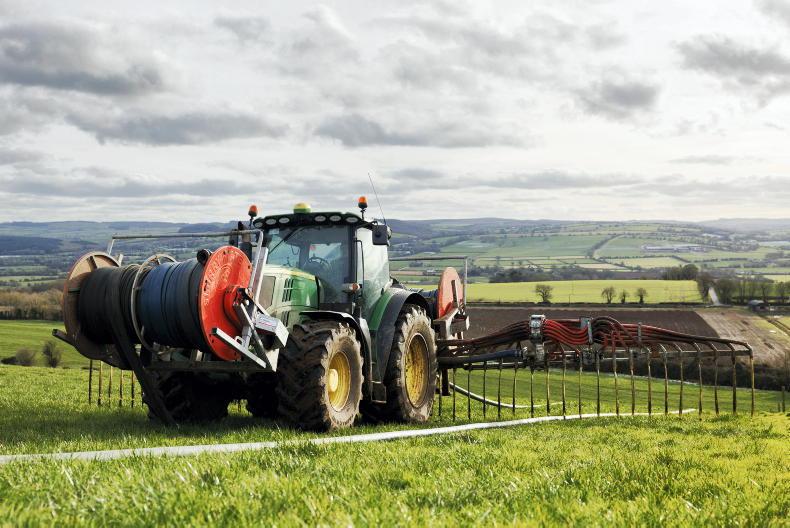
Smarten up on fertiliser use at this time of year. Paddocks with a high level of clover don’t need as much chemical nitrogen as they can fix their own. Fields that have been cut for bale silage need to be topped up with either slurry or compound fertiliser. Farmers are seeing a good grass growth response after soiled water is spread with a trailing shoe or dribble bar. Soiled water from a collecting yard can be spread at a rate of 3,000 gallons/acre and can, depending on the nutrient content, replace a round of nitrogen.
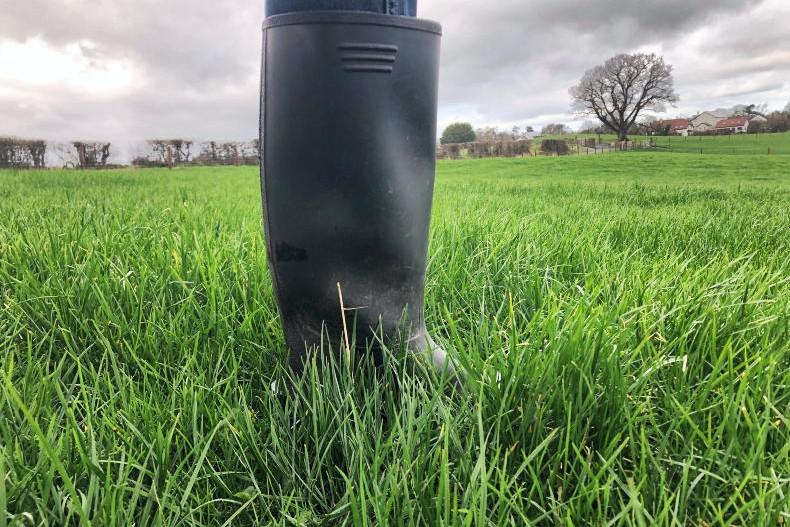
Grass growth is going to increase as weather conditions are very favourable.
You need to measure grass to know how many paddocks you can afford to skip over.
Aim to have a cover of 160-180kg/cow.
Paddocks with a high clover content can get less chemical nitrogen.
Register for free to read this story and our free stories.
This content is available to digital subscribers and loyalty code users only. Sign in to your account, use the code or subscribe to get unlimited access.
The reader loyalty code gives you full access to the site from when you enter it until the following Wednesday at 9pm. Find your unique code on the back page of Irish Country Living every week.
CODE ACCEPTED
You have full access to the site until next Wednesday at 9pm.
CODE NOT VALID
Please try again or contact support.
Average grass growth rates are set to bounce this week after a big increase in air and soil temperatures. Widespread rain last weekend, followed by warm and humid weather this week, is creating tropical-like conditions in many areas. I would expect growth rates to exceed 80kg/day on many farms.
This burst in growth is a call to action. Farmers need to walk their farms and assess grass covers. Strong paddocks should be skipped over and baled. How many paddocks can you afford to take out? This all depends on your demand, growth rate and how much grass is on the farm. Demand is how much grass you need to grow to feed the herd. This depends on stocking rate and how much meal is being fed, if any. A farm stocked at 3.8 cows/ha with no meal being fed has a demand of 68kg/day.
The next step is to work out how much grass you have on the farm. Cover per cow is the average farm cover per hectare divided by the stocking rate. The target is to be between 160kg/cow and 180kg/cow. By knowing these three things you can make good decisions about how many paddocks can be skipped over. Every time you skip a paddock you increase the demand. Play around with paddocks until you find your comfort zone.
Smarten up on fertiliser use at this time of year. Paddocks with a high level of clover don’t need as much chemical nitrogen as they can fix their own. Fields that have been cut for bale silage need to be topped up with either slurry or compound fertiliser. Farmers are seeing a good grass growth response after soiled water is spread with a trailing shoe or dribble bar. Soiled water from a collecting yard can be spread at a rate of 3,000 gallons/acre and can, depending on the nutrient content, replace a round of nitrogen.
Grass growth is going to increase as weather conditions are very favourable.
You need to measure grass to know how many paddocks you can afford to skip over.
Aim to have a cover of 160-180kg/cow.
Paddocks with a high clover content can get less chemical nitrogen.
If you would like to speak to a member of our team, please call us on 01-4199525.
Link sent to your email address
We have sent an email to your address. Please click on the link in this email to reset your password. If you can't find it in your inbox, please check your spam folder. If you can't find the email, please call us on 01-4199525.
ENTER YOUR LOYALTY CODE:
The reader loyalty code gives you full access to the site from when you enter it until the following Wednesday at 9pm. Find your unique code on the back page of Irish Country Living every week.






SHARING OPTIONS