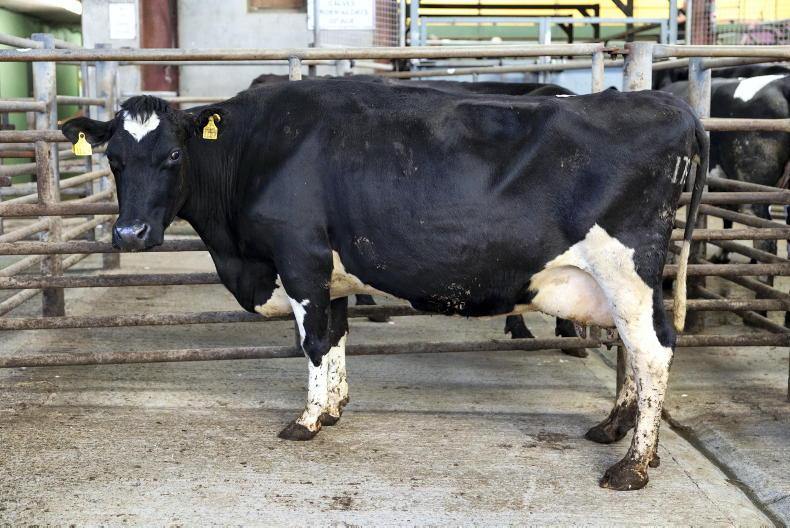
Greenfield Kilkenny cows waiting for their evening feed on 21 July 2018, during the bad drought of that summer.
ADVERTISEMENT
July is normally a tricky month for grass growth. It's important to remember where we are in the growth curve: we’ve come off the May/June peak and are now in the dip between that first peak and the next smaller peak in August.
However, on many farms the July dip is steeper than normal. Most of the country has received very little rainfall over the last four weeks. Soil moisture deficits are hovering around the 55mm mark, which is enough to restrict grass growth.
The long-range forecast predicts a continuation of the dry weather into the second half of July. This will worry many farmers who are already gone dry. It appears that the worst-affected places are in the southeast, with some farms in this area already in a green drought.
ADVERTISEMENT
Options
Whether or not this develops into a long-term drought is hard to know. Either way, we can expect to see growth rates to be lower than demand over the next few weeks. This means that cows will be eating into whatever grass is on the farm.
Avoid cutting out paddocks for bales: The first step should be to make sure that you are starting off with a high grass cover. I’d aim to have an average farm cover at the higher end of the target range, 200kg/cow. I would only reduce this by taking out paddocks for silage if the average farm cover is over 220kg/cow and you are fairly sure you’re not going to be affected by drought.
Manage demand: I don’t have any issue with letting average farm cover drop once it doesn’t go too low. Continue to measure grass every four or five days and act accordingly. Let average farm cover drop to around 400kg/ha before really slowing up the cows. On a farm stocked at three cows/ha, this is a cover per cow of 133kg. If cover drops to this, then you need to match growth with demand and this involves feeding or reducing stocking rate, such as moving animals off the milking block.
Feed options: Meal is the most expensive option and will have a lesser effect of reducing demand compared with feeding a forage. Zero-grazing grass from an out-farm is another option, once it can be fed out easily. Generally speaking though, most farms are not yet at the stage where they need to be concerned about heavy feeding of either meal or silage. However, farmers should be aware of the risk of drought and make sure they utilise as much grass on the farm as possible.
This content is available to digital subscribers and loyalty code users only. Sign in to your account, use the code or subscribe to get unlimited access.
The reader loyalty code gives you full access to the site from when you enter it until the following Wednesday at 9pm. Find your unique code on the back page of Irish Country Living every week.
CODE ACCEPTED
You have full access to the site until next Wednesday at 9pm.
CODE NOT VALID
Please try again or contact support.
July is normally a tricky month for grass growth. It's important to remember where we are in the growth curve: we’ve come off the May/June peak and are now in the dip between that first peak and the next smaller peak in August.
However, on many farms the July dip is steeper than normal. Most of the country has received very little rainfall over the last four weeks. Soil moisture deficits are hovering around the 55mm mark, which is enough to restrict grass growth.
The long-range forecast predicts a continuation of the dry weather into the second half of July. This will worry many farmers who are already gone dry. It appears that the worst-affected places are in the southeast, with some farms in this area already in a green drought.
Options
Whether or not this develops into a long-term drought is hard to know. Either way, we can expect to see growth rates to be lower than demand over the next few weeks. This means that cows will be eating into whatever grass is on the farm.
Avoid cutting out paddocks for bales: The first step should be to make sure that you are starting off with a high grass cover. I’d aim to have an average farm cover at the higher end of the target range, 200kg/cow. I would only reduce this by taking out paddocks for silage if the average farm cover is over 220kg/cow and you are fairly sure you’re not going to be affected by drought.
Manage demand: I don’t have any issue with letting average farm cover drop once it doesn’t go too low. Continue to measure grass every four or five days and act accordingly. Let average farm cover drop to around 400kg/ha before really slowing up the cows. On a farm stocked at three cows/ha, this is a cover per cow of 133kg. If cover drops to this, then you need to match growth with demand and this involves feeding or reducing stocking rate, such as moving animals off the milking block.
Feed options: Meal is the most expensive option and will have a lesser effect of reducing demand compared with feeding a forage. Zero-grazing grass from an out-farm is another option, once it can be fed out easily. Generally speaking though, most farms are not yet at the stage where they need to be concerned about heavy feeding of either meal or silage. However, farmers should be aware of the risk of drought and make sure they utilise as much grass on the farm as possible.
If you would like to speak to a member of our team, please call us on 01-4199525.
Link sent to your email address
We have sent an email to your address. Please click on the link in this email to reset your password. If you can't find it in your inbox, please check your spam folder. If you can't find the email, please call us on 01-4199525.
ENTER YOUR LOYALTY CODE:
The reader loyalty code gives you full access to the site from when you enter it until the following Wednesday at 9pm. Find your unique code on the back page of Irish Country Living every week.
SHARING OPTIONS