


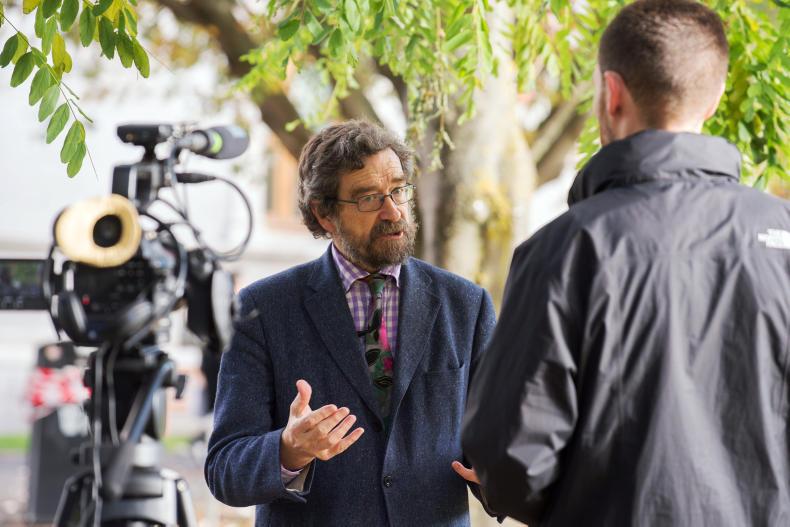
The chair of the Climate Advisory Council has defended his council’s recommendation to reduce cattle numbers on beef farms.
“We’re not proposing forcing farmers to do anything – we’re accelerating a process that is already there,” Professor John Fitzgerald said, citing Teagasc figures which showed a 1.7% annual reduction in the beef herd.
The report outlines a number of scenarios for reducing beef numbers but Fitzgerald believes that a reduction of between 1m and 1.5m cattle over the next 12 years will be needed to help achieve climate targets.
He outlined that farmers could potentially be incentivised to reduce numbers through the next Common Agriculture Policy (CAP).
“The way to make changes happen more rapidly is to make a moderate restructuring of the CAP to make it more profitable for farmers to actually do what needs to be done,” he said.
When asked about the potential economic effect of reducing the suckler herd on rural communities, Prof Fitzgerald said: “That would be a matter for policymakers.”
When asked what industries farmers were expected to move to if they left farming, he said he understood the predicament, but again said that decision would be for policymakers.
Dairy farming is also under the spotlight, and Prof Fitzgerald was keen to point out that Teagasc’s Marginal Abatement Cost Curve (MACC) plan, which recommends that low-emission slurry spreading, protected urea and herd genetics need to be adopted by dairy farmers.
He also poured cold water on the idea of unfettered dairy expansion.
“There isn’t much scope or head room to expand dairy at this stage,” he said.
Prof Fitzgerald added that the council would prefer if beef farmers who exited the sector or reduced numbers went into forestry rather than an intensive form of agriculture such as dairy.
He also pointed out that Brexit could have a further negative effect on beef prices and that financial supports that the Government suggested to put in place should be linked to a structured reduction in herd size.


SHARING OPTIONS