Why reseed?
Reseeded pastures have higher grass growth rates compared with old varieties. This is particularly evident at the shoulders of the year when grass growth is less. How much more grass will be grown depends on the type of sward that it replaces. Fields with old permanent pastures and a small proportion of perennial ryegrass will grow a lot more when replaced by new perennial ryegrass.
New varieties are better quality and more digestible, so animal performance increases
Reseeded pastures are more responsive to fertiliser so they will give a higher return in terms of grass, for every kilo of fertiliser applied. This helps to increase efficiency. New varieties are better quality and more digestible, so animal performance increases. The total cost of reseeding is around €323/ac but the extra productivity would cover the cost in just two years.
Why does new grass not last?
Farmers often say that after a few years, the old grass returns. This is definitely evident in some cases, but it mostly boils down to the management of the soil and the sward after sowing. Perennial ryegrass needs to tiller (create new plants) to survive. In order for it to successfully tiller, it must be grazed tight. If the plant is not grazed tight, particularly in spring and autumn, the new tillers will die. This results in a reduction in the percentage of perennial ryegrass in the sward over time. So very extensive grazing, leaving high residuals or regular cuts of silage, will reduce the percentage of perennial ryegrass in the sward. Perennial ryegrass is then replaced by weed species of grass such as agrostis, scutch, annual meadow grass and meadow fescues – none of which have the growth characteristics or quality as perennial ryegrass.
Perennial ryegrass, like any top performer, needs energy to be optimum
The second reason for new varieties not lasting is poor soil fertility. Perennial ryegrass, like any top performer, needs energy to be optimum. You would not feed bad hay to a racehorse and expect it to win the Grand National. Nor should you expect perennial ryegrass to last in the sward when soil fertility is poor. The most important things to focus on is soil pH, phosphorus and potassium index levels and then feed the grass with nitrogen as and when it is needed.
What varieties to pick?
Most co-ops and merchants have their own grass seed mixtures, with and without clover. In general, the quality of seeds in these mixtures has increased dramatically over the last number of years. All of the main merchants have carefully chosen their mixtures. The introduction of the pasture profit index (PPI) has been a big help in this.
Most mixtures will have a mix of tetraploid and diploid grass varieties and this is fine
The index gives each variety an economic value based on its traits. Only varieties on the recommended lists will have a PPI, so that remains the first port of call when judging a variety.
After that, you should pick varieties with intermediate to late heading dates within a few days of each other. Most mixtures will have a mix of tetraploid and diploid grass varieties and this is fine. I would not pick a mixture with less than 50% tetraploid.
What do most farmers forget?
The thing that is forgotten most when reseeding is the post-emergence spray and in my view it is one of the most important parts of the whole process. At €30/ac for the spray and the cost of spraying, it is small in the overall scheme of things.
The main reason farmers give for not spraying is that the weeds will be out-competed by the grass.
Killing a mature dock with a large tap root is extremely difficult
However, the main problem is the dock and/or thistle, and they will not be out-competed by the grass. Invariably, farmers who don’t use a post-emergence spray end up regretting it. Weeds such as docks are only ever successfully killed as seedlings.
Killing a mature dock with a large tap root is extremely difficult. The best time to spray is after most of the weeds have emerged and the grass is about two weeks away from being fit to be grazed.
Choosing the right time and method is critical
What is the best method?
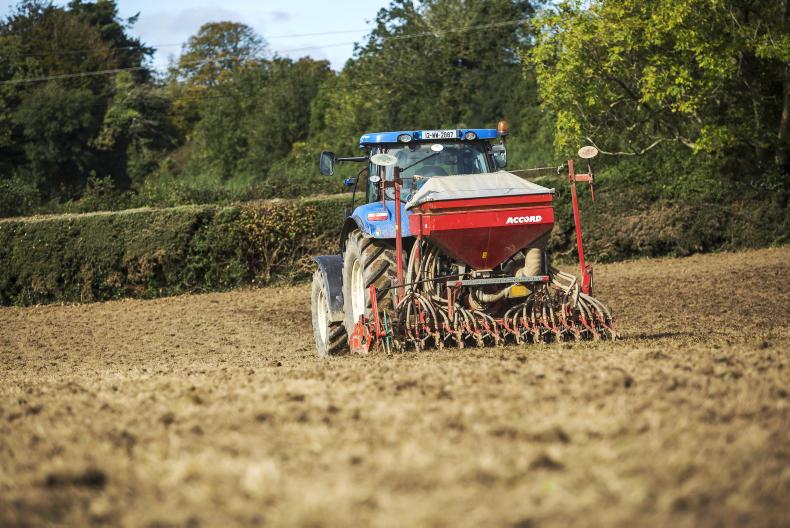
Numerous studies have shown very little difference between establishment methods. All methods are successful once carried out correctly. Each method has pros and cons.
Minimum tillage takes a bit more time as the old sward needs to die back fully before cultivating
Ploughing gives quickest establishment but it can bring up stones, bury soil nutrients and release both carbon and nitrogen from the soil.
Minimum tillage takes a bit more time as the old sward needs to die back fully before cultivating and seedling emergence can be a bit slower too. However, there are fewer stones to pick and it is better for the environment.
When is the best time to reseed?
Fields sprayed off with Roundup now won’t be grazed again properly until the first week of October. It is a long time for a field to be out of production but that is the reality of autumn reseeding. There is usually a 60-day turnaround time with autumn reseeding, while spring reseeding is a little bit shorter at 50 days. And that’s with doing everything by the book.
Regular, tight grazings help the new sward to tiller
The other downside to autumn reseeding is that it can be hard to get enough grazings off the field before winter.
Regular, tight grazings help the new sward to tiller. This can be hard to achieve in the autumn and early winter when land is getting wet and days are getting shorter.
However, reseeding in autumn is 100 times better than not reseeding at all, it is just a little more tricky to manage.
Read more
IGA Summer Tour: an English lesson on dairy conversion in Westmeath
Over-sowing clover and reseeding in Tipperary
Why reseed?
Reseeded pastures have higher grass growth rates compared with old varieties. This is particularly evident at the shoulders of the year when grass growth is less. How much more grass will be grown depends on the type of sward that it replaces. Fields with old permanent pastures and a small proportion of perennial ryegrass will grow a lot more when replaced by new perennial ryegrass.
New varieties are better quality and more digestible, so animal performance increases
Reseeded pastures are more responsive to fertiliser so they will give a higher return in terms of grass, for every kilo of fertiliser applied. This helps to increase efficiency. New varieties are better quality and more digestible, so animal performance increases. The total cost of reseeding is around €323/ac but the extra productivity would cover the cost in just two years.
Why does new grass not last?
Farmers often say that after a few years, the old grass returns. This is definitely evident in some cases, but it mostly boils down to the management of the soil and the sward after sowing. Perennial ryegrass needs to tiller (create new plants) to survive. In order for it to successfully tiller, it must be grazed tight. If the plant is not grazed tight, particularly in spring and autumn, the new tillers will die. This results in a reduction in the percentage of perennial ryegrass in the sward over time. So very extensive grazing, leaving high residuals or regular cuts of silage, will reduce the percentage of perennial ryegrass in the sward. Perennial ryegrass is then replaced by weed species of grass such as agrostis, scutch, annual meadow grass and meadow fescues – none of which have the growth characteristics or quality as perennial ryegrass.
Perennial ryegrass, like any top performer, needs energy to be optimum
The second reason for new varieties not lasting is poor soil fertility. Perennial ryegrass, like any top performer, needs energy to be optimum. You would not feed bad hay to a racehorse and expect it to win the Grand National. Nor should you expect perennial ryegrass to last in the sward when soil fertility is poor. The most important things to focus on is soil pH, phosphorus and potassium index levels and then feed the grass with nitrogen as and when it is needed.
What varieties to pick?
Most co-ops and merchants have their own grass seed mixtures, with and without clover. In general, the quality of seeds in these mixtures has increased dramatically over the last number of years. All of the main merchants have carefully chosen their mixtures. The introduction of the pasture profit index (PPI) has been a big help in this.
Most mixtures will have a mix of tetraploid and diploid grass varieties and this is fine
The index gives each variety an economic value based on its traits. Only varieties on the recommended lists will have a PPI, so that remains the first port of call when judging a variety.
After that, you should pick varieties with intermediate to late heading dates within a few days of each other. Most mixtures will have a mix of tetraploid and diploid grass varieties and this is fine. I would not pick a mixture with less than 50% tetraploid.
What do most farmers forget?
The thing that is forgotten most when reseeding is the post-emergence spray and in my view it is one of the most important parts of the whole process. At €30/ac for the spray and the cost of spraying, it is small in the overall scheme of things.
The main reason farmers give for not spraying is that the weeds will be out-competed by the grass.
Killing a mature dock with a large tap root is extremely difficult
However, the main problem is the dock and/or thistle, and they will not be out-competed by the grass. Invariably, farmers who don’t use a post-emergence spray end up regretting it. Weeds such as docks are only ever successfully killed as seedlings.
Killing a mature dock with a large tap root is extremely difficult. The best time to spray is after most of the weeds have emerged and the grass is about two weeks away from being fit to be grazed.
Choosing the right time and method is critical
What is the best method?
Numerous studies have shown very little difference between establishment methods. All methods are successful once carried out correctly. Each method has pros and cons.
Minimum tillage takes a bit more time as the old sward needs to die back fully before cultivating
Ploughing gives quickest establishment but it can bring up stones, bury soil nutrients and release both carbon and nitrogen from the soil.
Minimum tillage takes a bit more time as the old sward needs to die back fully before cultivating and seedling emergence can be a bit slower too. However, there are fewer stones to pick and it is better for the environment.
When is the best time to reseed?
Fields sprayed off with Roundup now won’t be grazed again properly until the first week of October. It is a long time for a field to be out of production but that is the reality of autumn reseeding. There is usually a 60-day turnaround time with autumn reseeding, while spring reseeding is a little bit shorter at 50 days. And that’s with doing everything by the book.
Regular, tight grazings help the new sward to tiller
The other downside to autumn reseeding is that it can be hard to get enough grazings off the field before winter.
Regular, tight grazings help the new sward to tiller. This can be hard to achieve in the autumn and early winter when land is getting wet and days are getting shorter.
However, reseeding in autumn is 100 times better than not reseeding at all, it is just a little more tricky to manage.
Read more
IGA Summer Tour: an English lesson on dairy conversion in Westmeath
Over-sowing clover and reseeding in Tipperary









SHARING OPTIONS