



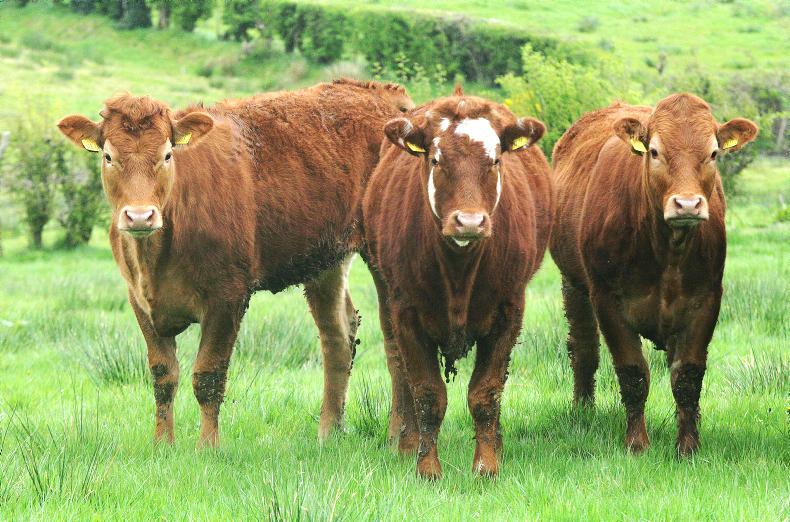
Processing demand for cattle is growing, as local plants look to increase throughput in response to factory closures south of the border.
However, any additional processing demand has yet to result in a meaningful price increase. That said, it has put a temporary floor in the beef trade.
As a result, base prices have hardened, with one plant increasing its quote by 2p/kg. Factory quotes are typically steady on 318p to 320p/kg for U-3 grading animals, with plenty of cattle moving at this level.
Farmers selling cattle on a more regular basis, or whom can offer bigger numbers for sale, report that steers continue to move at 2p to 4p/kg ahead of base price, with heifers moving from 326p to 328p/kg.
While factories are looking to increase throughput, there is still plenty of finished cattle coming on to the market.
Farmers continue to experience delays of two weeks to get cattle slaughtered and, as a result, this oversupply of animals is limiting the potential for any increase in beef price at present.
The weekly cattle kill increased by 1,075 head to 9,955, making it the highest weekly kill for the year to date.
Imports of Irish cattle for direct slaughter at NI plants totalled 281 head, an increase of 39 on the previous week, despite closures at Irish processing plants.
In contrast, imports of slaughter cattle from south of the border was 390 head for the same week last year.
The average price paid for steers and heifers rose by 0.9p to 317.9p/kg last week. The average price paid on U3 steers fell by 0.3p to 323.2p/kg, with U3 heifers down by 0.1p to 328.7p/kg.
Cows
Base quotes on cull cows has steadied, with plants holding on 245p to 255p/kg on O+3 grading animals, with R3 cows on 260p/kg. Last week, the average price paid on R3 cows was 272p/kg.
Lamb trade
Lamb quotes have fallen this week by 10p/kg, with a base of 355p/kg on offer. This makes a lamb worth £74.55 at the 21kg carcase weight limit. Trade in the marts is also back, by 6p/kg on average at Rathfriland. However, Massereene reported its sale average was unchanged.
In Kilrea, 400 lambs sold from 300p to 372p/kg, down by 10p/kg for heavier lambs. In contrast, light store lambs were very dear.
In Massereene, 1,033 lambs sold from 310p to 335p/kg, which was unchanged week on week. Heavy lambs from 25kg to 28kg sold from £76 to £80, with 23kg lots making £73.50 to £77. Lambs at 20kg and 21kg made £66 to £67/head.
In Saintfield, 554 lambs sold from 295p to 350p/kg, down by 5p/kg for heavies and 23p/kg for lighter sorts.
Rathfriland had a smaller show of 572 lambs, making 295p to 378p/kg, with an average of 314p/kg, down by 6p/kg. A pen of heavy lambs made £79 with the main run from £72 to £75/head.
Ewes
Fat ewe prices have eased slightly. The top price in Omagh was £80. Swatragh sold ewes to £89 for a show of 600 head. In Massereene, ewes made £110 for Texels, £95 for Charollais, £90 for Suffolks, £76 for Mules and £54 for Blackface. In Kilrea, top was £85, with Saintfield selling to £100 and Rathfriland selling to £88/head.
The top store lamb price in Ballymena was £71 for a pen of 35 Texels, with other lots making £60 to £63. The best Suffolks made £60 and £61/head.



SHARING OPTIONS