


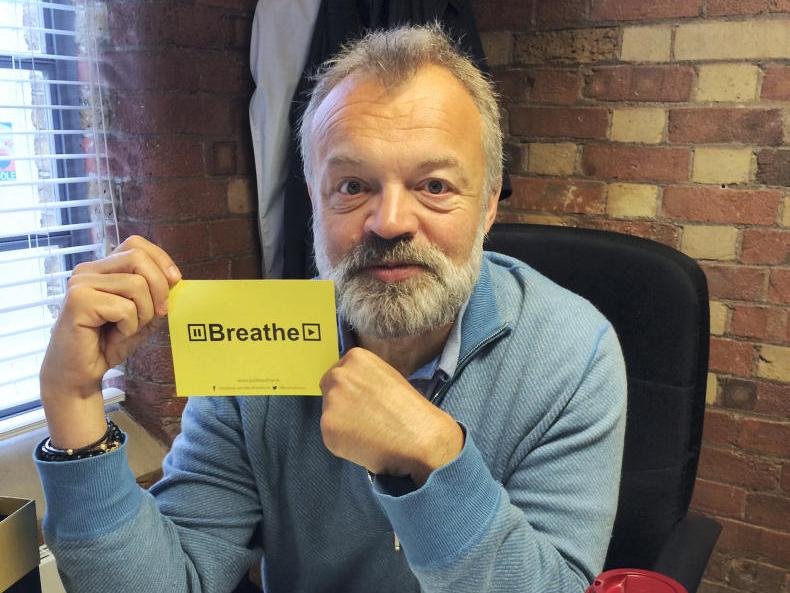
Corkman Graham Norton is steadily working his way into the enormous footprints of the Irish icons of British television. Dare we mention his name in the company of, or close to, Eamon Andrews and Terry Wogan and then acknowledge his connection with the Irish Farmers Journal?
The Graham Norton Show has eight million viewers on first showing and is then repeated at least twice. That amounts to a possible 24 million exposures to people who are not just viewers but dedicated fans. It is remarkable in the sense that it attracts a stream of A-level guests who give the distinct impression that they consider themselves privileged to be with him.
People like Nicole Kidman, Tom Hanks and Russell Crowe have all appeared to promote their latest artistic and general entertainment successes and Graham seems to be particularly pleased to have Irish stars like Colin Farrell and Chris O’Dowd on board. They come out not smiling but laughing and continue to laugh while their quite personal matters are exposed to the sharp wit of their fellow guests and the laughing, effusive Norton.
No place like home
Norton never fails to acknowledge his Irish roots, often referencing his favourite place to spend his holidays – west Cork. On top of TV and his successful wine business in Cork, he has also taken pen to paper, writing some very readable books. His latest one, A Keeper, set in Kilkenny and west Cork, was among the top six Irish best sellers on the run up to Christmas last year. On his promotional tour for A Keeper, there were of course, many radio and TV interviews and once again he talked about his Irish connections and how he stayed in touch. One means of contact was Getting in Touch column in Irish Country Living, which plays a major role in the story.
Her friend persuaded her to put a notice in Getting in Touch and between them they drafted a short message
A Keeper is about a reasonably attractive Kilkenny woman in her 30s who became very concerned that she was left on the shelf. Her friend persuaded her to put a notice in Getting in Touch and between them they drafted a short message to be published under the pseudonym of “Lonely Leinster Lady”. She insisted that it would be a very honest message with no exaggerated description of herself or her expectations.
Her reasoning was that if you told lies and it turned out to get a positive result you would be left living with lies.
Lonely Lady got five replies. Four of them were immediately recognised as non-runners but the fifth, a farmer in west Cork, was worth a follow-up letter which led to a meeting which led in turn to... well, you’d have to read the book and keep in mind that the rest is dramatic fiction.
Also remember that Getting in Touch involves a great deal of confidentially.
How it all began
I was particularly interested because Getting in Touch was conceived in the kitchen of my father’s farmhouse more than 50 years ago and I was a key witness. It was a very masculine farm home and men would gather there at least weekly for the kind of chat that was so common before television and many other distractions.
One particular regular was a bachelor in his early 50s who owned a decent farm with a new bungalow and a Hillman Imp car.
I’ll tell you all something, I’m not going to spend another winter in that bed without something between me and that cold wall
Not bad at all you’d say, but his weakness was that he never had a romantic bone in his body. Naturally, his friends would often steer the conversation around to his dilemma. Loneliness. And no sign of him doing anything about it.
One statement that he made which I won’t easily forget was: “I’ll tell you all something, I’m not going to spend another winter in that bed without something between me and that cold wall.” I had a brain wave.
As a member of the Irish Farmers Journal staff, I suggested that he should concoct an advertisement requesting correspondence with appropriate women. He did, with some help and a lot of restraint on how he would word the very short message. It was published under the new heading of Getting in Touch and it worked.
In the 1940s and 50s, and into the 60s, almost half of Irish farmers didn’t marry and many of those who did left it very late in life
It was the first message of its kind and it was a rare piece of communication in so far as there was only one other connecting service in Ireland, managed by a priest in Co Roscommon.
It was obviously the beginning of a partial solution to a significant national problem.
In the 1940s and 50s, and into the 60s, almost half of Irish farmers didn’t marry and many of those who did left it very late in life. The reasons for this added up to a very complicated situation. In many cases they were waiting to inherit the property and their parents found it very hard to let go. Also, girls were very slow to move into a farmhouse already occupied by a strong woman. Fifteen- and 20-year courtships were not uncommon.
Before the Famine, young Irish people married fecklessly
At a fairly intellectual level, it was described to me as a racial psychological reaction to the Famine. Before the Famine, young Irish people married fecklessly, built a house behind or beside the main house and reared a big family. It was not a sustainable situation. It was replaced by a much more cautious approach to marriage in the 20th century.
Worth a shot
The Farmers Journal’s service was an immediate success. Notices poured in from dozens of farmers who had left it a bit late to take action. There was correspondence from those who were in remote areas, probably faced with restricted opportunities for social contact.
The was also a response from women who were unhappy with the city life that had attracted them as young girls or who had moved out of home to become nurses or teachers in Ireland or overseas and whom were missing rural life in their home districts.
But did it really work? That was the big question. I’ve already mentioned confidentiality, an essential part of the service and I obviously had no access to the content of the sealed responses that were channelled through the Irish Farmers Journal offices.
What I can reveal though is that some marriages have been the result of the idea concocted in our farmhouse. And our man by the cold wall? Well he got 27 replies and arranged meetings with about six of the women concerned. Beyond that my lips are sealed.


SHARING OPTIONS