If you are looking to work on this Roscommon farm then look somewhere else because the Gunn family have it wrapped up.
Whether it’s construction, machinery, milking, breeding or grassland management, a member of the Gunn team will have it completed before you can quote for it.
All work on the farm is carried out by the Gunns and they have the equipment and machinery to make it happen.
Michael’s father, Kevin, started farming near Strokestown at a very young age with three shorthorn cows.
Kevin’s son Michael inherited the farm in 2012 and today Michael and his wife, Miriam, are milking 180 Holstein cows and their kids are beginning to become involved on the farm.
Michael’s father Kevin and his mother, Eileen, are still very involved in the business as all the work is kept in the family.
When you have two farming couples as active, enthusiastic and as knowledgeable as they are, no job is a challenge.
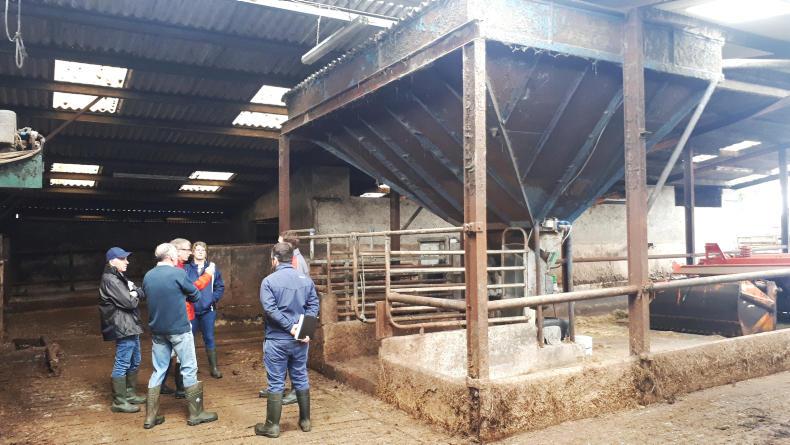
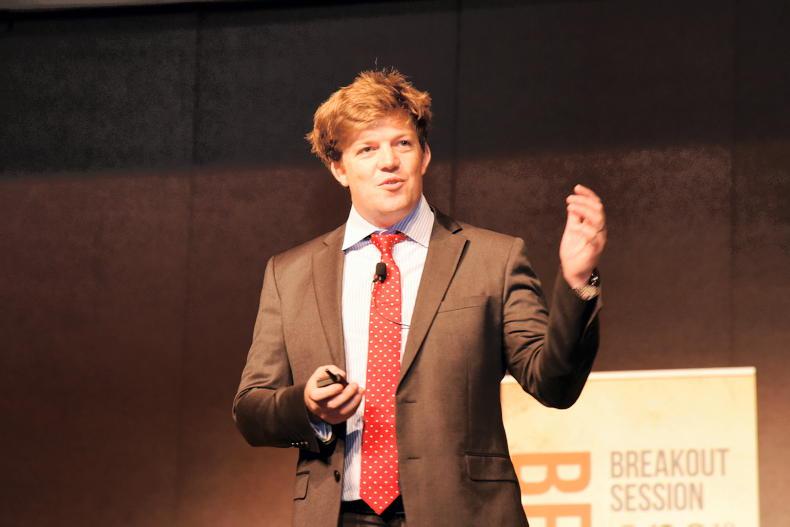
Michael explains to the judges how he has modified the existing system of feeding concentrates to cows once housed indoors.
The extent of the ingenuity and creativity in the new generation of farmers is captured by the fact Michael designed a unit to travel behind a cement lorry when laying down farm roads so that the concrete was shaped and levelled with little or no other work required. This means the time taken in doing this work is minimised but also it is finished to a high standard.
Another unusual feature is a cow underpass that runs under the dairy to bring cows from the paddock right into the back of the collecting yard.
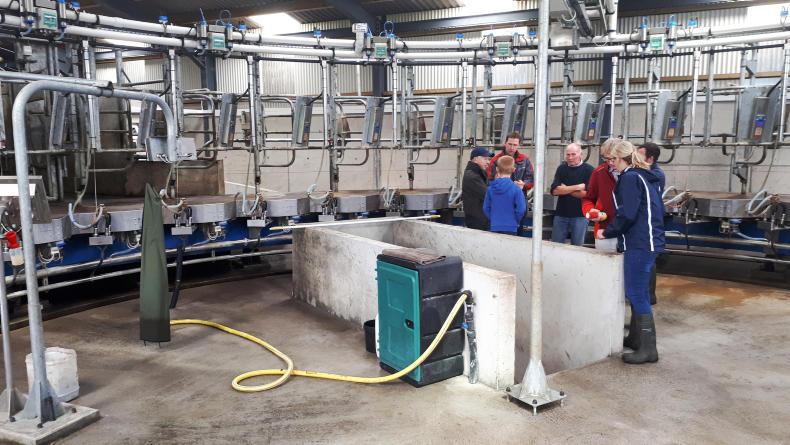
Not afraid to do something different, the rotary is an internal 32-point rotary meaning the milker is on the inside rather than the outside like most of the new rotaries.
Access to the inside of the rotary is via a small underground tunnel that comes up in the centre of the rotary
The Gunns say one of the benefits of this type of a parlour is that you have better visibility from the cluster attachment area of how the rest of the cows are getting on as they go around the rotation.
Access to the inside of the rotary is via a small underground tunnel that comes up in the centre of the rotary.
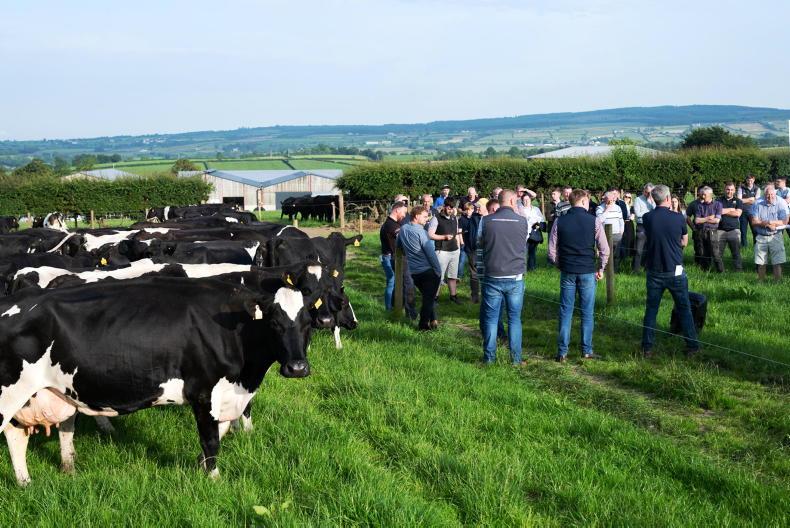
The Gunns now have a 98ha grazing area for the cows and are farming 108ha in total. This is a big change from what they had in the past.
Essentially, they have been lucky to have the capacity to be able to purchase a farm adjoined to the home block of land.
To make this happen, they sold an outblock away from the farm so now cows can walk to a lot more land than they had in the past.
The grazing block is good quality and the Gunns have done a lot of work on reseeding etc over the last number of years to bring it up to speed on grass quality and tonnage grown etc.
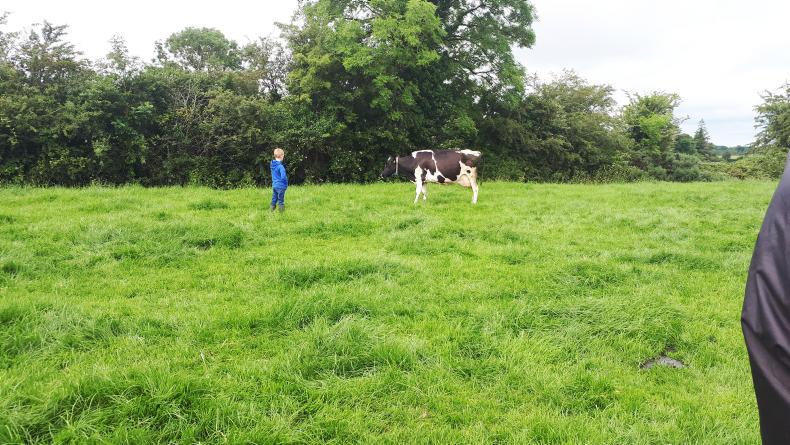
One of the younger members of the Gunn family making sure this cow is alright.
This family have a real good handle on quality milk and knowledge of individual cows. Their expertise has allowed them to reduce antibiotics at drying off down to a minimum.
In 2018 only 10% of cows got antibiotics at drying off – the rest getting a sealer only. Replacement rate in 2018 was 18 first-calvers in the 75-strong herd (24%). About 40 cows calve in the autumn to supply the winter milk, with calving starting in October.
Herd EBI is €34, with the focus to select sires for cows that have over 300kg of milk volume, high milk solids and that are not overly tall. About 70% of the herd go in calf to Friesian AI for replacements.
Milk supply is all year round, with about six weeks of calving in the autumn and 20 weeks in the spring. Monthly milk supply peaks in May.
In 2018, 172 cows were milked and it’s up slightly to 178 for 2019. A total of 88,900 kg of milk solids were delivered in 2018 with about 1,500kg of meal fed per cow. See key stats.
If you are looking to work on this Roscommon farm then look somewhere else because the Gunn family have it wrapped up.
Whether it’s construction, machinery, milking, breeding or grassland management, a member of the Gunn team will have it completed before you can quote for it.
All work on the farm is carried out by the Gunns and they have the equipment and machinery to make it happen.
Michael’s father, Kevin, started farming near Strokestown at a very young age with three shorthorn cows.
Kevin’s son Michael inherited the farm in 2012 and today Michael and his wife, Miriam, are milking 180 Holstein cows and their kids are beginning to become involved on the farm.
Michael’s father Kevin and his mother, Eileen, are still very involved in the business as all the work is kept in the family.
When you have two farming couples as active, enthusiastic and as knowledgeable as they are, no job is a challenge.

Michael explains to the judges how he has modified the existing system of feeding concentrates to cows once housed indoors.
The extent of the ingenuity and creativity in the new generation of farmers is captured by the fact Michael designed a unit to travel behind a cement lorry when laying down farm roads so that the concrete was shaped and levelled with little or no other work required. This means the time taken in doing this work is minimised but also it is finished to a high standard.
Another unusual feature is a cow underpass that runs under the dairy to bring cows from the paddock right into the back of the collecting yard.
Not afraid to do something different, the rotary is an internal 32-point rotary meaning the milker is on the inside rather than the outside like most of the new rotaries.
Access to the inside of the rotary is via a small underground tunnel that comes up in the centre of the rotary
The Gunns say one of the benefits of this type of a parlour is that you have better visibility from the cluster attachment area of how the rest of the cows are getting on as they go around the rotation.
Access to the inside of the rotary is via a small underground tunnel that comes up in the centre of the rotary.
The Gunns now have a 98ha grazing area for the cows and are farming 108ha in total. This is a big change from what they had in the past.
Essentially, they have been lucky to have the capacity to be able to purchase a farm adjoined to the home block of land.
To make this happen, they sold an outblock away from the farm so now cows can walk to a lot more land than they had in the past.
The grazing block is good quality and the Gunns have done a lot of work on reseeding etc over the last number of years to bring it up to speed on grass quality and tonnage grown etc.

One of the younger members of the Gunn family making sure this cow is alright.
This family have a real good handle on quality milk and knowledge of individual cows. Their expertise has allowed them to reduce antibiotics at drying off down to a minimum.
In 2018 only 10% of cows got antibiotics at drying off – the rest getting a sealer only. Replacement rate in 2018 was 18 first-calvers in the 75-strong herd (24%). About 40 cows calve in the autumn to supply the winter milk, with calving starting in October.
Herd EBI is €34, with the focus to select sires for cows that have over 300kg of milk volume, high milk solids and that are not overly tall. About 70% of the herd go in calf to Friesian AI for replacements.
Milk supply is all year round, with about six weeks of calving in the autumn and 20 weeks in the spring. Monthly milk supply peaks in May.
In 2018, 172 cows were milked and it’s up slightly to 178 for 2019. A total of 88,900 kg of milk solids were delivered in 2018 with about 1,500kg of meal fed per cow. See key stats.
SHARING OPTIONS