


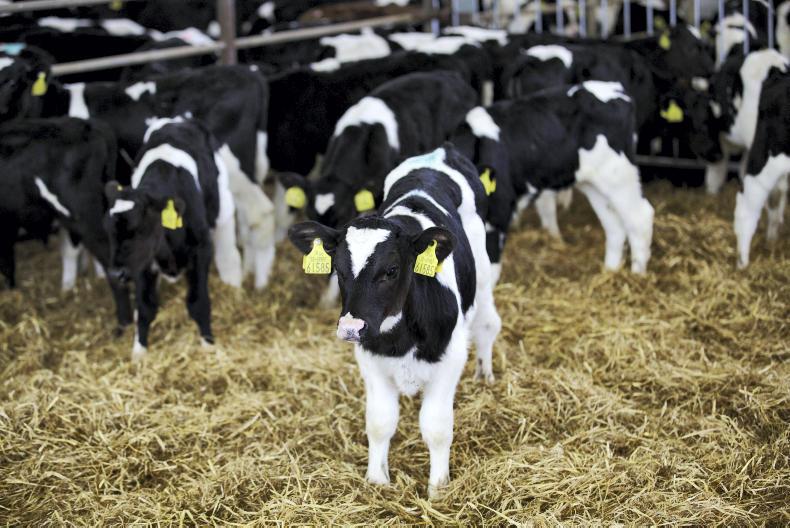
Teagasc and the IFA have both issued warnings about threats posed to the dairy industry by the ever-growing number of calves each spring.
Speaking in Cavan on Tuesday at the first of the IFA’s information meetings on its calf welfare strategy, the association’s dairy committee chair, Tom Phelan, said the situation is too critical to ignore.
“As our [dairy] herd has expanded, so too has the number of dairy calves on the ground.
Failure to effectively deal with the growing number of calves on Irish farms could do untold damage to the sector
"When I was appointed dairy chair, our committee took up the issue of calf welfare as being the most pressing for our sector,” he told the crowd.
“Failure to effectively deal with the growing number of calves on Irish farms could do untold damage to the sector.”
Phelan was joined at the Cavan event by Sean Coughlan, CEO of the Irish Cattle Breeding Federation (ICBF), Pat Dillon of Teagasc and Ray Doyle from the Irish Co-operative Organisation Society (ICOS).
The IFA will host further meetings in Kilkenny and Mayo this week and next.
All speakers agreed that calf exports are “high-risk” and shared a preference for developing a beef industry for dairy calves.
Ferries
Ray Doyle said he fears the public image around calf exports could hit the ferry service from Ireland.
“There are serious challenges for live exports.
If there’s any negativity to animal welfare on their ferries that would be deleterious to the tourist business
"We have 200,000 calves going out of the country but the challenges we have are in Europe because welfare standards are increasing, but, more pressingly, we are relying on two private companies running the ferries.
“If there’s any negativity to animal welfare on their ferries that would be deleterious to the tourist business or their standard roll-on, roll-off business, they could simply have a board meeting on a Monday and it [animal transport] would be over on a Tuesday. So, we have to have the highest standards and not be relying on [exports],” Doyle said before adding that his preference is to rear and process the calves here – once there is a viable beef price.
“The future of these animals is rearing them here and having a vibrant beef industry in Ireland,” Doyle said.
‘We need to reduce calf exports’
Pat Dillon from Teagasc Moorepark said he is concerned about “high-risk” calf exports.
When asked if the industry had expanded too quickly without considering the consequences, Dillon said that the industry could have taken a more strategic approach to calf advice when promoting dairy expansion.
The expansion has resulted in significant increases in dairy calves
“Believe it or not, we never considered the output of the calves on the system. It was all about how we would get [cow] numbers to increase, how we could get milk processed, how would we get land for dairy farmers. We probably should have planned better around the concept [of expansion].
“The expansion has resulted in significant increases in dairy calves and we have seen increases in the slaughter of these calves – around 26,000 last year – and we have seen significant increases in the exports.
“My view is, long-term, we need to eliminate the dependence on slaughter and reduce around the dependence on [live exports]... they’re highrisk,” he said.



SHARING OPTIONS