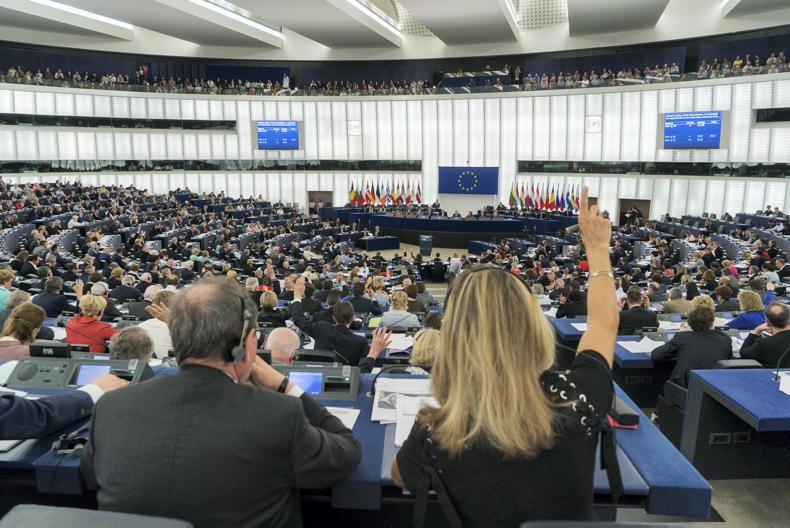
The European Parliament this week approved a resolution declaring a climate and environmental emergency in Europe and globally.
It also wants the Commission to ensure that all relevant legislative and budgetary proposals are fully aligned with the objective of limiting global warming to under 1.5°C.
Climate neutrality
In a separate resolution, the Parliament urged the EU to submit its strategy to reach climate neutrality as soon as possible, and by 2050 at the latest, to the UN convention on climate change.
MEPs also called on the new European Commission President Ursula von der Leyen to include a 55% reduction target of greenhouse gas emissions by 2030 in the European green deal.
Step up global emission reductions for aviation and shipping
MEPs said that current aviation and shipping ambitions fall short of the necessary emissions reductions.
All countries should include emissions from international shipping and aviation in their national contributions plans (NDCs), the parliament stated, and urged the Commission to propose that the maritime sector be included in the EU’s emissions trading system (ETS).
It also said that EU countries should at least double their contributions to the international green climate fund
It also said that EU countries should at least double their contributions to the international green climate fund.
EU member states are the largest providers of public climate finance and the EU’s budget should fully comply with its international commitments.
MEPs also urgently called on all EU countries to phase out all direct and indirect fossil fuel subsidies by 2020.
The resolution on declaring a climate and environmental emergency was adopted with 429 votes for, 225 votes against and 19 abstentions.
Calls for action on climate change
As the parliament declared a climate emergency, the results of a new Eurobarometer survey revealed that EU citizens want combating climate change to be parliament’s top priority.
In total, 32% of Europeans point towards the fight against climate change and preserving the environment as the most important issue for MEPs to address.
It is the most mentioned item in 11 member states, especially in Sweden (62%), Denmark (50%) and The Netherlands (46%).
The Eurobarometer survey also asked respondents which environmental concern is the most pressing. An absolute majority of Europeans (52%) believe that it is climate change, followed by air pollution (35%), marine pollution (31%), deforestation and the growing amount of waste (both 28%).
Irish angle
The Eurobarometer survey shows that close to six out of 10 European citizens are confident or convinced that youth-led protests have a direct impact on policy at both national and European level.
The Irish (74%), Swedes (71%) and Cypriots (70%) are most convinced that the protests will lead to political measures being taken at EU level, compared with 42% of Czechs and 47% of UK citizens, it found.
Read more
Nuffield conference: alternative crops can store twice as much carbon as trees
Farmers urged to send in their views on climate roadmap
Plant-based foods have a higher carbon footprint than meat and dairy
The European Parliament this week approved a resolution declaring a climate and environmental emergency in Europe and globally.
It also wants the Commission to ensure that all relevant legislative and budgetary proposals are fully aligned with the objective of limiting global warming to under 1.5°C.
Climate neutrality
In a separate resolution, the Parliament urged the EU to submit its strategy to reach climate neutrality as soon as possible, and by 2050 at the latest, to the UN convention on climate change.
MEPs also called on the new European Commission President Ursula von der Leyen to include a 55% reduction target of greenhouse gas emissions by 2030 in the European green deal.
Step up global emission reductions for aviation and shipping
MEPs said that current aviation and shipping ambitions fall short of the necessary emissions reductions.
All countries should include emissions from international shipping and aviation in their national contributions plans (NDCs), the parliament stated, and urged the Commission to propose that the maritime sector be included in the EU’s emissions trading system (ETS).
It also said that EU countries should at least double their contributions to the international green climate fund
It also said that EU countries should at least double their contributions to the international green climate fund.
EU member states are the largest providers of public climate finance and the EU’s budget should fully comply with its international commitments.
MEPs also urgently called on all EU countries to phase out all direct and indirect fossil fuel subsidies by 2020.
The resolution on declaring a climate and environmental emergency was adopted with 429 votes for, 225 votes against and 19 abstentions.
Calls for action on climate change
As the parliament declared a climate emergency, the results of a new Eurobarometer survey revealed that EU citizens want combating climate change to be parliament’s top priority.
In total, 32% of Europeans point towards the fight against climate change and preserving the environment as the most important issue for MEPs to address.
It is the most mentioned item in 11 member states, especially in Sweden (62%), Denmark (50%) and The Netherlands (46%).
The Eurobarometer survey also asked respondents which environmental concern is the most pressing. An absolute majority of Europeans (52%) believe that it is climate change, followed by air pollution (35%), marine pollution (31%), deforestation and the growing amount of waste (both 28%).
Irish angle
The Eurobarometer survey shows that close to six out of 10 European citizens are confident or convinced that youth-led protests have a direct impact on policy at both national and European level.
The Irish (74%), Swedes (71%) and Cypriots (70%) are most convinced that the protests will lead to political measures being taken at EU level, compared with 42% of Czechs and 47% of UK citizens, it found.
Read more
Nuffield conference: alternative crops can store twice as much carbon as trees
Farmers urged to send in their views on climate roadmap
Plant-based foods have a higher carbon footprint than meat and dairy








SHARING OPTIONS