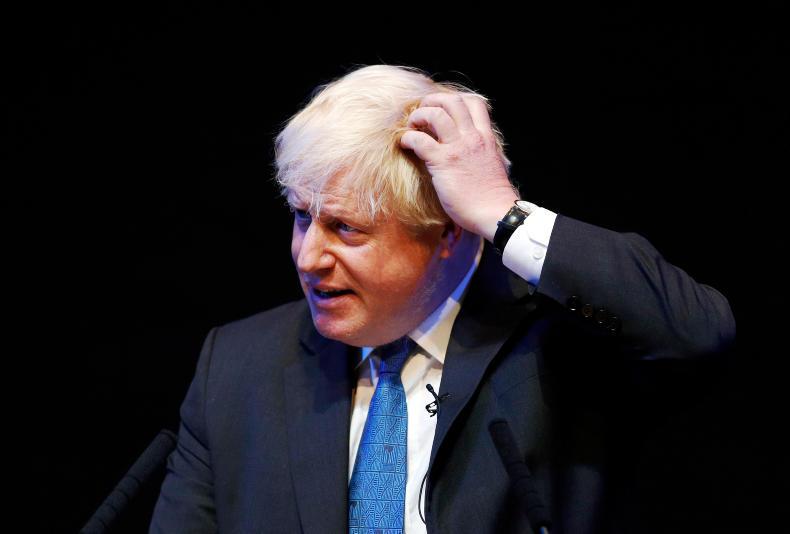
Outgoing British prime minister Boris Johnson has won the UK general election with the biggest majority in 32 years.
As the result became clear, sterling strengthened against the euro to levels last seen at the time of the Brexit referendum in 2016.
However, it has lost some gains since then and by late Friday was trading at 83.6p =€1.00.
Sterling
The strength or weakness of sterling is assessed by financial markets' reading of how hard or soft Brexit will be.
Sterling strengthens whenever traders believe Brexit will result in the UK maintaining closely aligned with the EU in the key areas of product standards and customs tariffs.
When the market view is that the UK will diverge from EU standards and tariffs, then sterling weakens. At the time when a no-deal Brexit seemed a strong possibility, sterling fell to 93p = €1.00.
Clues on policy
Overnight, the view emerged that the prime minister was getting such a big majority that he could ignore the hard Brexit element among his MPs and withstand a rebellion that his outgoing government nor his predecessor Theresa May couldn’t.
The next clues as to what approach he is likely to take is the selection of his ministers.
If the European Research Group (ERG) MPs are relegated from cabinet, it will suggest that the PM is inclined to forge a closer trading relationship with the EU at the expense of negotiating more flexible deals with countries outside the EU, with the USA most mentioned.
Why it matters to Irish farmers
There was a six-week sabbatical on Brexit while the British general election campaign was fought, but the reality is that, despite the UK leaving the EU on 31 January as is now almost certain, the Brexit debate will go on throughout next year and perhaps beyond.
The reason for this is that if the UK leaves with the current deal on 31 January, then it enters a transition phase during which the future trading relationship is negotiated.
This is good for farmers, because it means it will be business as usual after Brexit formally happens for at least a year.
It also means that the uncertainty will continue until the shape of the future trading relationship becomes known. It is only then that farmers and exporters will know if it is a hard or soft Brexit; the harder it is, the worse it will be for Irish farmers.
Read more
Brexit clarity emerges with Conservative majority
Outgoing British prime minister Boris Johnson has won the UK general election with the biggest majority in 32 years.
As the result became clear, sterling strengthened against the euro to levels last seen at the time of the Brexit referendum in 2016.
However, it has lost some gains since then and by late Friday was trading at 83.6p =€1.00.
Sterling
The strength or weakness of sterling is assessed by financial markets' reading of how hard or soft Brexit will be.
Sterling strengthens whenever traders believe Brexit will result in the UK maintaining closely aligned with the EU in the key areas of product standards and customs tariffs.
When the market view is that the UK will diverge from EU standards and tariffs, then sterling weakens. At the time when a no-deal Brexit seemed a strong possibility, sterling fell to 93p = €1.00.
Clues on policy
Overnight, the view emerged that the prime minister was getting such a big majority that he could ignore the hard Brexit element among his MPs and withstand a rebellion that his outgoing government nor his predecessor Theresa May couldn’t.
The next clues as to what approach he is likely to take is the selection of his ministers.
If the European Research Group (ERG) MPs are relegated from cabinet, it will suggest that the PM is inclined to forge a closer trading relationship with the EU at the expense of negotiating more flexible deals with countries outside the EU, with the USA most mentioned.
Why it matters to Irish farmers
There was a six-week sabbatical on Brexit while the British general election campaign was fought, but the reality is that, despite the UK leaving the EU on 31 January as is now almost certain, the Brexit debate will go on throughout next year and perhaps beyond.
The reason for this is that if the UK leaves with the current deal on 31 January, then it enters a transition phase during which the future trading relationship is negotiated.
This is good for farmers, because it means it will be business as usual after Brexit formally happens for at least a year.
It also means that the uncertainty will continue until the shape of the future trading relationship becomes known. It is only then that farmers and exporters will know if it is a hard or soft Brexit; the harder it is, the worse it will be for Irish farmers.
Read more
Brexit clarity emerges with Conservative majority







SHARING OPTIONS