


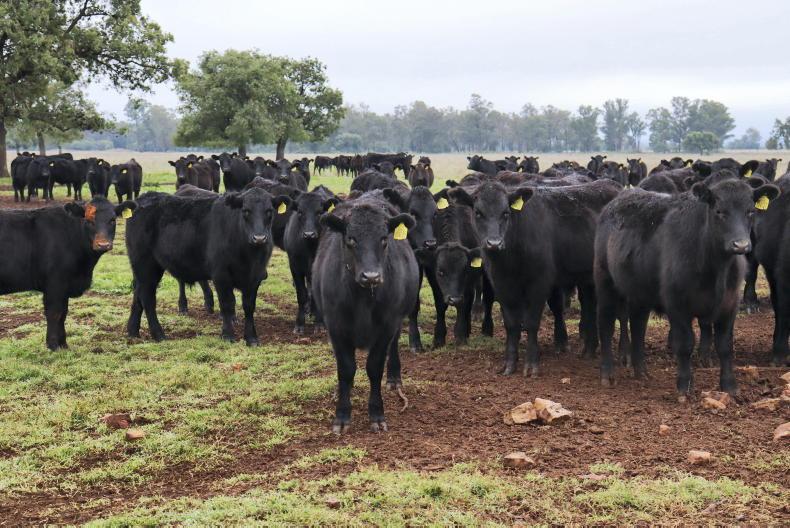
Irish beef prices are now slightly ahead of the EU average when comparing the Irish R3 steer price with the EU average R3 young bull price. The Irish price was €3.66/kg (excluding VAT) for week ending 1 February compared with the EU average of €3.61/kg, though the Irish R3 young bull price remains well below the EU average on just €3.39/kg.
There has been a marginal recovery in the Irish beef price since November, when the Irish R3 steer price was 16c/kg adrift of the EU R3 young bull average. Though the EU average price has remained flat, prices in Britain and Northern Ireland have also improved since November to the equivalent of €4.02/kg and €4.01/kg respectively.
Global trade
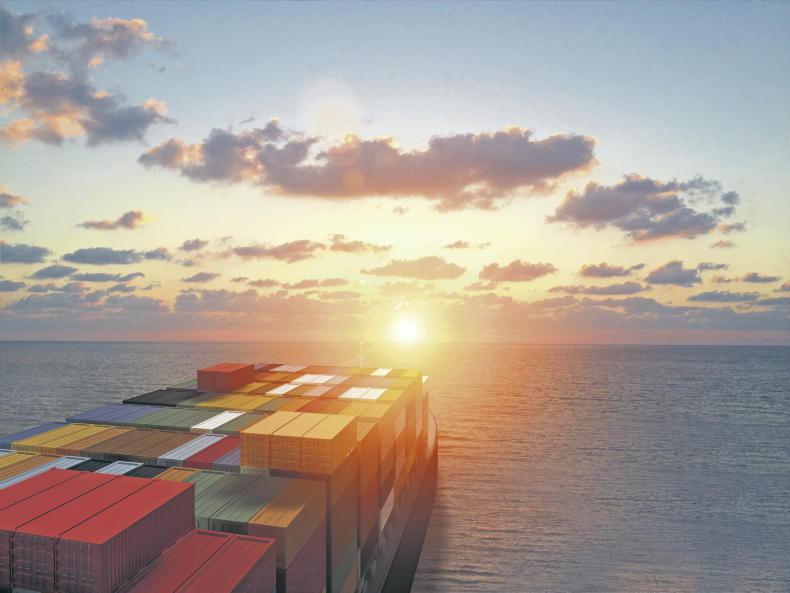
Beef trade across the EU is flat and consumption in the UK, our main market, remains under pressure. No doubt the media negativity and association of beef production with climate change has an effect as even though 90% of UK households are beef purchasers, according to Kantar/AHDB data, the reality is that less volume is being purchased.
World trade is increasingly dictated by China. In late 2019, there was an explosion of demand, not just for beef but all types of meat, as they sought to plug the deficit in pigmeat supply caused by African swine fever (ASF). This has caused a drop in available supply of 18m tonnes, according to latest FAS/USDA estimates. Beef imports increased to 2.9m tonnes carcase weight equivalent (cwe) in 2019, up from 1.5m tonnes cwe the previous year.
Approval of an extra 24 Brazilian factories plus increased deliveries from Argentina and Uruguay led to a surge in supply at inflated prices ahead of the Chinese new year at the end of January. It became apparent that traders had over-bought and many suppliers found deals not being honoured. It had, however, been expected that after the new year, trade would resume at lower prices but then the coronavirus intervened and uncertainty continues.
Even in the uncertainty of January this year, Brazil exported 53,200t of beef to China. This is more than double the volume exported in January 2019, with a value of $322m (€292m), a 200% increase on the value for January 2019 according to ABIEC, the Brazilian Beef Exporters Association.
Prices
In mid-November, Irish prices lagged behind many of the major beef-producing countries in the world outside the EU. Since then, there has been a significant fall in South American countries and to a lesser extent in Australia (see Figure 1). Prices in the USA have remained strong, driven by a strong domestic market for manufacturing beef and no exposure to China. Irish beef exports to the USA in January reached 1,000t, according to USDA import figures, a record high for Irish exports to the USA since trade resumed in 2015.
2020 prospects
The outbreak of the coronavirus has created uncertainty with China. If it is brought under control quickly, then the expectation is that Chinese demand for beef will continue to grow, with FAS/USDA predicting that they will import 2.9m tonnes cwe this year. With most Irish beef exporters now approved to supply China, Ireland will be in a position grab a share of the Chinese beef market in 2020. However, both Brazil and Argentina are increasing production and in a position to increase supply to the Chinese market.
Comment
Comparing Irish farmgate prices with EU and other major beef-producing countries, we didn’t get the bounce in November nor the fall since then. We have had a modest recovery while the EU average has stood still. What is notable is that while we lag a long way behind NI and Britain, they too have had a modest increase in price over the past couple of months. That reflects the fact that it is our most important market by a considerable distance and why Brexit is such an important issue for Irish beef producers.





SHARING OPTIONS