Padraig McCarthy, a progressive farmer from Aghabeg, Lixnaw, Co Kerry, with 220 acres, milking 175 cows, he stocks Freisian and crossbreed jersey, and could spend up to 6 hours milking every day.Photo:Valerie O’Sullivan
ADVERTISEMENT
If you haven’t walked your farm yet this year, now is the time to do so. Walking the land, and ideally measuring your grass covers, will give you an idea of where the heavy and light grass covers are, as well as where the dry parts and wetter parts are. This is need-to-know information before you start grazing or spreading slurry or fertiliser. The majority of dairy and drystock farmers who have already walked their farms got a nice surprise. The reasonably mild winter following on from the early housing last autumn means grass supplies are in quite a healthy state. There is some small growth at the minute, underpinned by soil temperatures running one to two degrees above average for the time of year.
Ideally, fertiliser and slurry should be out. Early nitrogen will help to increase growth rates, maintain grass quality and ensure better regrowths when grazing begins. Be careful spreading slurry on heavy covers as the grazing season could be closer than you think. Apply 2,000gal/ac on light covers and consider using a dribble bar or trailing shoe if covers are heavier. Where grass is too strong, hold off on slurry until after grazing. Strong covers can get fertiliser instead. Urea should be the product of choice at this time of year, with a recommended application of 0.5 bags (23 units) per acre. With heavy rain forecast this weekend, it would be wiser to hold off on all spreading until a better forecast is given.
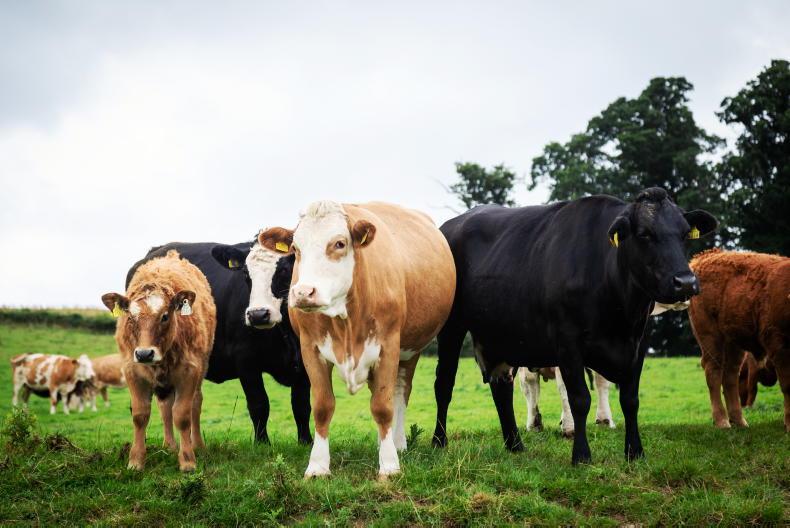
On dairy farms, target grazing covers of 700kg DM/ha to 1,000kg DM/ha first. Cows need to adjust to eating grass. It’s the best way to utilise and graze ground efficiently. On drystock farms, weanlings and lighter store cattle should be the first out. Offering two-day, square or rectangle blocks of grass will be best for utilisation and to prevent ground damage.
ADVERTISEMENT
Register for free to read this story and our free stories.
This content is available to digital subscribers and loyalty code users only. Sign in to your account, use the code or subscribe to get unlimited access.
The reader loyalty code gives you full access to the site from when you enter it until the following Wednesday at 9pm. Find your unique code on the back page of Irish Country Living every week.
CODE ACCEPTED
You have full access to the site until next Wednesday at 9pm.
CODE NOT VALID
Please try again or contact support.
If you haven’t walked your farm yet this year, now is the time to do so. Walking the land, and ideally measuring your grass covers, will give you an idea of where the heavy and light grass covers are, as well as where the dry parts and wetter parts are. This is need-to-know information before you start grazing or spreading slurry or fertiliser. The majority of dairy and drystock farmers who have already walked their farms got a nice surprise. The reasonably mild winter following on from the early housing last autumn means grass supplies are in quite a healthy state. There is some small growth at the minute, underpinned by soil temperatures running one to two degrees above average for the time of year.
Ideally, fertiliser and slurry should be out. Early nitrogen will help to increase growth rates, maintain grass quality and ensure better regrowths when grazing begins. Be careful spreading slurry on heavy covers as the grazing season could be closer than you think. Apply 2,000gal/ac on light covers and consider using a dribble bar or trailing shoe if covers are heavier. Where grass is too strong, hold off on slurry until after grazing. Strong covers can get fertiliser instead. Urea should be the product of choice at this time of year, with a recommended application of 0.5 bags (23 units) per acre. With heavy rain forecast this weekend, it would be wiser to hold off on all spreading until a better forecast is given.
On dairy farms, target grazing covers of 700kg DM/ha to 1,000kg DM/ha first. Cows need to adjust to eating grass. It’s the best way to utilise and graze ground efficiently. On drystock farms, weanlings and lighter store cattle should be the first out. Offering two-day, square or rectangle blocks of grass will be best for utilisation and to prevent ground damage.
If you would like to speak to a member of our team, please call us on 01-4199525.
Link sent to your email address
We have sent an email to your address. Please click on the link in this email to reset your password. If you can't find it in your inbox, please check your spam folder. If you can't find the email, please call us on 01-4199525.
ENTER YOUR LOYALTY CODE:
The reader loyalty code gives you full access to the site from when you enter it until the following Wednesday at 9pm. Find your unique code on the back page of Irish Country Living every week.






SHARING OPTIONS