Over the last 300 years, the type of cattle we breed has changed drastically. These changes came about in order to meet the needs of the industry at that time, and whether we want to believe it or not, we are still changing the type of cattle we breed today.
The real start of commercial cattle breeding took place in the 1700s when European farmers began recording ancestry and developing local breeds.
Early European cattle were used primarily for draft and milk. They were extremely large-framed, late-maturing, light-muscled and slow to finish.
Breeders then set about reducing frame size and speeding up maturity so animals could be slaughtered younger and at a lighter weight.
This reducing size was beginning to show by the early 1800s. The champion Smithfield steer in 1802 weighed in at 1,360kg, about one-third lighter than cattle of the previous century.
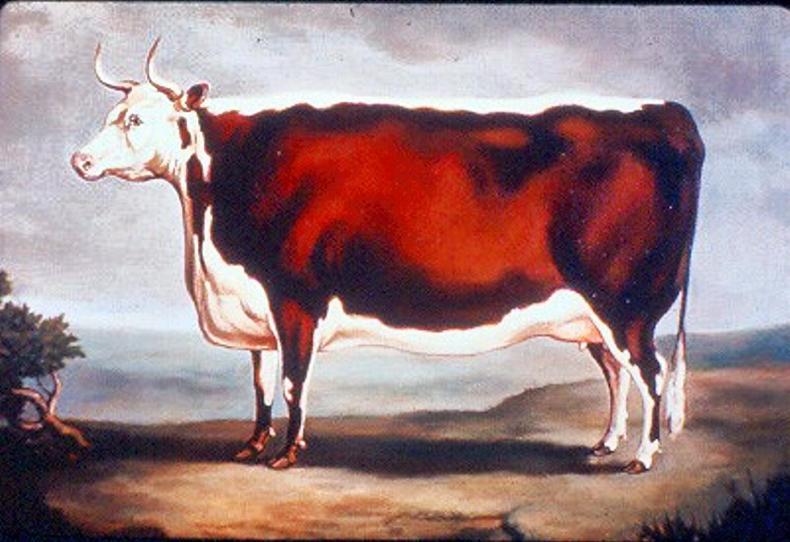
Sir Hungerford was champion three-year-old Hereford bull at England’s Royal Show in 1868.
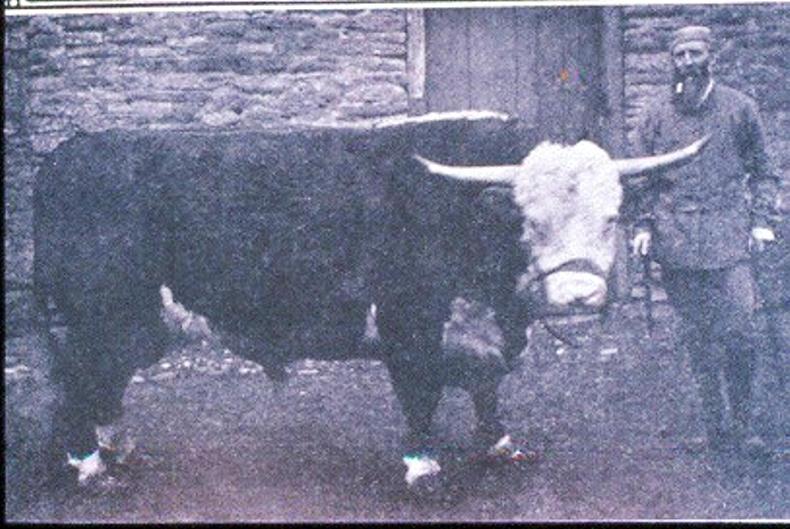
Sir Hungerford a the first prize three-year-old Hereford bull at England’s Royal Show in 1868.
His photo is purported to be the oldest print of an animal. There was a significant type in change at that show from large-framed, rough cattle to smaller-framed, smoother-finished cattle with more “shape” and “balance” to them. Sir Hungerford epitomised this change.
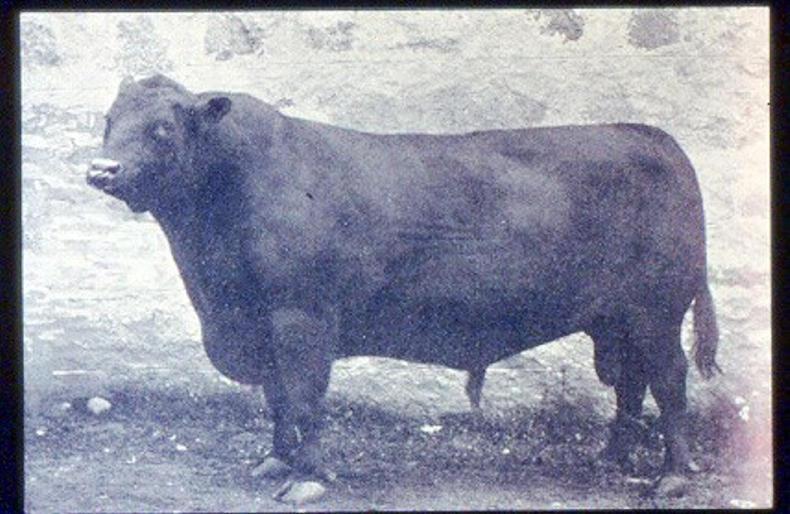
“The Black Knight” was the champion bull at the Highland Angus Show in 1883 and 1885.
During the first third of the 20th century, the trend towards earlier-maturing, smaller-framed, earlier-fattening cattle continued.
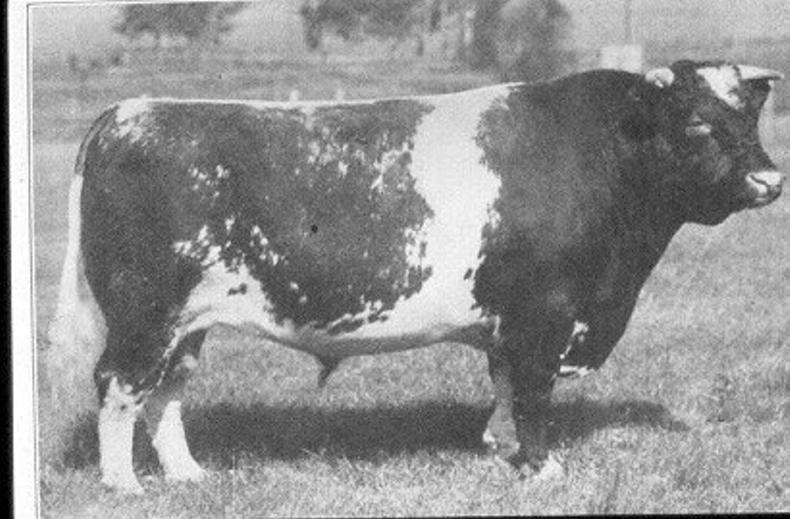
A Shorthorn bull called Ringmaster who was grand champion at the international in Chicago in 1911.
The Angus bull Quality Marshall added substantially to the makeup of the breed in America. At three years of age, he weighed 1,150kg.
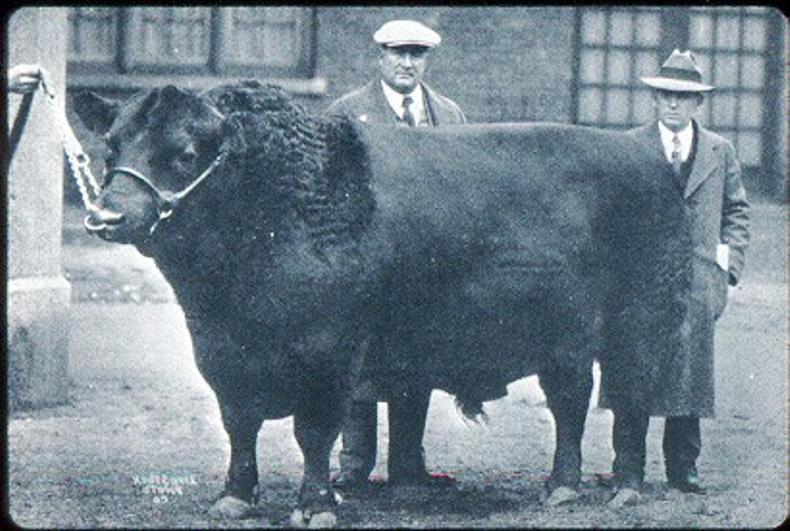
Angus bull Quality Marshall.
From the mid-1930s to the mid-1950s, there was intense selection pressure for earlier-maturing, smaller-framed cattle. It was around this time that the term “baby beef” came to life.
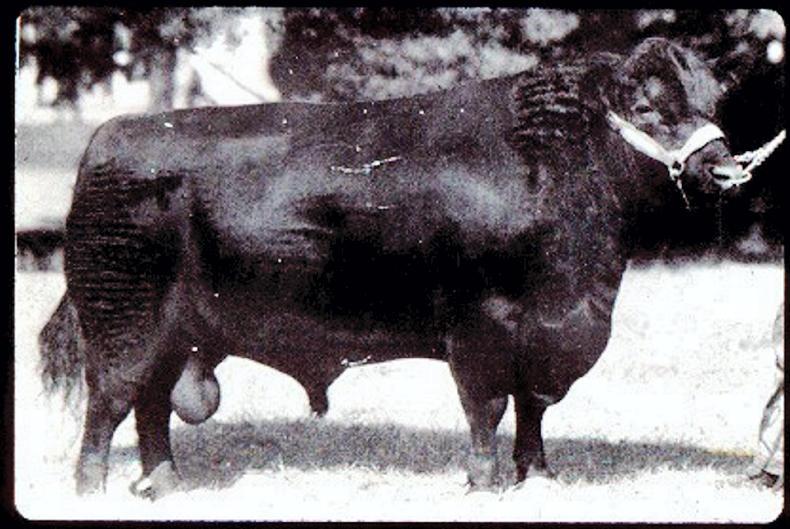
“Bandolier of Anoka 6th” Grand Champion Angus Bull, 1937 International. He was the smallest-framed, shortest-legged, most compact bull up to that time.
An example of this reduction in size is Ernie, the grand champion at the National Western Stock Show in Denver, Colorado, in 1948 who weighed 405kg.
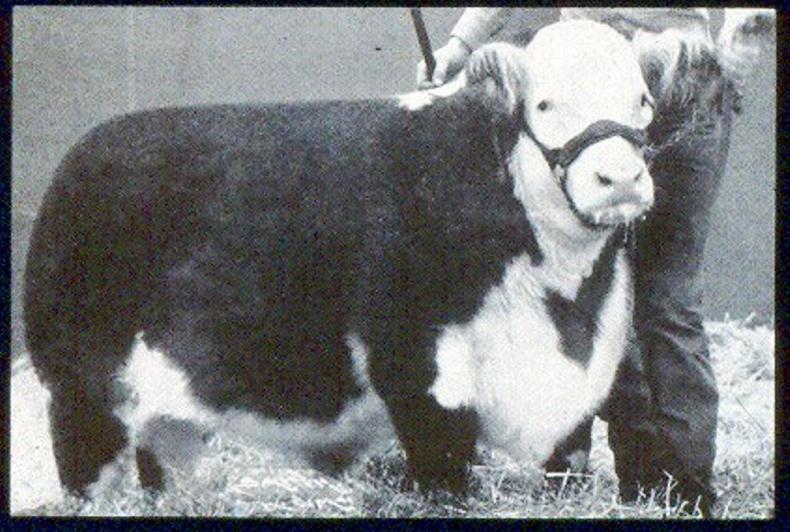
“Ernie” the Grand Champion Steer, at the National Western Stock Show in Denver in 1948.
The market demanded smaller and smaller cattle and during the 1950s dwarfism in cattle erupted, devastating the purebred industry. Dwarfism became a particular problem among Hereford and Angus herds.
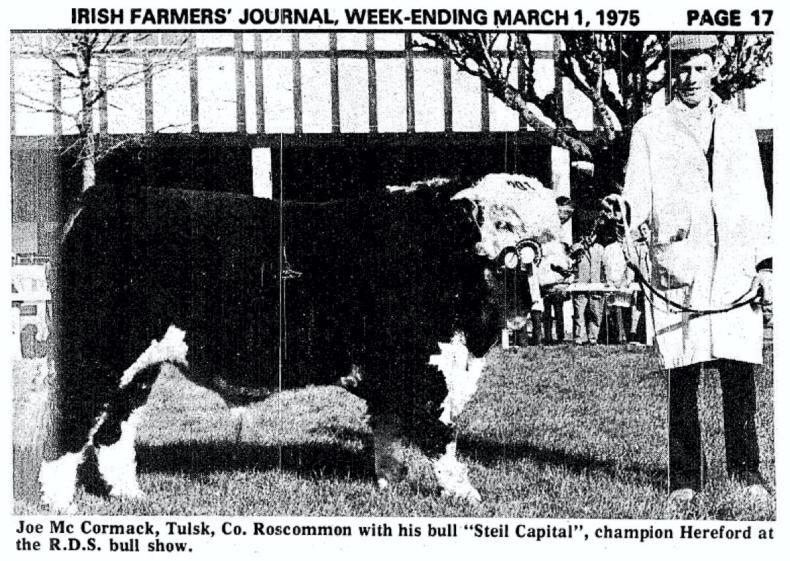
RDS 1957.
These animals at the time were called snorters as they were very small, slow-growing, and their short, dish-shaped heads and large tongues made it difficult for them to breathe so they sounded like they were snorting.
Studies at the time established that this was a heritable trait. But no one knew which animals carried the gene, and there were no reliable methods for determining carriers. As a result, huge numbers of stock were culled. Animals that would have sold for a great deal of money were suddenly worth only their slaughter value.
From 1955 to 1960, cattle size levelled out. During the 1960s, breeders began to select for increased size, but were not able to make much progress with the bloodlines they were using at the time. By the early 1960s, feeders could not bring cattle to slaughter weight without getting overfat. Animals were also achieving an unacceptably low average daily gain.
This led to the beef industry searching for cattle that could be carried to desired slaughter weights without becoming overfat. This is when the European breeds such as the Charolais cross became popular due to their rapid gains and good cuts.
Within the British breeds, intense selection for leaner, larger–framed cattle started in the late 1960s.
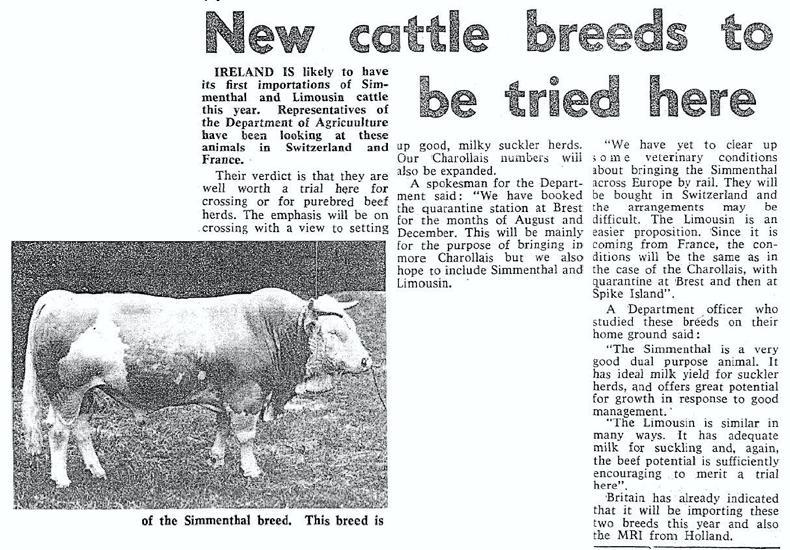
April 1970: First importation of Limousin and Simmental to Ireland
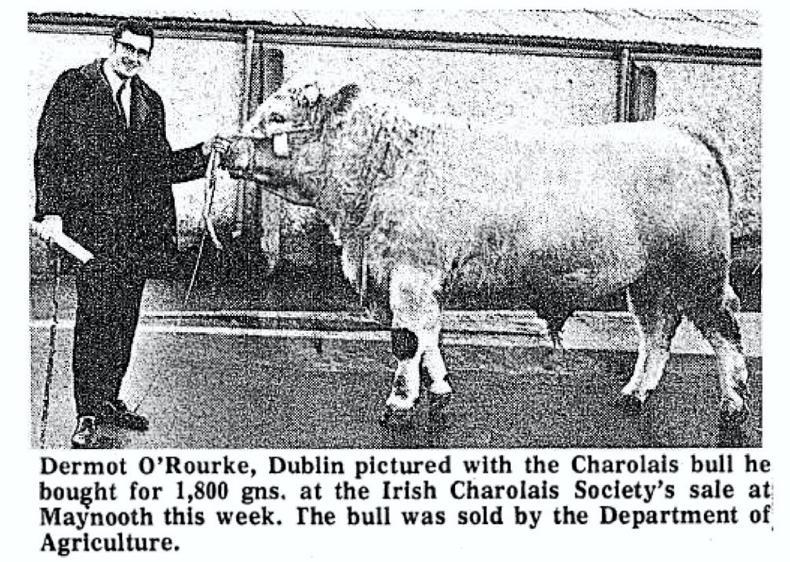
January 1972: The Charolais breed became increasingly popular because of rapid gains and good cuts.
By the early 1980s, some champion show animals were taller than their exhibitors. Champions at cattle shows continued to be larger and larger. By the the mid-1980s, many champion cattle were back up to 1,200kg.
Just as breeders had previously struggled to stop making animals smaller, now they couldn’t seem to stop heading the other direction.
Beginning in the late 1980s, cattle size started to reduce again.
Ireland’s commercial cattle may have dropped somewhat in size, but we still have many pedigree cattle across a number of breeds reaching the 1,000kg mark and above.
The main driving factor behind any significant change is customer demand. Currently, desired carcase weight stands at around 380kg, so farmers must breed an animal to reach this weight while remaining in spec at the earliest age.

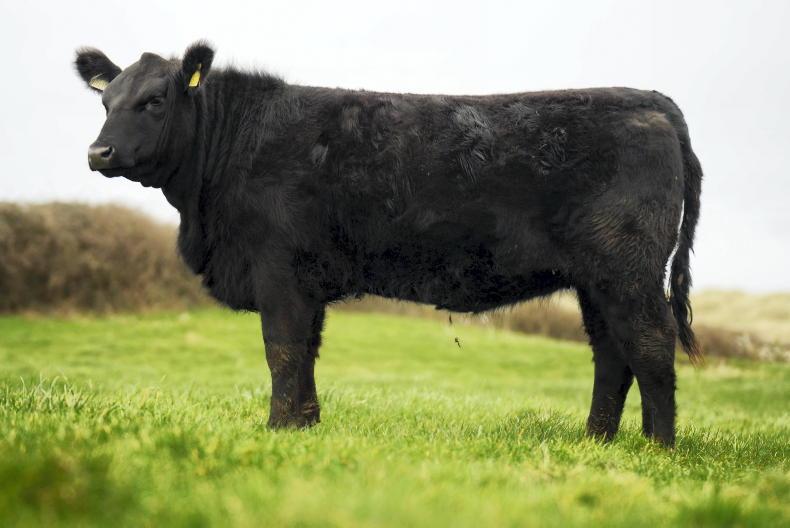
The last 20 years has seen of cattle turn into meat machines. \ MacGregor Photography
Being paid on carcase confirmation has seen cattle turn into meat machines over the past 20 years. Heavily muscled bulls from breeds such as Belgian Blue and Limousin flourished to meet this demand.
Now we’re looking at a time where the most important thing is going to be feed efficiency, as the cost of feed is continually rising. This, again, will dictate the way in which we breed cattle and the way in which our cattle look in future years.
What will our national herd look like in 10, 20 or even 30 years?
Over the last 300 years, the type of cattle we breed has changed drastically. These changes came about in order to meet the needs of the industry at that time, and whether we want to believe it or not, we are still changing the type of cattle we breed today.
The real start of commercial cattle breeding took place in the 1700s when European farmers began recording ancestry and developing local breeds.
Early European cattle were used primarily for draft and milk. They were extremely large-framed, late-maturing, light-muscled and slow to finish.
Breeders then set about reducing frame size and speeding up maturity so animals could be slaughtered younger and at a lighter weight.
This reducing size was beginning to show by the early 1800s. The champion Smithfield steer in 1802 weighed in at 1,360kg, about one-third lighter than cattle of the previous century.
Sir Hungerford was champion three-year-old Hereford bull at England’s Royal Show in 1868.
Sir Hungerford a the first prize three-year-old Hereford bull at England’s Royal Show in 1868.
His photo is purported to be the oldest print of an animal. There was a significant type in change at that show from large-framed, rough cattle to smaller-framed, smoother-finished cattle with more “shape” and “balance” to them. Sir Hungerford epitomised this change.
“The Black Knight” was the champion bull at the Highland Angus Show in 1883 and 1885.
During the first third of the 20th century, the trend towards earlier-maturing, smaller-framed, earlier-fattening cattle continued.
A Shorthorn bull called Ringmaster who was grand champion at the international in Chicago in 1911.
The Angus bull Quality Marshall added substantially to the makeup of the breed in America. At three years of age, he weighed 1,150kg.
Angus bull Quality Marshall.
From the mid-1930s to the mid-1950s, there was intense selection pressure for earlier-maturing, smaller-framed cattle. It was around this time that the term “baby beef” came to life.
“Bandolier of Anoka 6th” Grand Champion Angus Bull, 1937 International. He was the smallest-framed, shortest-legged, most compact bull up to that time.
An example of this reduction in size is Ernie, the grand champion at the National Western Stock Show in Denver, Colorado, in 1948 who weighed 405kg.
“Ernie” the Grand Champion Steer, at the National Western Stock Show in Denver in 1948.
The market demanded smaller and smaller cattle and during the 1950s dwarfism in cattle erupted, devastating the purebred industry. Dwarfism became a particular problem among Hereford and Angus herds.
RDS 1957.
These animals at the time were called snorters as they were very small, slow-growing, and their short, dish-shaped heads and large tongues made it difficult for them to breathe so they sounded like they were snorting.
Studies at the time established that this was a heritable trait. But no one knew which animals carried the gene, and there were no reliable methods for determining carriers. As a result, huge numbers of stock were culled. Animals that would have sold for a great deal of money were suddenly worth only their slaughter value.
From 1955 to 1960, cattle size levelled out. During the 1960s, breeders began to select for increased size, but were not able to make much progress with the bloodlines they were using at the time. By the early 1960s, feeders could not bring cattle to slaughter weight without getting overfat. Animals were also achieving an unacceptably low average daily gain.
This led to the beef industry searching for cattle that could be carried to desired slaughter weights without becoming overfat. This is when the European breeds such as the Charolais cross became popular due to their rapid gains and good cuts.
Within the British breeds, intense selection for leaner, larger–framed cattle started in the late 1960s.
April 1970: First importation of Limousin and Simmental to Ireland
January 1972: The Charolais breed became increasingly popular because of rapid gains and good cuts.
By the early 1980s, some champion show animals were taller than their exhibitors. Champions at cattle shows continued to be larger and larger. By the the mid-1980s, many champion cattle were back up to 1,200kg.
Just as breeders had previously struggled to stop making animals smaller, now they couldn’t seem to stop heading the other direction.
Beginning in the late 1980s, cattle size started to reduce again.
Ireland’s commercial cattle may have dropped somewhat in size, but we still have many pedigree cattle across a number of breeds reaching the 1,000kg mark and above.
The main driving factor behind any significant change is customer demand. Currently, desired carcase weight stands at around 380kg, so farmers must breed an animal to reach this weight while remaining in spec at the earliest age.
The last 20 years has seen of cattle turn into meat machines. \ MacGregor Photography
Being paid on carcase confirmation has seen cattle turn into meat machines over the past 20 years. Heavily muscled bulls from breeds such as Belgian Blue and Limousin flourished to meet this demand.
Now we’re looking at a time where the most important thing is going to be feed efficiency, as the cost of feed is continually rising. This, again, will dictate the way in which we breed cattle and the way in which our cattle look in future years.
What will our national herd look like in 10, 20 or even 30 years?





SHARING OPTIONS