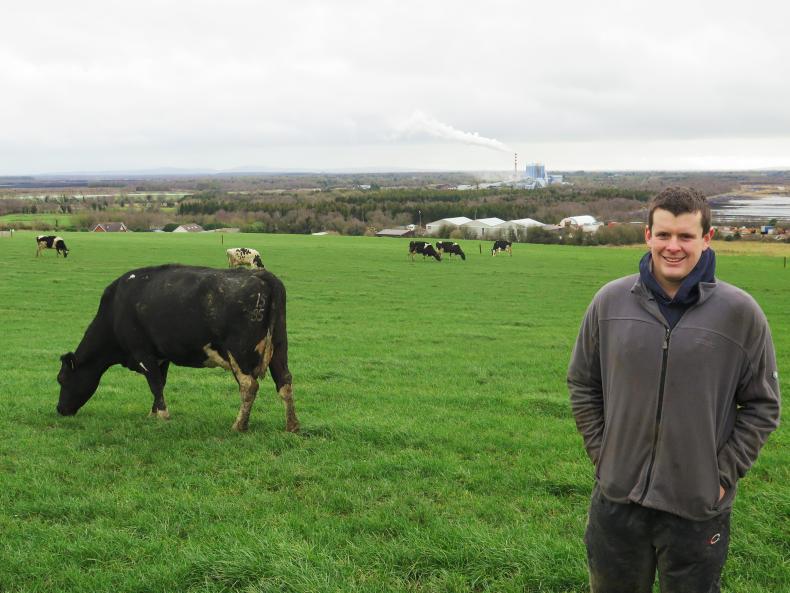
Cows were in for most of last week on the Evans farm at Ballyfore near Edenderry in Co Offaly. Despite the bad weather in February, Pat and his father Patsy have nearly 35% of the farm grazed so far.
Fifty cows in the herd of 220 calved in autumn and these were turned out to grass on 15 January, so the demand was there early.
Of the 170 spring-calving cows, 90 had calved when I visited on Monday, which is 52% of the herd.
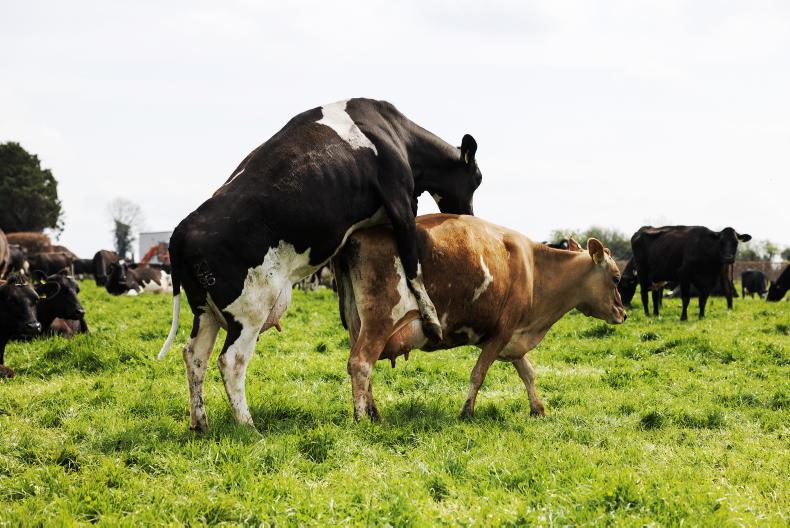
“I was expecting to have more calved by now to be honest. We started calving on 27 January, the due date was 4 February but I reckon we should have 60% calved by now,” said Pat.
“One possible reason why we’re a bit behind is that we used sexed semen on the heifers last year, with only middling results.
Pat says he wanted to reduce the number of lower-value male calves on the farm
“We got 55% in-calf to AI after doing a full CIDR programme. The other thing is a good share of the herd are in-calf to beef AI bulls and they’re probably carrying a few extra days,” Pat said.
The reason sexed semen and more beef AI were used was in response to the difficulties in getting calves sold last spring.
Pat says he wanted to reduce the number of lower-value male calves on the farm.
As things are turning out, demand for calves is good and Pat is getting calls from farmers looking to buy calves.
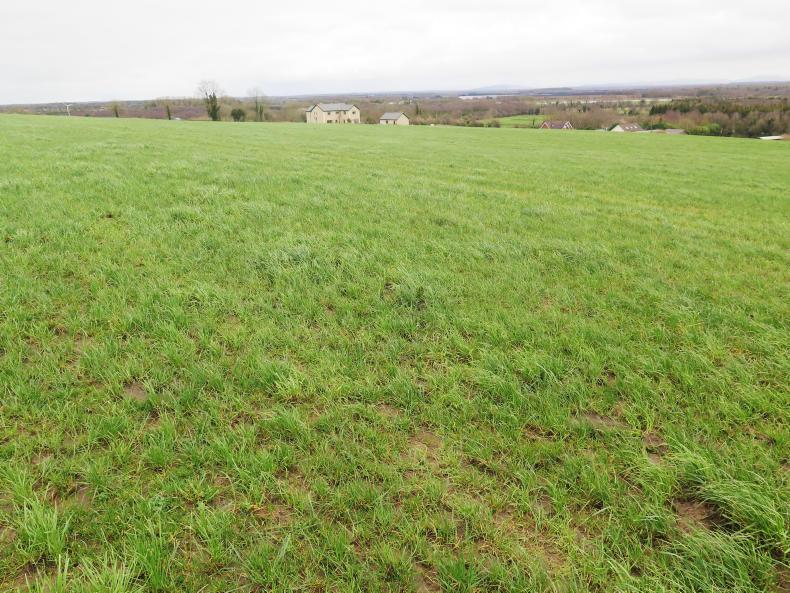
The first field grazed has a cover back of about 250kgDM/ha.
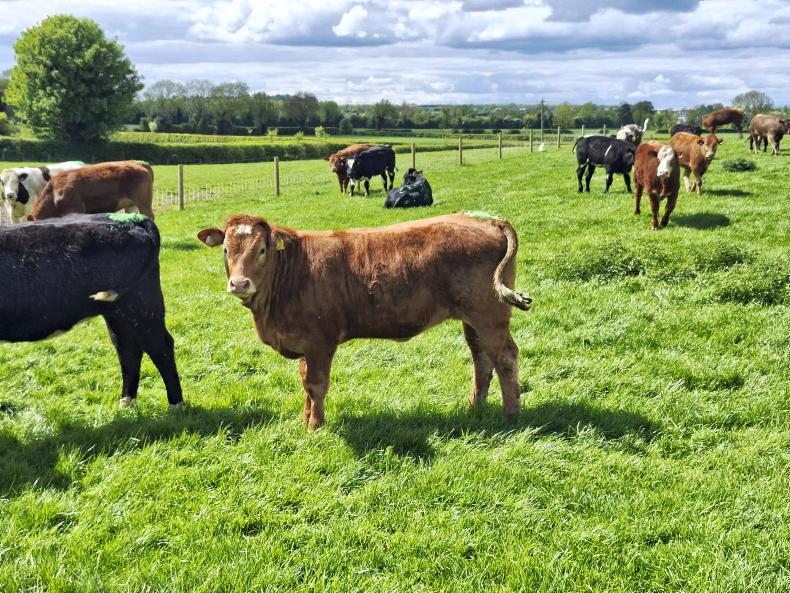
The herd is fully black and white, coming from a Holstein Friesian base, so calf quality is reasonably good. Pat has a deal done to sell the first batch of bull calves at three weeks of age.
Despite the lower than normal conception rate to sexed semen, Pat reckons he’ll use it on the heifers again next year.
With 80 maiden heifers coming on stream, he plans to use it on the best 40. Rather than using a CIDR programme they are going to watch and serve to standing heat. They will probably use PG after seven days.
Grazing
There’s a saying in Tipperary that the best land is often next to a bog. Well this is certainly true in north Offaly. About 80% of the Evans’ farm is extremely free-draining being on a gravel hill overlooking the bog and the Edenderry power plant.
Despite over 30mm of rain at the weekend, the cows were out grazing and didn’t leave a mark. They were on a particularly dry field, the cover was low and they had a large area to ramble over. The stocking rate on the milking platform is just at one cow/acre and with 16tDM/ha grown last year, the farm is in a very comfortable place regarding grass.
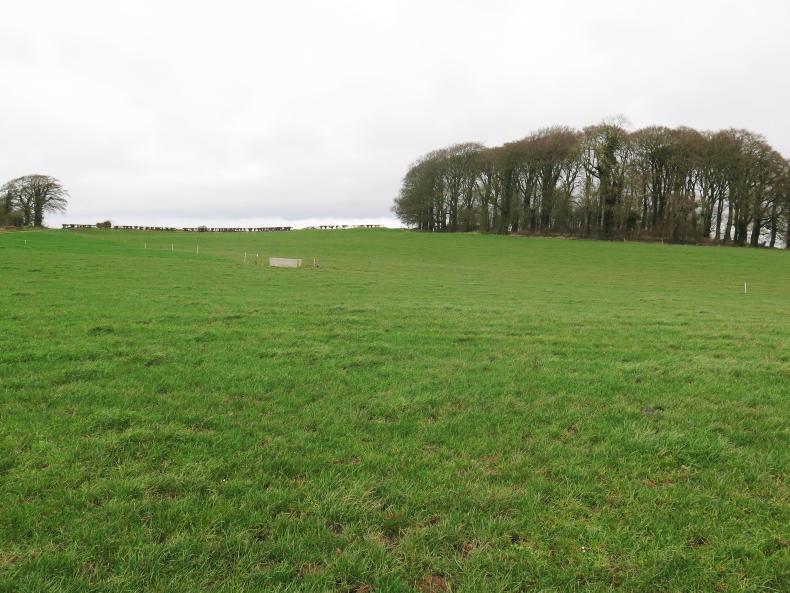
Most of the land is very free draining.
Pat says they’d often have had most of it grazed and be on the second rotation by mid-March, which sounds hard to believe but when grazing starts in early January it’s possible. Pre-grazing yield would have been around 1,000kg/ha and the cows would have been supplemented with maize and grass silage at night.
The liquid milk contract has now been sold back to Glanbia, so the farm will be 100% spring-calving from this year on.
There’s still maize in the pit and the milkers are being fed a mix of maize and grass silage at night. They’re being fed 5kg of meal in the parlour and grass during the day.
About one-third of the milkers calved in October and November, so they’re eating a lot now.
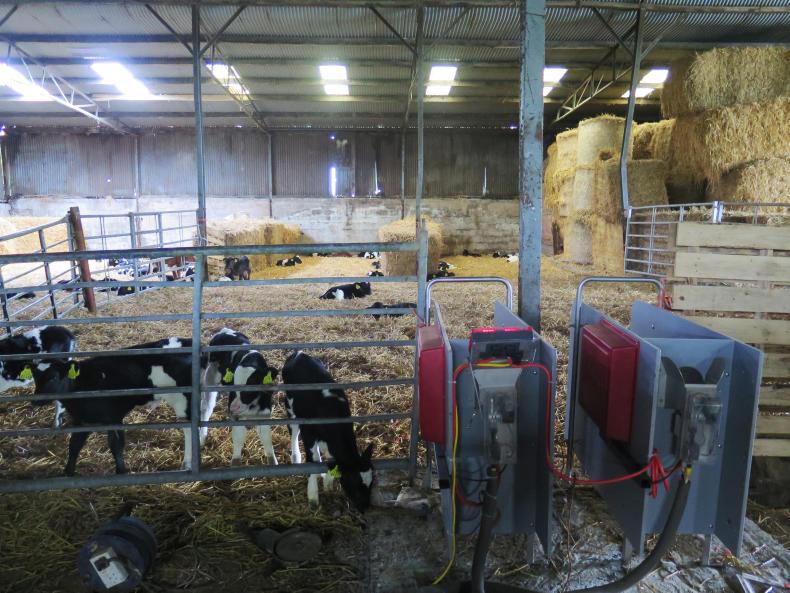
The new feeder has saved Pat about two hours per day spent calf feeding.
The average farm cover is on the low side at 670kg/ha, but the cover per cow is 268kg/cow. The growth rate is currently 12kgDM/ha/day but with so much of the farm grazed and ready to kick off, this should increase fast.
The whole farm got spread with 23 units/acre of urea in the first week of February and about one-third of the farm has got slurry too. Pat and Patsy do most of the machinery work themselves, with local man Larry O’Brien coming in to help out two days per week.
In-parlour feeding was installed three years ago; up to then everything went through the diet feeder
The milking block is split in two divisions, connected by a farm roadway. The main block has the parlour, cubicle and calving facilities while the other block has the silage pits, calf shed and slatted sheds for weanlings and 40 cubicles.
Feeding is done every second day using a diet feeder – a hangover from the liquid milk days. In-parlour feeding was installed three years ago; up to then everything went through the diet feeder.
A new 80-cow cubicle shed was built this winter which has increased the amount of cubicle housing on the farm to 220 cubicles so all cows can be housed in the one yard.
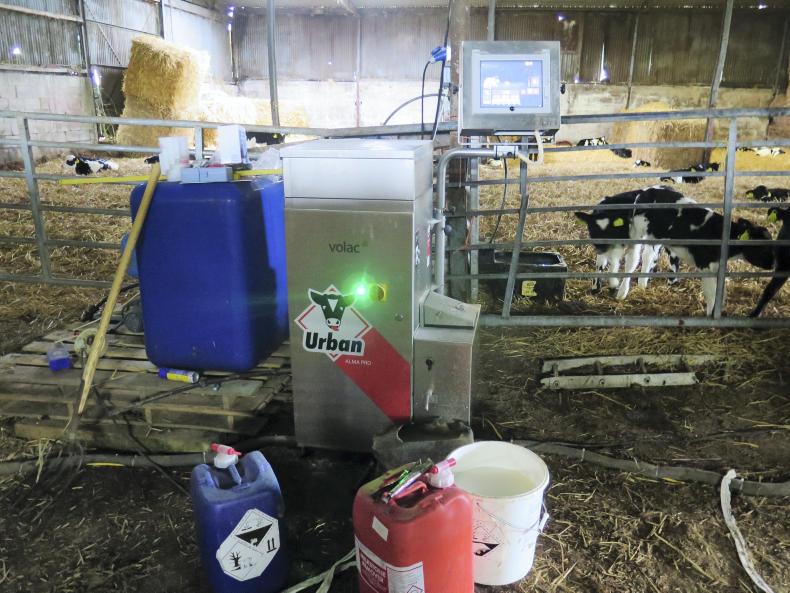
The new Urban calf feeder cost €13,500 plus VAT.
A new Urban computerised calf feeder has just been commissioned. Pat applied for the grant aid on this machine. He received correspondence to say that the application was received but has heard nothing else since. The machine cost €13,500 ex. VAT and is capable of feeding up to 120 calves.
The machine is in a big round-roofed shed on the second yard. The calves are brought over to this yard at three or four days old and put on the feeder.
There are currently two large pens with the two feed stations per pen, but Pat says he’ll probably change it around a bit by making one training pen and then having one large pen with three stations. The shed is plenty big for 120 calves. It’s big, bright and airy and the calves are happy out now.
A refractometer, like what is used to measure colostrum quality, was used to check the dry matter of the mixed milk
They did get a touch of nutritional scour last week after Pat switched the brand of milk replacer.
After a visit by the technical sales rep, it turns out the machine was feeding milk powder at 16% powder rate. It has since been turned back to 12% and there are no more issues.
A refractometer, like what is used to measure colostrum quality, was used to check the dry matter of the mixed milk.
Calves start out at 4l/day for one week, rising then to 6l/day for 47 days and then dropping back to wean at 10 weeks of age.
Other than that, the Evans family have no real issues to report. Calving is going well, with no retained cleanings or hard calvings.
There have been two cases of milk fever but they have recovered well.
The goal was to milk 230 cows and we’re just at that now and have no real desire to push numbers any higher
Pat starts at 6.30am and finishes most days at around 6pm, but is in and out of the yard throughout the evening. Patsy usually gets up once or twice during the night to check on cows.
The pair are in partnership. Pat spent six months in New Zealand during his work placement from UCD.
He then spent two years teaching English in Qatar, before returning home to farm full-time in 2016.
“The goal was to milk 230 cows and we’re just at that now and have no real desire to push numbers any higher. The plan for this year is to fix up farm roadways as lameness is an issue and it’s hard to find suitable stone in these parts.
“The other thing is that depending on how breeding goes we’ll cull hard this year as we should have extra heifers and have been keeping everything for the last few years,” Pat says.
According to the co-op performance report, the herd produced 449kg MS/cow in 2019 from 748kg of meal per cow. The aim is to produce over 500kgMS/cow from similar levels of meal.
Read more
No stop to grazing in the southeast
Calving off to a good start in Cork
Cows were in for most of last week on the Evans farm at Ballyfore near Edenderry in Co Offaly. Despite the bad weather in February, Pat and his father Patsy have nearly 35% of the farm grazed so far.
Fifty cows in the herd of 220 calved in autumn and these were turned out to grass on 15 January, so the demand was there early.
Of the 170 spring-calving cows, 90 had calved when I visited on Monday, which is 52% of the herd.
“I was expecting to have more calved by now to be honest. We started calving on 27 January, the due date was 4 February but I reckon we should have 60% calved by now,” said Pat.
“One possible reason why we’re a bit behind is that we used sexed semen on the heifers last year, with only middling results.
Pat says he wanted to reduce the number of lower-value male calves on the farm
“We got 55% in-calf to AI after doing a full CIDR programme. The other thing is a good share of the herd are in-calf to beef AI bulls and they’re probably carrying a few extra days,” Pat said.
The reason sexed semen and more beef AI were used was in response to the difficulties in getting calves sold last spring.
Pat says he wanted to reduce the number of lower-value male calves on the farm.
As things are turning out, demand for calves is good and Pat is getting calls from farmers looking to buy calves.
The first field grazed has a cover back of about 250kgDM/ha.
The herd is fully black and white, coming from a Holstein Friesian base, so calf quality is reasonably good. Pat has a deal done to sell the first batch of bull calves at three weeks of age.
Despite the lower than normal conception rate to sexed semen, Pat reckons he’ll use it on the heifers again next year.
With 80 maiden heifers coming on stream, he plans to use it on the best 40. Rather than using a CIDR programme they are going to watch and serve to standing heat. They will probably use PG after seven days.
Grazing
There’s a saying in Tipperary that the best land is often next to a bog. Well this is certainly true in north Offaly. About 80% of the Evans’ farm is extremely free-draining being on a gravel hill overlooking the bog and the Edenderry power plant.
Despite over 30mm of rain at the weekend, the cows were out grazing and didn’t leave a mark. They were on a particularly dry field, the cover was low and they had a large area to ramble over. The stocking rate on the milking platform is just at one cow/acre and with 16tDM/ha grown last year, the farm is in a very comfortable place regarding grass.
Most of the land is very free draining.
Pat says they’d often have had most of it grazed and be on the second rotation by mid-March, which sounds hard to believe but when grazing starts in early January it’s possible. Pre-grazing yield would have been around 1,000kg/ha and the cows would have been supplemented with maize and grass silage at night.
The liquid milk contract has now been sold back to Glanbia, so the farm will be 100% spring-calving from this year on.
There’s still maize in the pit and the milkers are being fed a mix of maize and grass silage at night. They’re being fed 5kg of meal in the parlour and grass during the day.
About one-third of the milkers calved in October and November, so they’re eating a lot now.
The new feeder has saved Pat about two hours per day spent calf feeding.
The average farm cover is on the low side at 670kg/ha, but the cover per cow is 268kg/cow. The growth rate is currently 12kgDM/ha/day but with so much of the farm grazed and ready to kick off, this should increase fast.
The whole farm got spread with 23 units/acre of urea in the first week of February and about one-third of the farm has got slurry too. Pat and Patsy do most of the machinery work themselves, with local man Larry O’Brien coming in to help out two days per week.
In-parlour feeding was installed three years ago; up to then everything went through the diet feeder
The milking block is split in two divisions, connected by a farm roadway. The main block has the parlour, cubicle and calving facilities while the other block has the silage pits, calf shed and slatted sheds for weanlings and 40 cubicles.
Feeding is done every second day using a diet feeder – a hangover from the liquid milk days. In-parlour feeding was installed three years ago; up to then everything went through the diet feeder.
A new 80-cow cubicle shed was built this winter which has increased the amount of cubicle housing on the farm to 220 cubicles so all cows can be housed in the one yard.
The new Urban calf feeder cost €13,500 plus VAT.
A new Urban computerised calf feeder has just been commissioned. Pat applied for the grant aid on this machine. He received correspondence to say that the application was received but has heard nothing else since. The machine cost €13,500 ex. VAT and is capable of feeding up to 120 calves.
The machine is in a big round-roofed shed on the second yard. The calves are brought over to this yard at three or four days old and put on the feeder.
There are currently two large pens with the two feed stations per pen, but Pat says he’ll probably change it around a bit by making one training pen and then having one large pen with three stations. The shed is plenty big for 120 calves. It’s big, bright and airy and the calves are happy out now.
A refractometer, like what is used to measure colostrum quality, was used to check the dry matter of the mixed milk
They did get a touch of nutritional scour last week after Pat switched the brand of milk replacer.
After a visit by the technical sales rep, it turns out the machine was feeding milk powder at 16% powder rate. It has since been turned back to 12% and there are no more issues.
A refractometer, like what is used to measure colostrum quality, was used to check the dry matter of the mixed milk.
Calves start out at 4l/day for one week, rising then to 6l/day for 47 days and then dropping back to wean at 10 weeks of age.
Other than that, the Evans family have no real issues to report. Calving is going well, with no retained cleanings or hard calvings.
There have been two cases of milk fever but they have recovered well.
The goal was to milk 230 cows and we’re just at that now and have no real desire to push numbers any higher
Pat starts at 6.30am and finishes most days at around 6pm, but is in and out of the yard throughout the evening. Patsy usually gets up once or twice during the night to check on cows.
The pair are in partnership. Pat spent six months in New Zealand during his work placement from UCD.
He then spent two years teaching English in Qatar, before returning home to farm full-time in 2016.
“The goal was to milk 230 cows and we’re just at that now and have no real desire to push numbers any higher. The plan for this year is to fix up farm roadways as lameness is an issue and it’s hard to find suitable stone in these parts.
“The other thing is that depending on how breeding goes we’ll cull hard this year as we should have extra heifers and have been keeping everything for the last few years,” Pat says.
According to the co-op performance report, the herd produced 449kg MS/cow in 2019 from 748kg of meal per cow. The aim is to produce over 500kgMS/cow from similar levels of meal.
Read more
No stop to grazing in the southeast
Calving off to a good start in Cork






SHARING OPTIONS