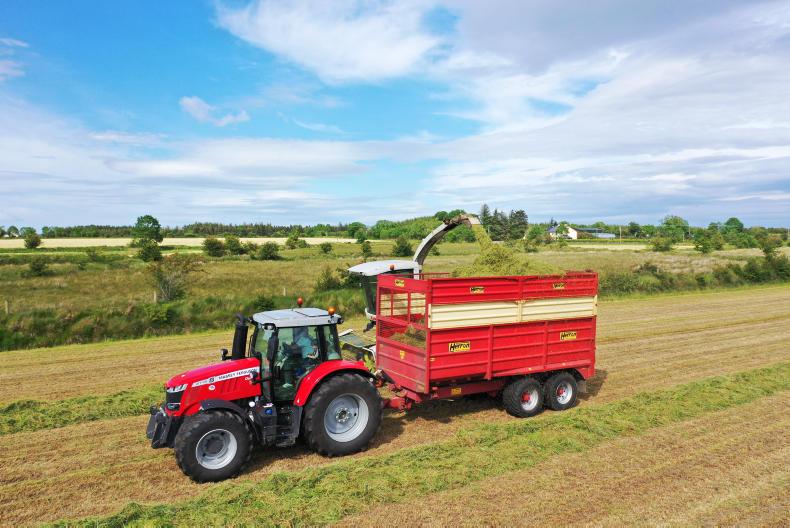
As the silage season fast approaches, now is the time to pull out all the trailers and give them a once-over before the season starts. It is also worth familiarising yourself and your staff with the current RSA regulations around trailers.
Before getting into weight limits and what not, start with a physical assessment of the trailer. Begin by inspecting the following.
1 Draw bar and towing eye
Traditional or standard towing eyes are a wearing component on any trailed machine, therefore they need to be inspected for wear and replaced if badly worn.
More and more equipment is being ordered now with the safer ball-and-spoon-type coupling system which is not only safer, but is much harder wearing and allows 1t more weight to legally be carried on the hitch.
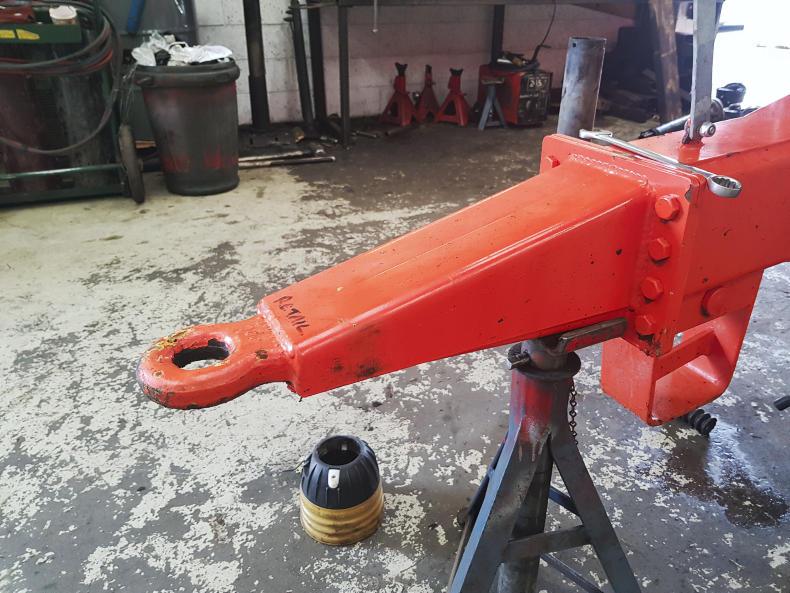
Towing eye condition should be checked.
2 Axles and running gear
Axles need to be inspected for wear and possible damage as they spend most of their time under load. Depending on the axle type, they generally consist of multiple moving components that need to be regularly lubricated for a long working life. Steering axles are very common on the larger trailers of today. It is vital that these are checked over and receive adequate lubrication on a regular basis.
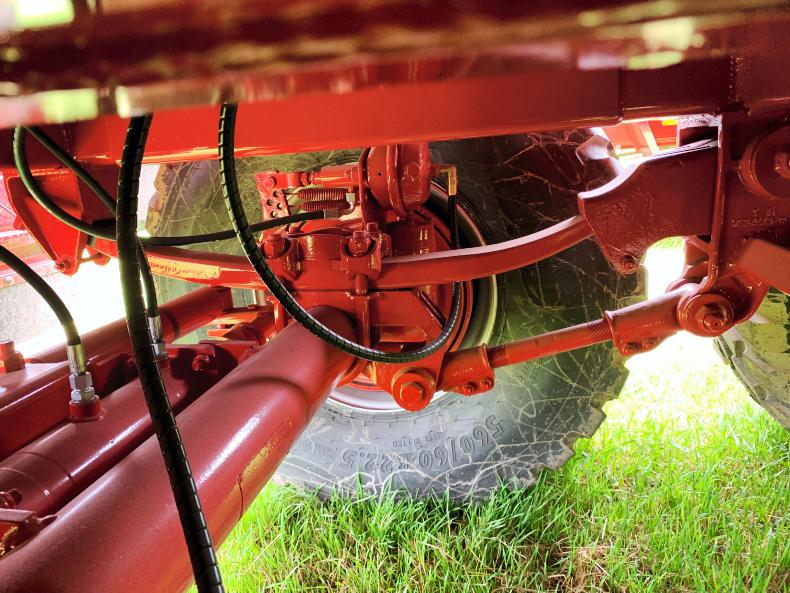
Running gear such as axles and springs should be checked for damage or wear.
Passive steering systems should be tested to ensure they are locking in position for road travel.
As the name suggests, the axle once depressurised is free to turn in any direction, which can be dangerous at high road going speed if not locked.
The majority of trailers are now fitted with springs. It is important these springs are checked over and that none is snapped.
3 Brakes
Regardless of the braking system fitted, all brakes should be in good working order. Slack adjusters should be checked and if these are the older manual type they should be adjusted accordingly.
Braking regulations differ depending on the speed of the tractor towing the trailer and the speed the trailer was designed to be towed at. Trailers manufactured before January 2016 may need to be retrofitted with a more modern braking system.
For example, a trailer designed to be towed with a 50km/h tractor must be fitted with load-sensing air brakes, an auto breakaway, a parking brake and an authorisation plate. These requirements can be confusing and differ for each scenario.
If in doubt, check with the RSA or your trailer manufacturer for correct guidance.
4 Lights and reflectors
Lighting systems vary somewhat depending on the setup. All trailer lights and reflectors should be working and intact. Tractors and trailers, if over a combined length of 10m, are to be fitted with amber side lights, reflective side markings and if over 13m combined, should have a “long vehicle” marker on the rear.

Reflective side marking and amber side lights must be fitted to trailers if the combined vehicle length exceeds 10m.
Reflective markings should cover 80% of the trailer. On the rear, a red reflective strip across the width of the trailer is required. A speed plate should also be fitted to the rear of the trailer. Once again, if in doubt contact the RSA or relevant trailer manufacturer for advice.
5 Tyres
As with any machine, tyres should always be in good physical condition showing no signs of excessive wear, cuts or bulges that could lead to failure. Wheel nut tightness and tyre pressure should be checked regularly throughout the season to prevent increased wear.
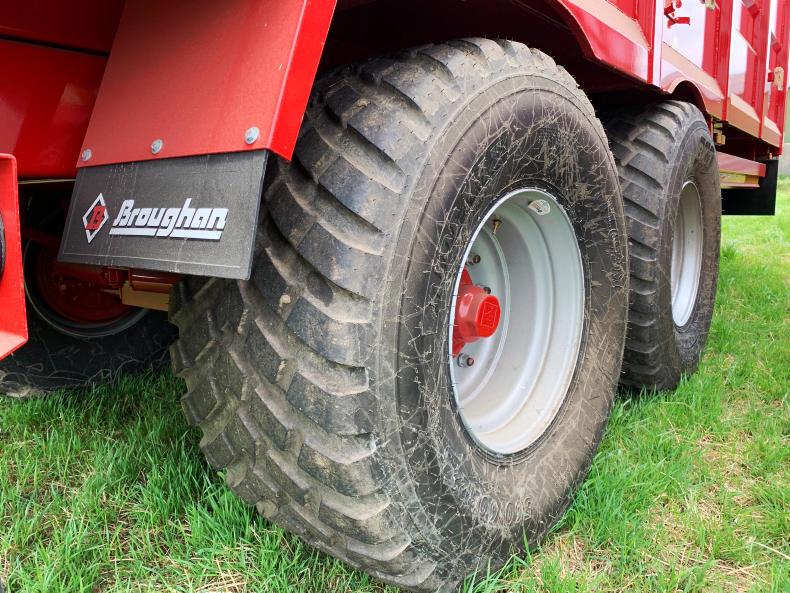
Tyre condition, pressure and wheel nuts must be checked on a regular basis.
As the silage season fast approaches, now is the time to pull out all the trailers and give them a once-over before the season starts. It is also worth familiarising yourself and your staff with the current RSA regulations around trailers.
Before getting into weight limits and what not, start with a physical assessment of the trailer. Begin by inspecting the following.
1 Draw bar and towing eye
Traditional or standard towing eyes are a wearing component on any trailed machine, therefore they need to be inspected for wear and replaced if badly worn.
More and more equipment is being ordered now with the safer ball-and-spoon-type coupling system which is not only safer, but is much harder wearing and allows 1t more weight to legally be carried on the hitch.
Towing eye condition should be checked.
2 Axles and running gear
Axles need to be inspected for wear and possible damage as they spend most of their time under load. Depending on the axle type, they generally consist of multiple moving components that need to be regularly lubricated for a long working life. Steering axles are very common on the larger trailers of today. It is vital that these are checked over and receive adequate lubrication on a regular basis.
Running gear such as axles and springs should be checked for damage or wear.
Passive steering systems should be tested to ensure they are locking in position for road travel.
As the name suggests, the axle once depressurised is free to turn in any direction, which can be dangerous at high road going speed if not locked.
The majority of trailers are now fitted with springs. It is important these springs are checked over and that none is snapped.
3 Brakes
Regardless of the braking system fitted, all brakes should be in good working order. Slack adjusters should be checked and if these are the older manual type they should be adjusted accordingly.
Braking regulations differ depending on the speed of the tractor towing the trailer and the speed the trailer was designed to be towed at. Trailers manufactured before January 2016 may need to be retrofitted with a more modern braking system.
For example, a trailer designed to be towed with a 50km/h tractor must be fitted with load-sensing air brakes, an auto breakaway, a parking brake and an authorisation plate. These requirements can be confusing and differ for each scenario.
If in doubt, check with the RSA or your trailer manufacturer for correct guidance.
4 Lights and reflectors
Lighting systems vary somewhat depending on the setup. All trailer lights and reflectors should be working and intact. Tractors and trailers, if over a combined length of 10m, are to be fitted with amber side lights, reflective side markings and if over 13m combined, should have a “long vehicle” marker on the rear.
Reflective side marking and amber side lights must be fitted to trailers if the combined vehicle length exceeds 10m.
Reflective markings should cover 80% of the trailer. On the rear, a red reflective strip across the width of the trailer is required. A speed plate should also be fitted to the rear of the trailer. Once again, if in doubt contact the RSA or relevant trailer manufacturer for advice.
5 Tyres
As with any machine, tyres should always be in good physical condition showing no signs of excessive wear, cuts or bulges that could lead to failure. Wheel nut tightness and tyre pressure should be checked regularly throughout the season to prevent increased wear.
Tyre condition, pressure and wheel nuts must be checked on a regular basis.







SHARING OPTIONS