



West Cork dairy processor Carbery says it stands ready to support farmer milk prices through the COVID-19-induced downturn in global dairy markets. Speaking to the Irish Farmers Journal this week, Carbery CEO Jason Hawkins said the co-op has a €7.3m stability fund that it is ready to use to support farmgate milk prices this year and help offset some of the weakness in dairy markets right now.
“We came into this year with €7.3m in our milk price stability fund, which we use to support milk prices during exceptionally weak markets,” said Hawkins.
Carbery cut its base milk price for March by 1.5c/l due to the negative impact COVID-19 was having on dairy markets
“When we met last week, the board of Carbery was conscious that March is the first big milk cheque of the year for farmers so we wanted to use the fund to support milk prices. The feeling was that it will give our suppliers a bit of cash at the start of the season,” he added.
Hawkins is clear that Carbery is not in a position to continue paying a support of 2c/l for the rest of 2020
Carbery cut its base milk price for March by 1.5c/l due to the negative impact COVID-19 was having on dairy markets but the co-op fully offset this by an increase of 1.5c/l from its stability fund. The co-op had already been paying farmer suppliers 0.5c/l from the stability fund for February, meaning Carbery is now paying a total support of 2c/l on March milk.
However, Hawkins is clear that Carbery is not in a position to continue paying a support of 2c/l for the rest of 2020 but does say the co-op will probably be able to support milk prices by 1c/l to 1.5c/l for the rest of the year, which will use up the entire €7.3m fund.
Dairy markets
On dairy markets, Hawkins says dairy farmers have been understandably shocked by the pace of the downturn in markets but that there probably is still some weakness to come in markets.
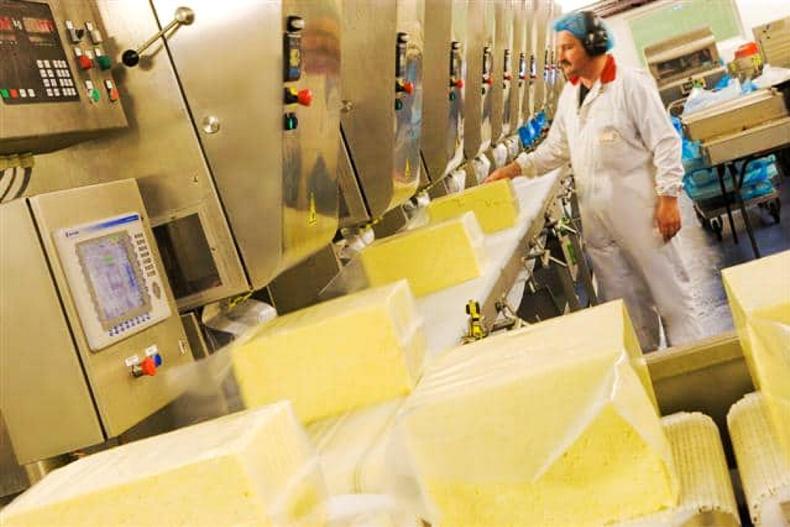
Carbery’s business is rooted in cheese production with its Ballineen factory producing around 50,000t of cheddar annually – about 25% of Ireland’s total cheese output.
The big problem is that the Chicago price for cheese (CME) has halved in the last eight weeks
While cheddar prices have performed better than other commodities such as butter and skimmed milk powder (SMP), Hawkins said the situation in the US is now starting to put pressure on international cheese prices.
“The big problem is that the Chicago price for cheese (CME) has halved in the last eight weeks. It is now at an equivalent price of €2,400/t for cheese. US dairy processors are aggressively pushing US cheese into international markets, which is putting downward pressure on our prices,” says Hawkins.
Carbery had also planned to commission its new €78m mozzarella plant this month. However, final commissioning work on the plant was halted due to the COVID-19 lockdown. Hawkins said the company had planned to produce about 8,000t of mozzarella this year but that will likely be less than 5,000t now.
Overall, Hawkins sees the implications of COVID-19 lasting well into 2021
It may be just as well as mozzarella markets have been hardest hit by the COVID-19 restrictions. With the majority of mozzarella destined for foodservice customers, the shutdown of restaurants, hotels and cafés has resulted in a huge collapse in mozzarella prices over recent weeks.
Overall, Hawkins sees the implications of COVID-19 lasting well into 2021.
I think the other big issue is that we will be left with a large overhang of dairy inventory
“I think it’s going to be a slow recovery for dairy markets into next year. The challenge is that foodservice channels such as restaurants and hotels will be pretty much the last to reopen after COVID. You certainly won’t see restaurants going back to 100% capacity on day one because consumers will be nervous of crowded places after this,” says Hawkins.
“I think the other big issue is that we will be left with a large overhang of dairy inventory next year, unfortunately.
In the US, stocks of SMP are 24% higher than they were last year and intervention is going to happen in Europe. The markets will return to normal but it just might be a bit of a slow return. We’ll get out of this but it could be a ropey 18 months,” he added.



SHARING OPTIONS