Ireland needs to change its model of farming, reduce reliance on pesticides and fertiliser and a reduction in the national cattle herd “is not a policy of ours”, according to Green Party agriculture spokesperson Pippa Hackett.
Last week the Green Party set out a document for Fianna Fáil and Fine Gael with a raft of questions it wants answered before any government negotiations take place.
It said “radical” action is needed to combat emissions and that a national land use policy would be “central” to “both our climate and biodiversity objectives”.
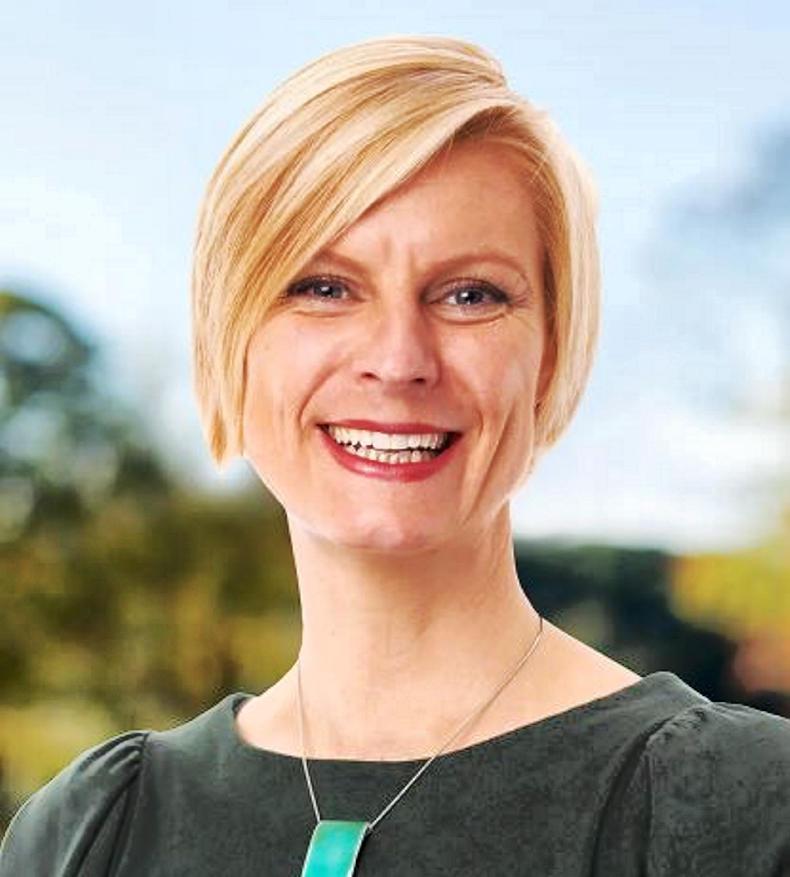
Pippa Hackett. \ Green Party
What such a policy would look like is not set in stone by the Greens.
A national land use policy would have to be thrashed out in discussions with Fianna Fáil and Fine Gael, the Offaly senator and farmer told the Irish Farmers Journal
She said Ireland needs to look at its land and “decide what the best use of it is”, across agriculture, forestry, wetlands and peat.
“We need input from stakeholders on that to help a future Government achieve its commitments on climate change and biodiversity loss.
“Agriculture needs to sit within the ecological boundaries in which it operates – we don’t see improvements in water quality and air quality.”
Change in the model
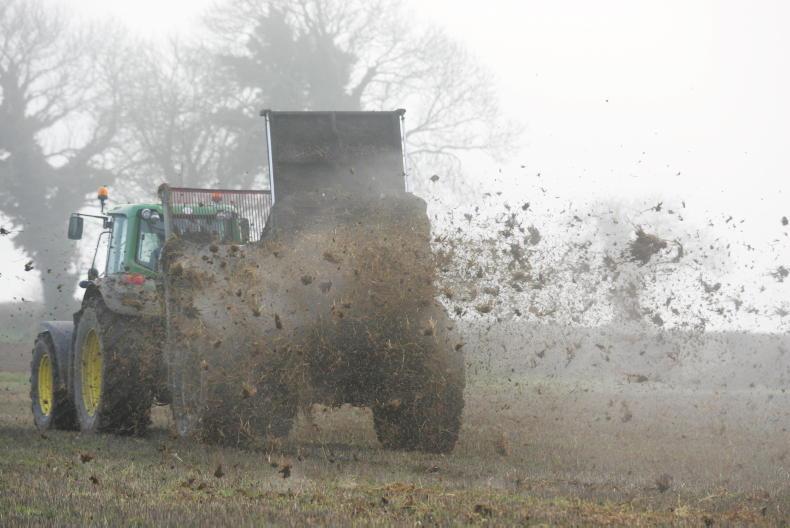
“The current agricultural model is dependent on imports. That approach needs to change,” she said, adding that nitrogen fertiliser imports are from fossil fuels and are therefore finite.
“We’ve only been 50 years at this, developing this dependence on synthetic fertiliser. I’m not saying that we’d go back to the practices of 50 years ago, but this is where we need the likes of Teagasc to help us move away from that.
“Yes they are doing work, with multi-species swards etc, we need to see more of that.”
Hackett said the time to act is now on more climate-friendly actions on farm. “It’s not time dependent, we need to make these jumps now,” she said.
Reduction in the herd
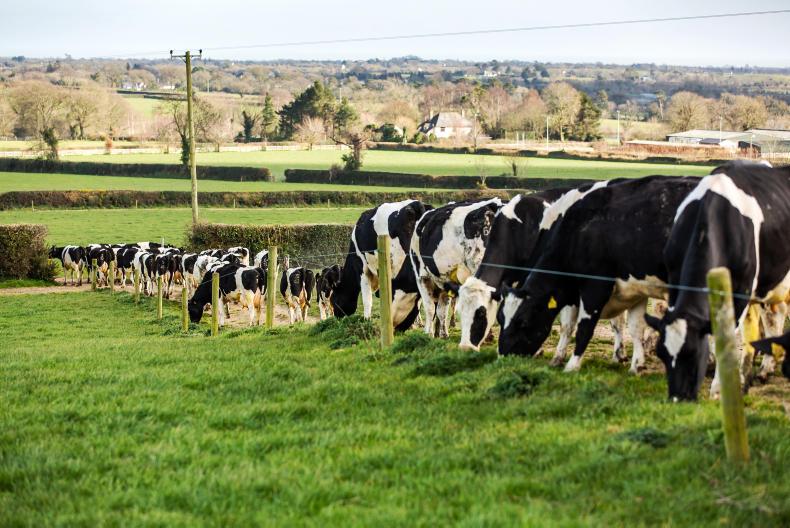
When asked if the Green Party is in favour of cutting the national herd, Hackett said a reduction is “not a policy of ours”.
“There’s no point in seeing a reduction if farmers aren’t paid – farmers have to be paid for it. [If there was a reduction], it would need to be a just transition, like the peat workers.
“Yes we could cut the herd, but we don’t think we need to do that. We need to add value to what we produce.
“COVID-19 has highlighted the vulnerabilities in agriculture. We need to future-proof our agricultural model.
“Bord Bia should be finding out what the high-end consumers want and what they’re willing to pay for. They need to feed that back to the farmer.
“The six or seven billion [people in the world], we need to be aiming to feed the top end of that, with the right system and Bord Bia.
“We will reduce emissions by changing our practices. If it happens to reduce the herd, it does. We need to look at the system and fix the system - farmers can only adjust inside the farm gate. Farmers can change their practices and they need to be rewarded in the marketplace for that.”
Is protected urea part of the answer to a change in practices? No, according to the organic farmer.
“Protected urea is really about trying to keep the status quo. Trying to maintain the current agriculture model is doomed to fail. I don’t think any farmer wants to diminish biodiversity, but we need experts and people in Teagasc to tell us what we can do to add value and protect biodiversity,” she said.
CAP money
Hackett believes that the CAP could be the vehicle in supporting change, by changing how CAP money is distributed.
“TAMS for example. An amount is allocated per year and that goes to primary producers for sheds for example. How about extending that further along the supply chain to support local food processors.
“Agroforestry - that needs to be pushed out more,” Hackett said and acknowledged that take-up of the current agroforestry scheme has been poor. She also said more support is needed for the horticulture sector.
But what about changes in the beef and dairy sectors? Hackett said it should be about adding value.
“In my opinion, we should support more extensive models of beef and sheep farming, look at how we manage our uplands with animals. This is where we need Bord Bia to step up to the mark and [see if there is] a market for biodiversity-friendly beef for example. We need to come to the table with ideas.
“At the moment they’re telling us to keep producing beef for 350/kg - that’s no good to any farmer and dairy is stuck in commodity production.
“If we want to be truly origin green, we need to do the origin green thing.
Tillage sector
What about the, one could argue, often forgotten tillage sector, where do the Greens stand on that?
The tillage sector needs support, especially for growing crops for animal feed, given we import so much animal feed, and the drinks industry, Hackett said.
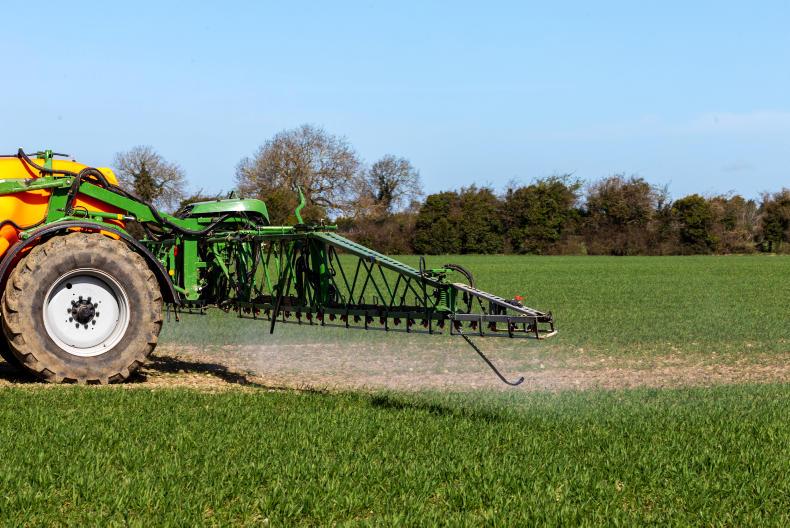
“To embrace a new model of farming, we’re looking to increase biodiversity. We would definitely like to see a reduction in pesticides - most farmers would.
“If we’re going to embrace farming and working within our ecological boundaries, we can’t be having new sprays. We have to move away from the use of pesticides and synthetic applications.”
But would that not see a shrinking of the sector and its farmers?
“I’m not saying this would happen in six months - it would be phased in. This is where we go to Teagasc. There has to be a better way that people don’t have to apply a number of sprays.
“We top our rushes and put up with them. There’s this aim for perceived perfection, people go nuts with docks or nettles. Some don’t. We can’t be reliant on synthetic pesticides.”
But what if there is no alternative?
“Well how do organic farmers survive? There’s an insatiable demand for human-grade organic oats.”
Yes, but do we not then flood the market with the same thing? Like we have at the minute.
“We’re at that point at the moment. Fair enough, let that be the future but if the model was changed to more environmentally friendly practices we would get more for it.
“We hear we have this market difference with origin green, we don’t want to undermine that.”
Trees
The Green Party document says “in expanding our afforestation ambitions, we must also ensure that we not only support the forestry sector, but at the same time respect the wishes of our communities, and factor in the ecological and amenity value of our woodlands, by planting the right trees in the right places”.
When the Irish Farmers Journal asked if this meant the forced plantation of trees on productive arable land and grassland, the Offaly farmer said no. She said the document is a response to Fianna Fáil and Fine Gael - the party is not rewriting a manifesto.
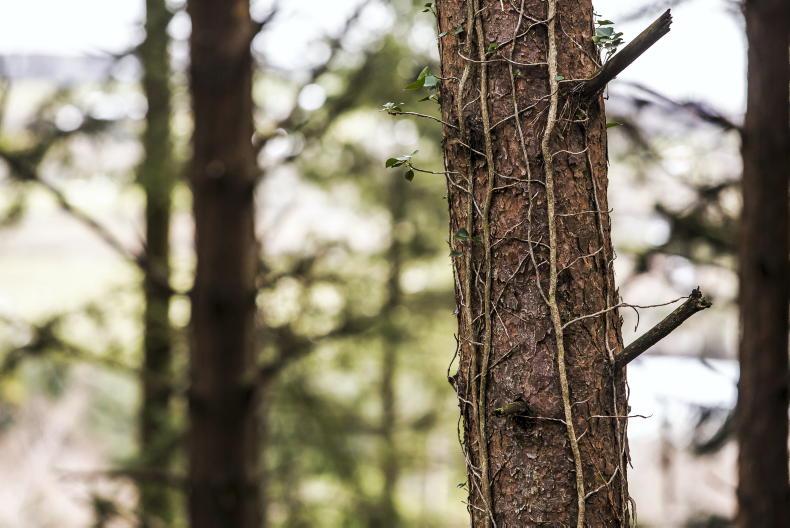
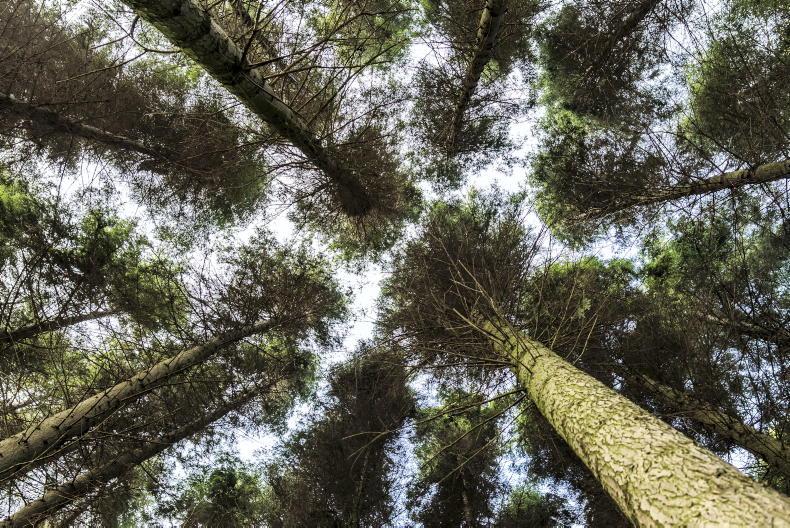
The party is in favour of a change in the forestry model, with a shift towards continuous cover with native trees.
“All the evidence suggests that all the single species conifers are doing nothing for our biodiversity or emissions. We need to take into account local communities.
“I think most farmers wouldn’t mind planting trees, if it enhances their own farm. I can’t see there being much resistance to that.”

Reform of agri-food policy
Hackett wants a review of Ireland’s agri-food policy.
“The last two have been about ramping up production, increasing agri-food exports and fair enough that’s what the aims were and State agencies followed that.
“I would feel we’ve had decades of this sort of advice. Yes there’s been a huge increase in exports, but it doesn’t filter down to the farmer. The money needs to go further down the system.
“The next agri-food policy should move from being industry-led to a farmer and community-led model.
“We need rural regeneration. We used to have vibrant areas, largely based around local food processing,” she said.
Government formation
The final question put to Hackett is on Government formation. This week rural independent TD Mattie McGrath told the Irish Farmers Journal that the Rural Independent group is not interested in going into Government with the Greens.
When asked if there was any party or grouping the Greens wouldn’t go into Government with, she had this to say: “We haven’t ruled anyone out. We’re more than happy to talk to them.”
Read more
Greens want national land use plan and reform of agri-food policy
'We won't go into government with the Greens' - McGrath
New Bord Bia climate credit scheme for farmers
Ireland needs to change its model of farming, reduce reliance on pesticides and fertiliser and a reduction in the national cattle herd “is not a policy of ours”, according to Green Party agriculture spokesperson Pippa Hackett.
Last week the Green Party set out a document for Fianna Fáil and Fine Gael with a raft of questions it wants answered before any government negotiations take place.
It said “radical” action is needed to combat emissions and that a national land use policy would be “central” to “both our climate and biodiversity objectives”.
Pippa Hackett. \ Green Party
What such a policy would look like is not set in stone by the Greens.
A national land use policy would have to be thrashed out in discussions with Fianna Fáil and Fine Gael, the Offaly senator and farmer told the Irish Farmers Journal
She said Ireland needs to look at its land and “decide what the best use of it is”, across agriculture, forestry, wetlands and peat.
“We need input from stakeholders on that to help a future Government achieve its commitments on climate change and biodiversity loss.
“Agriculture needs to sit within the ecological boundaries in which it operates – we don’t see improvements in water quality and air quality.”
Change in the model
“The current agricultural model is dependent on imports. That approach needs to change,” she said, adding that nitrogen fertiliser imports are from fossil fuels and are therefore finite.
“We’ve only been 50 years at this, developing this dependence on synthetic fertiliser. I’m not saying that we’d go back to the practices of 50 years ago, but this is where we need the likes of Teagasc to help us move away from that.
“Yes they are doing work, with multi-species swards etc, we need to see more of that.”
Hackett said the time to act is now on more climate-friendly actions on farm. “It’s not time dependent, we need to make these jumps now,” she said.
Reduction in the herd
When asked if the Green Party is in favour of cutting the national herd, Hackett said a reduction is “not a policy of ours”.
“There’s no point in seeing a reduction if farmers aren’t paid – farmers have to be paid for it. [If there was a reduction], it would need to be a just transition, like the peat workers.
“Yes we could cut the herd, but we don’t think we need to do that. We need to add value to what we produce.
“COVID-19 has highlighted the vulnerabilities in agriculture. We need to future-proof our agricultural model.
“Bord Bia should be finding out what the high-end consumers want and what they’re willing to pay for. They need to feed that back to the farmer.
“The six or seven billion [people in the world], we need to be aiming to feed the top end of that, with the right system and Bord Bia.
“We will reduce emissions by changing our practices. If it happens to reduce the herd, it does. We need to look at the system and fix the system - farmers can only adjust inside the farm gate. Farmers can change their practices and they need to be rewarded in the marketplace for that.”
Is protected urea part of the answer to a change in practices? No, according to the organic farmer.
“Protected urea is really about trying to keep the status quo. Trying to maintain the current agriculture model is doomed to fail. I don’t think any farmer wants to diminish biodiversity, but we need experts and people in Teagasc to tell us what we can do to add value and protect biodiversity,” she said.
CAP money
Hackett believes that the CAP could be the vehicle in supporting change, by changing how CAP money is distributed.
“TAMS for example. An amount is allocated per year and that goes to primary producers for sheds for example. How about extending that further along the supply chain to support local food processors.
“Agroforestry - that needs to be pushed out more,” Hackett said and acknowledged that take-up of the current agroforestry scheme has been poor. She also said more support is needed for the horticulture sector.
But what about changes in the beef and dairy sectors? Hackett said it should be about adding value.
“In my opinion, we should support more extensive models of beef and sheep farming, look at how we manage our uplands with animals. This is where we need Bord Bia to step up to the mark and [see if there is] a market for biodiversity-friendly beef for example. We need to come to the table with ideas.
“At the moment they’re telling us to keep producing beef for 350/kg - that’s no good to any farmer and dairy is stuck in commodity production.
“If we want to be truly origin green, we need to do the origin green thing.
Tillage sector
What about the, one could argue, often forgotten tillage sector, where do the Greens stand on that?
The tillage sector needs support, especially for growing crops for animal feed, given we import so much animal feed, and the drinks industry, Hackett said.
“To embrace a new model of farming, we’re looking to increase biodiversity. We would definitely like to see a reduction in pesticides - most farmers would.
“If we’re going to embrace farming and working within our ecological boundaries, we can’t be having new sprays. We have to move away from the use of pesticides and synthetic applications.”
But would that not see a shrinking of the sector and its farmers?
“I’m not saying this would happen in six months - it would be phased in. This is where we go to Teagasc. There has to be a better way that people don’t have to apply a number of sprays.
“We top our rushes and put up with them. There’s this aim for perceived perfection, people go nuts with docks or nettles. Some don’t. We can’t be reliant on synthetic pesticides.”
But what if there is no alternative?
“Well how do organic farmers survive? There’s an insatiable demand for human-grade organic oats.”
Yes, but do we not then flood the market with the same thing? Like we have at the minute.
“We’re at that point at the moment. Fair enough, let that be the future but if the model was changed to more environmentally friendly practices we would get more for it.
“We hear we have this market difference with origin green, we don’t want to undermine that.”
Trees
The Green Party document says “in expanding our afforestation ambitions, we must also ensure that we not only support the forestry sector, but at the same time respect the wishes of our communities, and factor in the ecological and amenity value of our woodlands, by planting the right trees in the right places”.
When the Irish Farmers Journal asked if this meant the forced plantation of trees on productive arable land and grassland, the Offaly farmer said no. She said the document is a response to Fianna Fáil and Fine Gael - the party is not rewriting a manifesto.
The party is in favour of a change in the forestry model, with a shift towards continuous cover with native trees.
“All the evidence suggests that all the single species conifers are doing nothing for our biodiversity or emissions. We need to take into account local communities.
“I think most farmers wouldn’t mind planting trees, if it enhances their own farm. I can’t see there being much resistance to that.”
Reform of agri-food policy
Hackett wants a review of Ireland’s agri-food policy.
“The last two have been about ramping up production, increasing agri-food exports and fair enough that’s what the aims were and State agencies followed that.
“I would feel we’ve had decades of this sort of advice. Yes there’s been a huge increase in exports, but it doesn’t filter down to the farmer. The money needs to go further down the system.
“The next agri-food policy should move from being industry-led to a farmer and community-led model.
“We need rural regeneration. We used to have vibrant areas, largely based around local food processing,” she said.
Government formation
The final question put to Hackett is on Government formation. This week rural independent TD Mattie McGrath told the Irish Farmers Journal that the Rural Independent group is not interested in going into Government with the Greens.
When asked if there was any party or grouping the Greens wouldn’t go into Government with, she had this to say: “We haven’t ruled anyone out. We’re more than happy to talk to them.”
Read more
Greens want national land use plan and reform of agri-food policy
'We won't go into government with the Greens' - McGrath
New Bord Bia climate credit scheme for farmers





SHARING OPTIONS