For the majority of spring-calving suckler herds in the BETTER Farm NI programme, the breeding season normally gets under way during May.
Most of the farms retain stock bulls to cover the majority of cows at grass. However, throughout the programme, the farmers have combined natural service with artificial insemination (AI).
In well-managed systems, conception rates as high as 80%-90% to first service have been achieved on the programme farms.
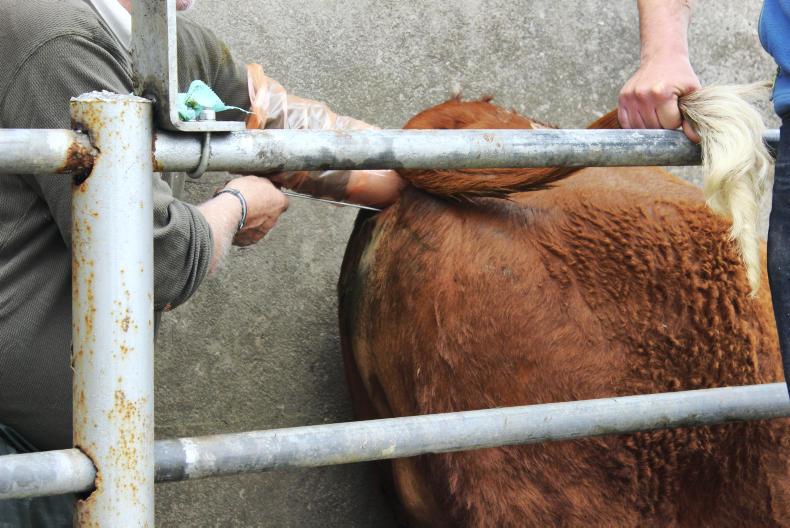
Inseminating cows at grass is less straightforward than running cows with the stock bull.
But with careful planning, good handling facilities and infrastructure, the programme farmers have demonstrated that AI is a viable breeding method for spring-calving cows.
Benefits
AI offers multiple benefits compared with solely using stock bulls for breeding. Firstly, it offers a wider choice of potential sires. Different bulls can be selected to suit the variation in cow type within a herd.
For instance, sires with proven calving ease can be selected to serve replacement heifers, or maternal bulls used to breed replacements with greater milk yield. AI also allows farmers access to the best available genetics within each breed.
But while there are many benefits to AI, it does require a higher level of management. Outlined are 10 steps to making AI work for spring-calving herds.
1 Choosing fertile animals
On the programme farms, AI is normally used on replacement heifers and cows that repeatedly calve down in the first six weeks of the calving period each year.
The earliest-calving cows tend to be the most fertile animals in the herd and this increases the chance of getting animals settled in-calf.
Replacement heifers are normally bred from the earliest-calving animals also. Fertility is an extremely heritable trait, so by selecting potential replacements on this criteria, these animals should also possess good levels of fertility.
2 Grazing infrastructure
As spring-calving cows will be at grass during the breeding season, the grazing platform needs to be set up so that animals can move to handling pens with minimal fuss. Cows that will be served to AI should be grazing next to a handling unit with secure gates and head-locking gate.
This reduces stress for cows prior to inseminating and ensures a safe operating environment for the farmer or AI technician.
Stress will negatively affect fertility. Therefore, make use of electric fencing to control paddock size and provide temporary laneways for moving cattle to handling areas.
When moving cows, always do so at the animal’s own pace.
3 Familiarise animals with handling
When cows are handled regularly and calmly, they will be much easier to move. On out-farms with limited infrastructure, a good way to get cows used to coming into the handling unit for AI is to feed a small quantity of meal in the pen.
Feed levels should be limited to 0.5kg to 1kg/head and rolled barley will suffice. Cows can then be isolated, inseminated and returned to the group with little fuss.
4 Isolate a group of animals
Trying to isolate an animal that has been in heat while in a paddock can be difficult. More often than not, the animal will become raised and cows with calves at foot can become aggressive.
Therefore, it is much easier to bring in a larger group of animals and isolate cows in a secure handling pen.
5 Mineral supplementation
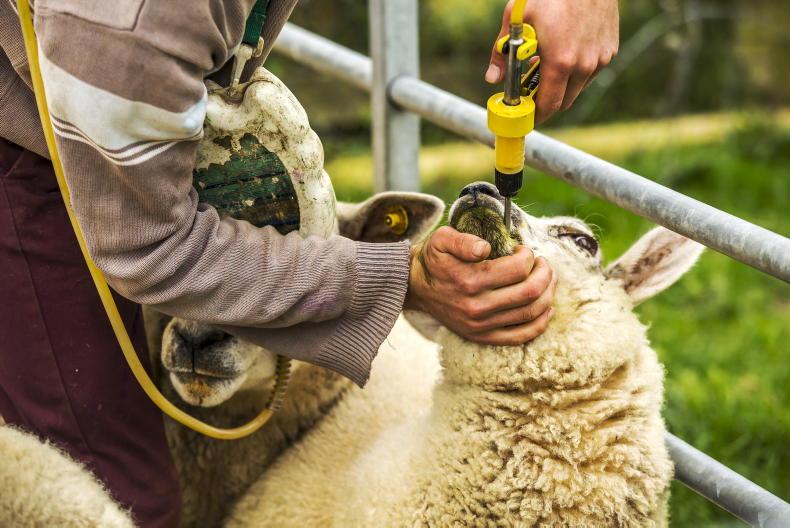
Cows and maiden heifers should be covered for minerals before and after breeding. Use a mineral bolus, oral drench or lick buckets to provide trace elements.
On some farms, applying 5ml-10ml of iodine to the flank of the cow at the start of the breeding period has helped to boost conception rates.
6 Heat detection
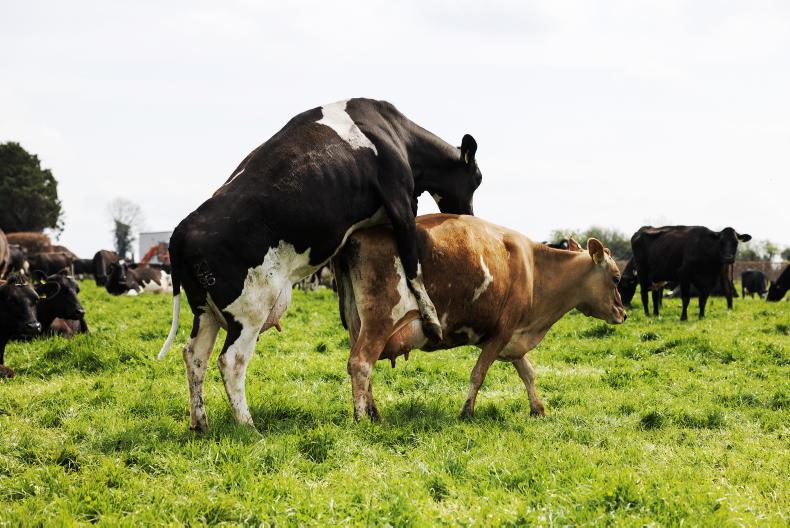
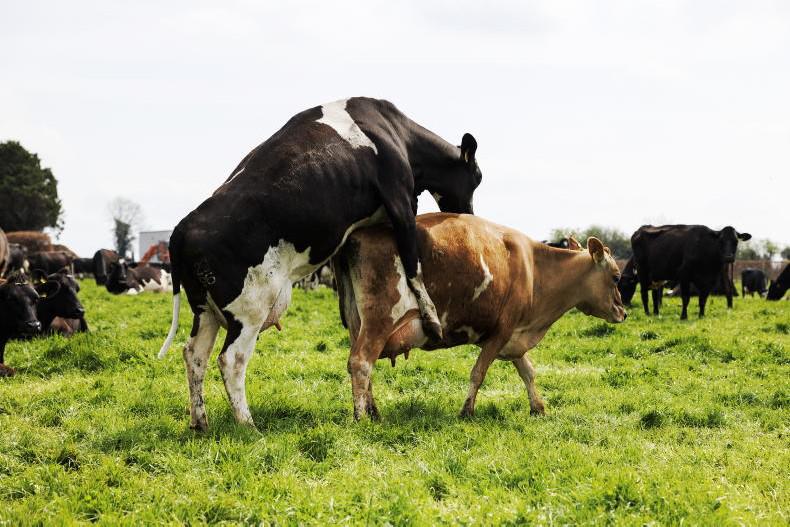
Heat detection is crucial when using AI. With natural service, the stock bull will do this for you, but with AI, the farmer must be alert to cows showing signs of breeding activity.
The more time spent watching cows the better, as some cows will exhibit weaker signs than others. Ideally, watch cows for a minimum of 30 minutes in the morning, afternoon and evening.
7 Using aids for heat detection
There are various aids on the market that can help with heat detection.
They range in cost, with the least expensive being coloured paint applied to the tail head of the cow.
There are similar aids that attach to the tail head and help identify cows in heat.

Applying tail paint to cows in a quick and cheap way to help identify animals as they come into heat.
At the other end of the spectrum are aids that make use of technology such as pedometers, heat collars and ear tags that sync with smart phones.
Alternatively, a vasectomised teaser bull fitted with a chin harness has been successfully used on the programme farms.
8 Fixed-time AI
Using AI as cows come into heat naturally is time-consuming, especially where the breeding period is typically 10 to 12 weeks.
So to streamline the breeding period to suit AI, synchronisation programmes with animals served at a fixed time has been successfully used on the programme farms.
This cuts down on the level of handling and makes AI more practical, as a large group of animals can be served on one day.
9 Follow the am:pm rule
If fixed-time AI is not an option and animals are being inseminated to natural heats, then follow the am:pm rule to serve cows.
This method works on the principle that cows observed in heat during the morning are inseminated that evening and vice versa.
10 Post-breeding
management
Once cows have been inseminated, it is important they return to grass as quickly as possible. To increase conception rates, herd management should be as consistent as possible.
This means avoiding major changes in the diet or environment, so make sure fertiliser is being regularly applied to maintain grass in front of cows.
Read more
Playing the matchmaker on Tullamore Farm
Farm Profit Programme: increased stocking rate pays off
For the majority of spring-calving suckler herds in the BETTER Farm NI programme, the breeding season normally gets under way during May.
Most of the farms retain stock bulls to cover the majority of cows at grass. However, throughout the programme, the farmers have combined natural service with artificial insemination (AI).
In well-managed systems, conception rates as high as 80%-90% to first service have been achieved on the programme farms.
Inseminating cows at grass is less straightforward than running cows with the stock bull.
But with careful planning, good handling facilities and infrastructure, the programme farmers have demonstrated that AI is a viable breeding method for spring-calving cows.
Benefits
AI offers multiple benefits compared with solely using stock bulls for breeding. Firstly, it offers a wider choice of potential sires. Different bulls can be selected to suit the variation in cow type within a herd.
For instance, sires with proven calving ease can be selected to serve replacement heifers, or maternal bulls used to breed replacements with greater milk yield. AI also allows farmers access to the best available genetics within each breed.
But while there are many benefits to AI, it does require a higher level of management. Outlined are 10 steps to making AI work for spring-calving herds.
1 Choosing fertile animals
On the programme farms, AI is normally used on replacement heifers and cows that repeatedly calve down in the first six weeks of the calving period each year.
The earliest-calving cows tend to be the most fertile animals in the herd and this increases the chance of getting animals settled in-calf.
Replacement heifers are normally bred from the earliest-calving animals also. Fertility is an extremely heritable trait, so by selecting potential replacements on this criteria, these animals should also possess good levels of fertility.
2 Grazing infrastructure
As spring-calving cows will be at grass during the breeding season, the grazing platform needs to be set up so that animals can move to handling pens with minimal fuss. Cows that will be served to AI should be grazing next to a handling unit with secure gates and head-locking gate.
This reduces stress for cows prior to inseminating and ensures a safe operating environment for the farmer or AI technician.
Stress will negatively affect fertility. Therefore, make use of electric fencing to control paddock size and provide temporary laneways for moving cattle to handling areas.
When moving cows, always do so at the animal’s own pace.
3 Familiarise animals with handling
When cows are handled regularly and calmly, they will be much easier to move. On out-farms with limited infrastructure, a good way to get cows used to coming into the handling unit for AI is to feed a small quantity of meal in the pen.
Feed levels should be limited to 0.5kg to 1kg/head and rolled barley will suffice. Cows can then be isolated, inseminated and returned to the group with little fuss.
4 Isolate a group of animals
Trying to isolate an animal that has been in heat while in a paddock can be difficult. More often than not, the animal will become raised and cows with calves at foot can become aggressive.
Therefore, it is much easier to bring in a larger group of animals and isolate cows in a secure handling pen.
5 Mineral supplementation
Cows and maiden heifers should be covered for minerals before and after breeding. Use a mineral bolus, oral drench or lick buckets to provide trace elements.
On some farms, applying 5ml-10ml of iodine to the flank of the cow at the start of the breeding period has helped to boost conception rates.
6 Heat detection
Heat detection is crucial when using AI. With natural service, the stock bull will do this for you, but with AI, the farmer must be alert to cows showing signs of breeding activity.
The more time spent watching cows the better, as some cows will exhibit weaker signs than others. Ideally, watch cows for a minimum of 30 minutes in the morning, afternoon and evening.
7 Using aids for heat detection
There are various aids on the market that can help with heat detection.
They range in cost, with the least expensive being coloured paint applied to the tail head of the cow.
There are similar aids that attach to the tail head and help identify cows in heat.
Applying tail paint to cows in a quick and cheap way to help identify animals as they come into heat.
At the other end of the spectrum are aids that make use of technology such as pedometers, heat collars and ear tags that sync with smart phones.
Alternatively, a vasectomised teaser bull fitted with a chin harness has been successfully used on the programme farms.
8 Fixed-time AI
Using AI as cows come into heat naturally is time-consuming, especially where the breeding period is typically 10 to 12 weeks.
So to streamline the breeding period to suit AI, synchronisation programmes with animals served at a fixed time has been successfully used on the programme farms.
This cuts down on the level of handling and makes AI more practical, as a large group of animals can be served on one day.
9 Follow the am:pm rule
If fixed-time AI is not an option and animals are being inseminated to natural heats, then follow the am:pm rule to serve cows.
This method works on the principle that cows observed in heat during the morning are inseminated that evening and vice versa.
10 Post-breeding
management
Once cows have been inseminated, it is important they return to grass as quickly as possible. To increase conception rates, herd management should be as consistent as possible.
This means avoiding major changes in the diet or environment, so make sure fertiliser is being regularly applied to maintain grass in front of cows.
Read more
Playing the matchmaker on Tullamore Farm
Farm Profit Programme: increased stocking rate pays off






SHARING OPTIONS