It’s a beautiful part of the country and I could never see myself living anywhere else.” These were the words of William Jones, a 28-year-old suckler farmer as we walked his farm on Monday evening.
The farm is pitched on top of Rathmore hill and looks out across several counties. You can see Westmeath, Cavan, Leitrim, Fermanagh and Sligo from here on a good day. The “rath” is located just across the road from the main farmyard and has survived through the generations.
Ring forts date back to 1200BC, so there’s a lot of history associated with these locations. “It’s kind of special to think that you are farming land that had farmers here thousands of years ago. I suppose all farms have had that, but the ring fort is a reminder,” William says.
A lot has been achieved by this 28-year-old and he’s not finished yet. The opportunity came up in 2019 to purchase an additional 35 acres a few hundred yards down the road and he took it.
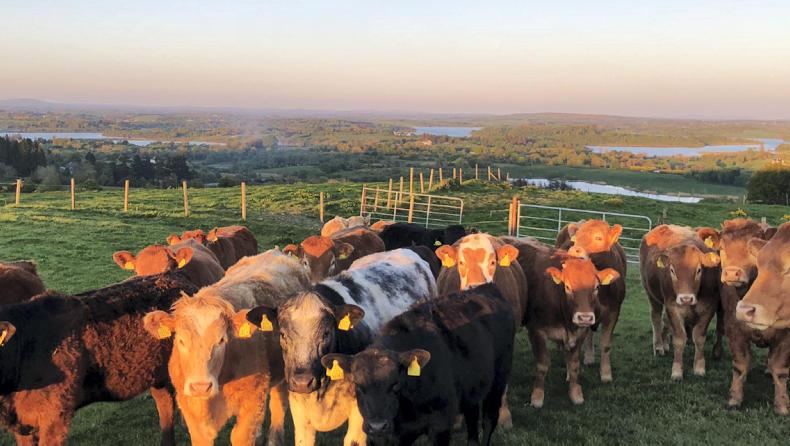
“It’s a very dry piece of land and we can get stock out very early, so it’s been a huge help in getting weanlings out to grass early this year.”
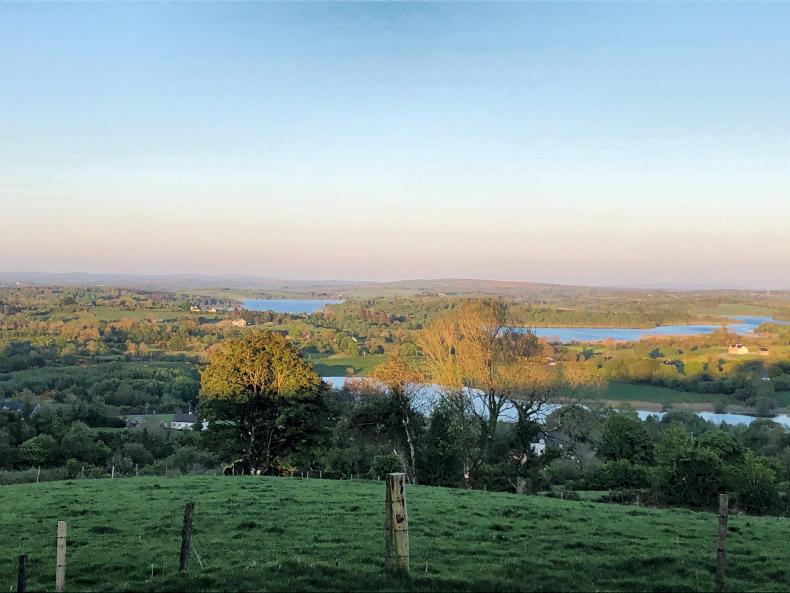
The view from farm are spectacular looking out across the lakes of Co Cavan.
William has made a few changes in the last two years to streamline the beef system. A move to 100% spring-calving is one he is happy with.
“We were calving in autumn and spring and there was a lot of work keeping calves bedded and fed during the winter months so we moved all to spring.”
Cows are now calved in March and April and moved straight out to grass after a few days and it cuts down the labour. The farm, like many others this year, moved away from finishing young bulls.
“It just wasn’t adding up so we decided to move back to selling bull weanlings. Costs were too high and then it was a begging match to get them killed, so we stopped it,” William says.
Simplifying the system meant William was able to get work with a local dairy farmer, which fits in well around his own farm.
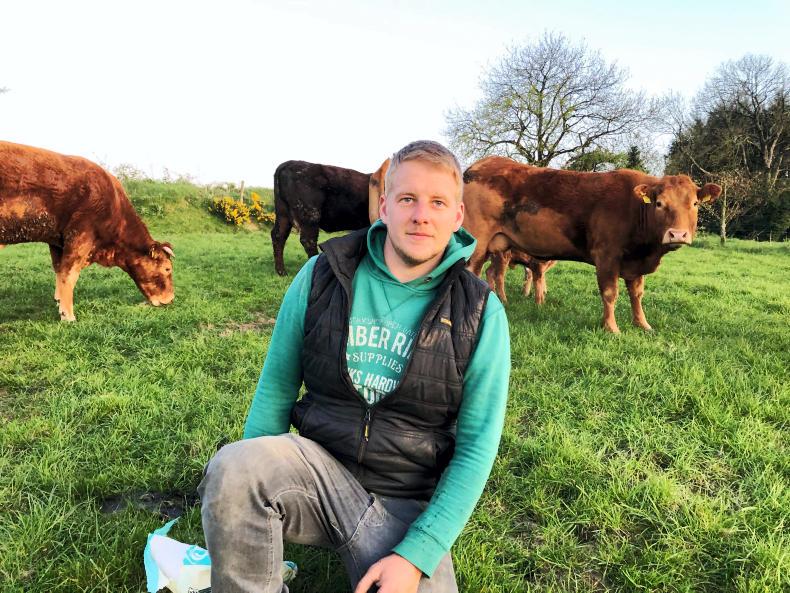
William Jones, a 28-year-old Longford farmer.
Father-son team
It’s a team effort here. “I officially took over the reins of running the farm in 2015, but I’ve been farming from a very young age. My father had an accident where he fell off a ladder while cleaning a window on the dwelling house in 1998, which left him paralysed from the waist down. That presented huge challenges for us as a family, but we all pulled together and got through it. He has a quad and does a lot of small jobs such as looking at stock.
“He’s my main source of advice as well and keeps an eye at calving time, if I’m away working. I was always encouraged to be involved at home and I think when you’re brought up with it, it’s sort of in you and it never leaves you. My father farmed here. My grandfather William farmed here, so there’s a bit of pride attached to that as well.”
Schemes
“Support payments are of huge importance to this area and to this farm. Without them, I don’t think the suckler cow would survive. I’m in most of the schemes that I can be in.
“BDGP is a good scheme and the stock are following the figures on this farm,” William says.
The herd average for the replacement index is €88, but the target is to get to €100 in the next few years.
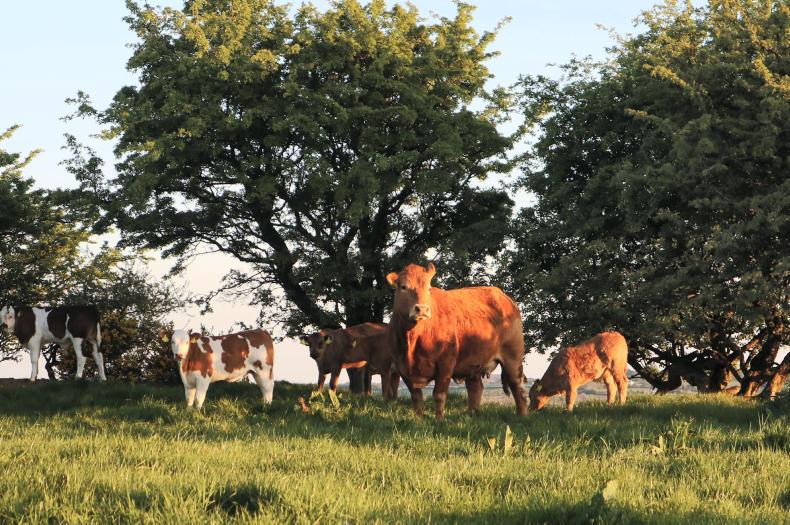
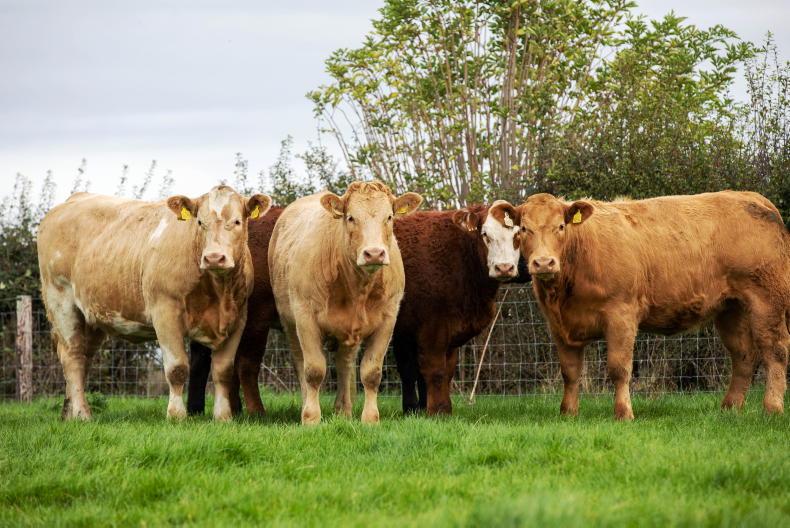
A Bavardage-sired Limousin bull that was purchased in February 2017 is starting to leave his stamp on progeny with a few heifers coming into the herd that have the looks and the figures to match.
With a terminal index of €162 and a replacement index of €157, he suits both the finishing and replacement heifer job.
“We purchased a Simmental bull last year by QCD and his first calves are on the ground this year.
“He’s easy-calved and the heifer calves off the red Limousin cows will hopefully make good replacements in the future,” William says.
A commonsense approach is used with the figures and it’s a combination of both visual appearance and the index that gets a heifer selected as a future cow on the farm. The Longford man says BEEP is money for jam.
“We’ve been weighing here for a few years and it’s good practice to see what’s happening, what you need to cull, when to start meal feeding, etc. It’s great to get paid to do something good for the farm,” he says.
“I didn’t join BEAM. With the extra land, I couldn’t. It would have been a great help to the farm and we lost money on our finished cattle in 2018-19, but it would have been too restrictive for us. The farm was a participant in a few rounds of REPS but we didn’t opt for GLAS.
“GLAS just didn’t suit us. We’re trying our best with all the ground we have and didn’t want any of it to go back so we didn’t join.”
The future
“I’d have an open mind. I’m not in any way tied down to one farming system.
“I’m lucky in that we have a relatively dry farm, so that means we have options. I have about 90 acres available to graze around the yard, so dairying is an option.
“We would have to spend a few euro around the yard converting sheds and a parlour.
“With the extra land purchased last year, we probably have enough to do but I wouldn’t rule it out down the road.
“For the moment, there are plans to extend a slatted shed to increase stock numbers in line with the new land with the goal to get to 60 cows in the next few years.
“Schemes such as BDGP and BEEP are what’s keeping me suckling at the moment. If they ever finished, I’d have to look at other options.”
It’s a beautiful part of the country and I could never see myself living anywhere else.” These were the words of William Jones, a 28-year-old suckler farmer as we walked his farm on Monday evening.
The farm is pitched on top of Rathmore hill and looks out across several counties. You can see Westmeath, Cavan, Leitrim, Fermanagh and Sligo from here on a good day. The “rath” is located just across the road from the main farmyard and has survived through the generations.
Ring forts date back to 1200BC, so there’s a lot of history associated with these locations. “It’s kind of special to think that you are farming land that had farmers here thousands of years ago. I suppose all farms have had that, but the ring fort is a reminder,” William says.
A lot has been achieved by this 28-year-old and he’s not finished yet. The opportunity came up in 2019 to purchase an additional 35 acres a few hundred yards down the road and he took it.
“It’s a very dry piece of land and we can get stock out very early, so it’s been a huge help in getting weanlings out to grass early this year.”
The view from farm are spectacular looking out across the lakes of Co Cavan.
William has made a few changes in the last two years to streamline the beef system. A move to 100% spring-calving is one he is happy with.
“We were calving in autumn and spring and there was a lot of work keeping calves bedded and fed during the winter months so we moved all to spring.”
Cows are now calved in March and April and moved straight out to grass after a few days and it cuts down the labour. The farm, like many others this year, moved away from finishing young bulls.
“It just wasn’t adding up so we decided to move back to selling bull weanlings. Costs were too high and then it was a begging match to get them killed, so we stopped it,” William says.
Simplifying the system meant William was able to get work with a local dairy farmer, which fits in well around his own farm.
William Jones, a 28-year-old Longford farmer.
Father-son team
It’s a team effort here. “I officially took over the reins of running the farm in 2015, but I’ve been farming from a very young age. My father had an accident where he fell off a ladder while cleaning a window on the dwelling house in 1998, which left him paralysed from the waist down. That presented huge challenges for us as a family, but we all pulled together and got through it. He has a quad and does a lot of small jobs such as looking at stock.
“He’s my main source of advice as well and keeps an eye at calving time, if I’m away working. I was always encouraged to be involved at home and I think when you’re brought up with it, it’s sort of in you and it never leaves you. My father farmed here. My grandfather William farmed here, so there’s a bit of pride attached to that as well.”
Schemes
“Support payments are of huge importance to this area and to this farm. Without them, I don’t think the suckler cow would survive. I’m in most of the schemes that I can be in.
“BDGP is a good scheme and the stock are following the figures on this farm,” William says.
The herd average for the replacement index is €88, but the target is to get to €100 in the next few years.
A Bavardage-sired Limousin bull that was purchased in February 2017 is starting to leave his stamp on progeny with a few heifers coming into the herd that have the looks and the figures to match.
With a terminal index of €162 and a replacement index of €157, he suits both the finishing and replacement heifer job.
“We purchased a Simmental bull last year by QCD and his first calves are on the ground this year.
“He’s easy-calved and the heifer calves off the red Limousin cows will hopefully make good replacements in the future,” William says.
A commonsense approach is used with the figures and it’s a combination of both visual appearance and the index that gets a heifer selected as a future cow on the farm. The Longford man says BEEP is money for jam.
“We’ve been weighing here for a few years and it’s good practice to see what’s happening, what you need to cull, when to start meal feeding, etc. It’s great to get paid to do something good for the farm,” he says.
“I didn’t join BEAM. With the extra land, I couldn’t. It would have been a great help to the farm and we lost money on our finished cattle in 2018-19, but it would have been too restrictive for us. The farm was a participant in a few rounds of REPS but we didn’t opt for GLAS.
“GLAS just didn’t suit us. We’re trying our best with all the ground we have and didn’t want any of it to go back so we didn’t join.”
The future
“I’d have an open mind. I’m not in any way tied down to one farming system.
“I’m lucky in that we have a relatively dry farm, so that means we have options. I have about 90 acres available to graze around the yard, so dairying is an option.
“We would have to spend a few euro around the yard converting sheds and a parlour.
“With the extra land purchased last year, we probably have enough to do but I wouldn’t rule it out down the road.
“For the moment, there are plans to extend a slatted shed to increase stock numbers in line with the new land with the goal to get to 60 cows in the next few years.
“Schemes such as BDGP and BEEP are what’s keeping me suckling at the moment. If they ever finished, I’d have to look at other options.”





SHARING OPTIONS