
Delvin, Westmeath
The damage has already been done to some crops in Westmeath and Donal thinks rain would do little to help them. Others, however, are still looking quite good but moisture will be needed soon if they are to realise their yield potential.
His winter barley crops are under the most pressure for moisture. His Valarie crop was looking poorly all year, but the lack of moisture has really compounded this. Even his better-looking Cassia crops are beginning to go backwards. Donal isn’t expecting a bumper yield. On 19 May, Donal applied the head spray of Decoy (0.65l/ha), Priaxor (1.3l/ha) and Bravo (1l/ha). He added in Phylgreen seaweed extract into the tank to help ease the stress.
Some of his winter wheat crops are showing signs of moisture stress, especially his direct drilled Graham. The rest of his crops are looking green and healthy.

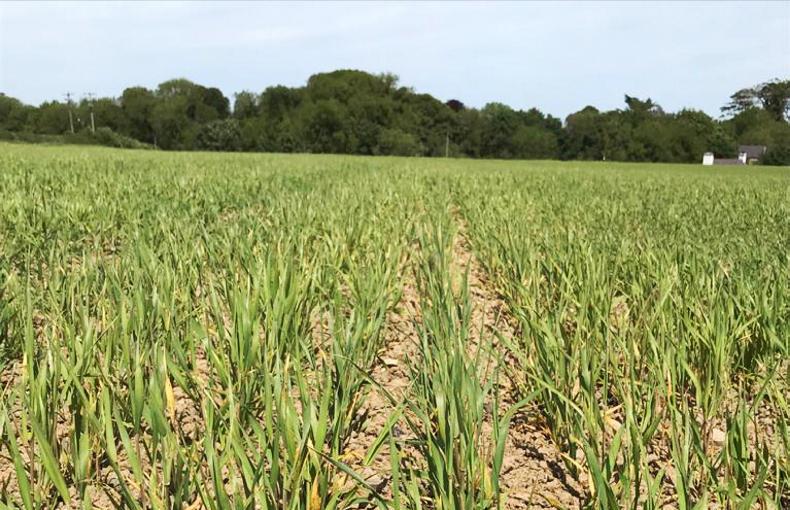
Donal's winter barley crops have been under pressure for moisture for some time now.
On 19 May the crops received a T2 of Librax (1.25l/ha), Bravo (1l/ha) and Phylgreen (0.75l/ha). The crop is clean and Donal asks if there is scope to reduce fungicide spend even further.
His winter oat crops continue to look excellent as they have all year and are heading out. On 26 May his Isabel gluten-free oats received a head spray of Comet (0.8l/ha) and Decoy (0.8l/ha) as well as Magphos K (2l/ha).
His Husky seed oats will receive a head spray this week.
Donal is very happy with his spring barley crops so far. They have received the right amount of rain and rolling with a flat roller after sowing really helped to conserve moisture, explains Donal.
His Gangway crops received a T1 on 27 May of Siltra Xpro(0.5l/ha) and Novo K (1l/ha).
His Planet spring barley received its T1 on 25 May of Comet (0.5l/ha), Decoy (0.5l/ha) as well as Calibre Max (100g/ha) and Pixarro (0.4l/ha).
His spring oat crops are lush, if not a little rank. On 26 May, the crop received Opera (1.2l/ha), Talius (0.25l/ha), Ceraide (1l/ha), Optimus (0.3l/ha) as well as the plant nutrient spray Wolftrax (0.8kg/ha) .

Lismore, Waterford
The past week has been great haymaking weather in Lismore, with high temperatures and a decent breeze. Philip made the most of it and was able to make hay. Conditions are dry on his farm but the 15mm of rain which fell three weekends ago has been of benefit to his crops. While conditions are dry, his crops aren’t under significant moisture pressure and he is hopeful about the yield potential of them this year.
After some moisture-related germination issues, Philip’s spring barley crops are now looking very good. The flag leaf is around 50% out and he notes only a small amount of rhynco in the crop. On May 19 the crop received a T1 of Proline (0.4l/ha), Bravo (1l/ha) as well as Moddus (0.1l/ha). He is considering an application of Terpal (0.5l/ha) on his Planet variety as the crop is quite lush.
He is also happy with the development of his spring oats. At GS 32 the crop received a T1 of Tocata (1.6l/ha), CCC (1l/ha) as well as Moddus (0.2l/ha). The crop is very clean and he is considering reducing planned fungicide spend if this continues.

Philip's Enermax fodder beet crops are developing well.
Beet
Philip’s beet crops would certainly benefit from some moisture, however. His Enermax varieties have now received a T1 herbicide of Target (1.5l/ha), Betanal MaxxPro (1 .5l/ha) as well as Vivendi (0.5l/ha) and oil. Some crops received Sniper (1.3l/ha). His Conviso Smart sugar beet crops are coming along well. However, he notes an amount of chickweed in the crop which wasn’t killed by the single 1l/ha application of the Conviso One herbicide (containing Foramsulfuron and Thiencarbazone-methyl).
Philip is hopeful about the potential of his winter barley crops this year. However, he questions the potential of his winter wheat crops. They have been thin all year. On May 19 they received a T2 of Adexar (1.8l/ha) and Bravo (1l/ha).
His winter oat crops received a head spray of Elatus Plus (0.5l/ha) and EPSO Combitop (5kg/ha) on 26 May. He generally adds in some kind of a magnesium head spray on all of his crops to help with straw strength.

Bangor, Down
The rain which fell three weekends ago in Down has done little to help David’s crops. Some crops on heavier ground are holding up OK, but crops on lighter ground are incurring yield penalties as the pressure for moisture is severe. However disease pressure is generally low and he reduced/adjusted the rates in all fungicide applications according to crop conditions.
His winter barley crops are sown on sandy soil and were in need of moisture for most of the past two months. The crops now appear short and thin. Disease pressure however remains low and David was able to reduce fungicide spend accordingly. Between 16 and 20 May, the crops received a head spray of Proline (0.35l/ha), Swift (trifloxystrobin at 0.15l/ha) and Bravo (1l/ha). Copper, boron and bittersalts were also added into the tank.
His winter oats were looking promising but began to show real signs of moisture stress on 20 May. In response, David applied a combination of zinc, manganese and potash in foliar feeds to the crop.
His winter wheat is now booting a week earlier than normal and David attributes this to moisture stress. He notes that the crops do have a reasonably sized developing head, however. On 25 May, the crop received Kestrel (prothioconazole and tebuconazole at 0.4l/ha) and Imtrex (fluxapyromid at 0.5l/ha). In some varieties, the Kestrel was replaced with Epic (epoxiconazole at 0.85l/ha) to counter any potential issues with yellow rust.

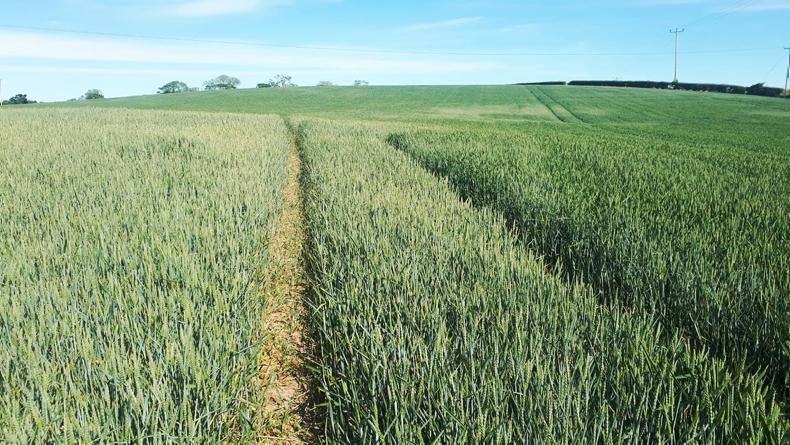
Most of David's winter wheat crops are holding on but crops on gravel ground are under pressure for moisture.
David didn’t apply a sclerotinia spray on his oilseed rape this season. He didn’t apply one last season either and had one of his highest yields on record.
His spring barley is doing well. He applied Oskar (0.65l/ha) when the crops were at GS30 on a few problem areas for wild oats.
The crops are very clean so far. On 27 May he applied Jager (prothioconazole, trifloxystrobin at 0.5l/ha) and Inception (bixafen at 0.035l/ha) along with the growth regulator of Alatrin (0.15l/ha) with Manganese at (3l/ha).
Preparation for harvest 2020 is continuing and David is preparing his grain store and machinery for the busy period.
Delvin, Westmeath
The damage has already been done to some crops in Westmeath and Donal thinks rain would do little to help them. Others, however, are still looking quite good but moisture will be needed soon if they are to realise their yield potential.
His winter barley crops are under the most pressure for moisture. His Valarie crop was looking poorly all year, but the lack of moisture has really compounded this. Even his better-looking Cassia crops are beginning to go backwards. Donal isn’t expecting a bumper yield. On 19 May, Donal applied the head spray of Decoy (0.65l/ha), Priaxor (1.3l/ha) and Bravo (1l/ha). He added in Phylgreen seaweed extract into the tank to help ease the stress.
Some of his winter wheat crops are showing signs of moisture stress, especially his direct drilled Graham. The rest of his crops are looking green and healthy.
Donal's winter barley crops have been under pressure for moisture for some time now.
On 19 May the crops received a T2 of Librax (1.25l/ha), Bravo (1l/ha) and Phylgreen (0.75l/ha). The crop is clean and Donal asks if there is scope to reduce fungicide spend even further.
His winter oat crops continue to look excellent as they have all year and are heading out. On 26 May his Isabel gluten-free oats received a head spray of Comet (0.8l/ha) and Decoy (0.8l/ha) as well as Magphos K (2l/ha).
His Husky seed oats will receive a head spray this week.
Donal is very happy with his spring barley crops so far. They have received the right amount of rain and rolling with a flat roller after sowing really helped to conserve moisture, explains Donal.
His Gangway crops received a T1 on 27 May of Siltra Xpro(0.5l/ha) and Novo K (1l/ha).
His Planet spring barley received its T1 on 25 May of Comet (0.5l/ha), Decoy (0.5l/ha) as well as Calibre Max (100g/ha) and Pixarro (0.4l/ha).
His spring oat crops are lush, if not a little rank. On 26 May, the crop received Opera (1.2l/ha), Talius (0.25l/ha), Ceraide (1l/ha), Optimus (0.3l/ha) as well as the plant nutrient spray Wolftrax (0.8kg/ha) .
Lismore, Waterford
The past week has been great haymaking weather in Lismore, with high temperatures and a decent breeze. Philip made the most of it and was able to make hay. Conditions are dry on his farm but the 15mm of rain which fell three weekends ago has been of benefit to his crops. While conditions are dry, his crops aren’t under significant moisture pressure and he is hopeful about the yield potential of them this year.
After some moisture-related germination issues, Philip’s spring barley crops are now looking very good. The flag leaf is around 50% out and he notes only a small amount of rhynco in the crop. On May 19 the crop received a T1 of Proline (0.4l/ha), Bravo (1l/ha) as well as Moddus (0.1l/ha). He is considering an application of Terpal (0.5l/ha) on his Planet variety as the crop is quite lush.
He is also happy with the development of his spring oats. At GS 32 the crop received a T1 of Tocata (1.6l/ha), CCC (1l/ha) as well as Moddus (0.2l/ha). The crop is very clean and he is considering reducing planned fungicide spend if this continues.
Philip's Enermax fodder beet crops are developing well.
Beet
Philip’s beet crops would certainly benefit from some moisture, however. His Enermax varieties have now received a T1 herbicide of Target (1.5l/ha), Betanal MaxxPro (1 .5l/ha) as well as Vivendi (0.5l/ha) and oil. Some crops received Sniper (1.3l/ha). His Conviso Smart sugar beet crops are coming along well. However, he notes an amount of chickweed in the crop which wasn’t killed by the single 1l/ha application of the Conviso One herbicide (containing Foramsulfuron and Thiencarbazone-methyl).
Philip is hopeful about the potential of his winter barley crops this year. However, he questions the potential of his winter wheat crops. They have been thin all year. On May 19 they received a T2 of Adexar (1.8l/ha) and Bravo (1l/ha).
His winter oat crops received a head spray of Elatus Plus (0.5l/ha) and EPSO Combitop (5kg/ha) on 26 May. He generally adds in some kind of a magnesium head spray on all of his crops to help with straw strength.
Bangor, Down
The rain which fell three weekends ago in Down has done little to help David’s crops. Some crops on heavier ground are holding up OK, but crops on lighter ground are incurring yield penalties as the pressure for moisture is severe. However disease pressure is generally low and he reduced/adjusted the rates in all fungicide applications according to crop conditions.
His winter barley crops are sown on sandy soil and were in need of moisture for most of the past two months. The crops now appear short and thin. Disease pressure however remains low and David was able to reduce fungicide spend accordingly. Between 16 and 20 May, the crops received a head spray of Proline (0.35l/ha), Swift (trifloxystrobin at 0.15l/ha) and Bravo (1l/ha). Copper, boron and bittersalts were also added into the tank.
His winter oats were looking promising but began to show real signs of moisture stress on 20 May. In response, David applied a combination of zinc, manganese and potash in foliar feeds to the crop.
His winter wheat is now booting a week earlier than normal and David attributes this to moisture stress. He notes that the crops do have a reasonably sized developing head, however. On 25 May, the crop received Kestrel (prothioconazole and tebuconazole at 0.4l/ha) and Imtrex (fluxapyromid at 0.5l/ha). In some varieties, the Kestrel was replaced with Epic (epoxiconazole at 0.85l/ha) to counter any potential issues with yellow rust.
Most of David's winter wheat crops are holding on but crops on gravel ground are under pressure for moisture.
David didn’t apply a sclerotinia spray on his oilseed rape this season. He didn’t apply one last season either and had one of his highest yields on record.
His spring barley is doing well. He applied Oskar (0.65l/ha) when the crops were at GS30 on a few problem areas for wild oats.
The crops are very clean so far. On 27 May he applied Jager (prothioconazole, trifloxystrobin at 0.5l/ha) and Inception (bixafen at 0.035l/ha) along with the growth regulator of Alatrin (0.15l/ha) with Manganese at (3l/ha).
Preparation for harvest 2020 is continuing and David is preparing his grain store and machinery for the busy period.











SHARING OPTIONS