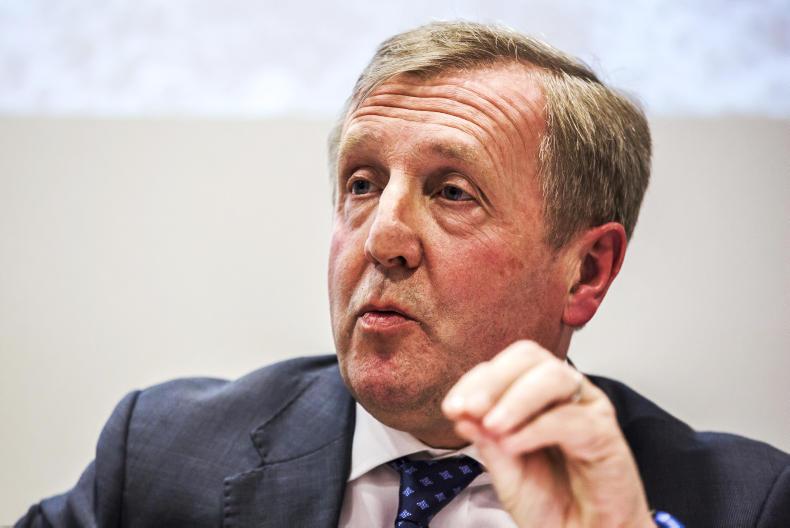
Setting a mandatory amount that must be allocated to eco schemes in the next CAP runs the risk of an underspend in payments to farmers, Minister for Agriculture Michael Creed has warned.
As part of the new Farm to Fork strategy, the European Commission has said it is open to ring-fencing a percentage of direct payment funds for eco schemes.
Eco schemes will replace greening, which will be incorporated into more stringent cross compliance called ‘enhanced conditionality’. They will be mandatory for member states to offer to farmers, but it will be optional for farmers to undertake them.
However, those who opt out will lose a portion of their direct payment, the amount of which has not yet been set.
Needs assessment
Minister Creed told his European counterparts in a video conference on Monday that Ireland supported mandatory eco schemes. However, he added that countries should be allowed to decide the appropriate level of funding for these schemes.
“We do not accept that member states who are raising their environmental ambition, by allocating funds to eco schemes, should run the risk of losing important funds. This must be resolved, if any ring fencing proposal is to be considered,” the Minister stressed.
He said the level of funding allocated should be based on the SWOT and needs analysis member states are conducting as part of the strategic plan process.
These plans will be central to the next CAP and will detail how member states intend to spent their CAP budget to meet certain targets.
Targets
Targets in the Farm to Fork strategy, such as reductions in the use of fertilisers, pesticides and antimicrobials and an increase in landscape features and organic farming, must also be included in the plans.
Minister Creed said Ireland was well advanced in the process of designing its strategic plan and the objectives of the Farm to Fork and biodiversity strategies would be reflected in it.
“However, I have some concerns that at a late stage in the process we would receive a set of recommendations about what we must include that may not be based on that process. I do not think that such a prescriptive approach would be consistent with the new CAP proposals.”
Organics
On plans to increase the area of EU farmland under organic production to 25% by 2030, the Minister stressed that the target must be underpinned by greater consumer demand for organic produce.
At present, 8% of EU agricultural land is farmed organically. However, in individual member states it ranges from as high as 25% in Austria to as low as 2% in some countries including Ireland.
Read more
Department exploring ways to pay for carbon sequestration
Watch back: the new CAP and the EU Green Deal webinar
Setting a mandatory amount that must be allocated to eco schemes in the next CAP runs the risk of an underspend in payments to farmers, Minister for Agriculture Michael Creed has warned.
As part of the new Farm to Fork strategy, the European Commission has said it is open to ring-fencing a percentage of direct payment funds for eco schemes.
Eco schemes will replace greening, which will be incorporated into more stringent cross compliance called ‘enhanced conditionality’. They will be mandatory for member states to offer to farmers, but it will be optional for farmers to undertake them.
However, those who opt out will lose a portion of their direct payment, the amount of which has not yet been set.
Needs assessment
Minister Creed told his European counterparts in a video conference on Monday that Ireland supported mandatory eco schemes. However, he added that countries should be allowed to decide the appropriate level of funding for these schemes.
“We do not accept that member states who are raising their environmental ambition, by allocating funds to eco schemes, should run the risk of losing important funds. This must be resolved, if any ring fencing proposal is to be considered,” the Minister stressed.
He said the level of funding allocated should be based on the SWOT and needs analysis member states are conducting as part of the strategic plan process.
These plans will be central to the next CAP and will detail how member states intend to spent their CAP budget to meet certain targets.
Targets
Targets in the Farm to Fork strategy, such as reductions in the use of fertilisers, pesticides and antimicrobials and an increase in landscape features and organic farming, must also be included in the plans.
Minister Creed said Ireland was well advanced in the process of designing its strategic plan and the objectives of the Farm to Fork and biodiversity strategies would be reflected in it.
“However, I have some concerns that at a late stage in the process we would receive a set of recommendations about what we must include that may not be based on that process. I do not think that such a prescriptive approach would be consistent with the new CAP proposals.”
Organics
On plans to increase the area of EU farmland under organic production to 25% by 2030, the Minister stressed that the target must be underpinned by greater consumer demand for organic produce.
At present, 8% of EU agricultural land is farmed organically. However, in individual member states it ranges from as high as 25% in Austria to as low as 2% in some countries including Ireland.
Read more
Department exploring ways to pay for carbon sequestration
Watch back: the new CAP and the EU Green Deal webinar







SHARING OPTIONS