


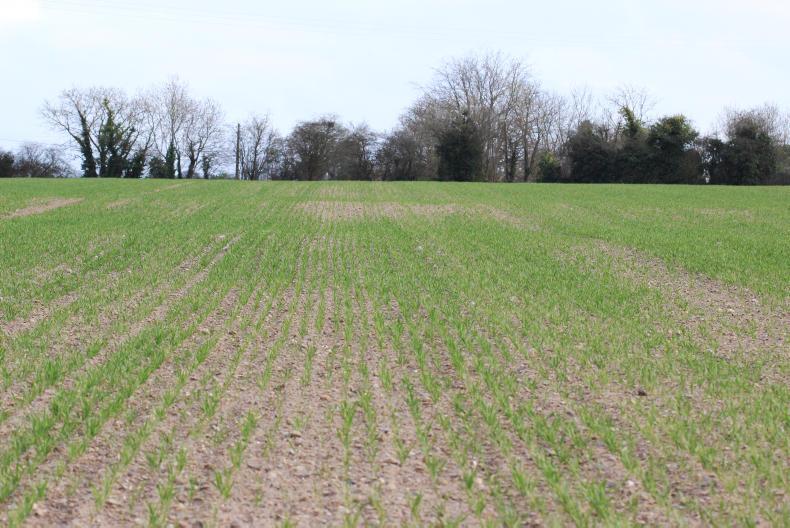
In June 1984 there were general predictions of doom and gloom because there had been a few months without rain and crops looked like they would benefit from a drink. For those with a good enough memory, and those old enough to remember, that year produced record high yields for all cereal crops.
That year all crops established well, were well structured and, more importantly, well rooted by the time the dryness hit. This gave them the ability to cope with the dryness and they had bulked up adequately to help them cope. We should also remember that land was much fresher back in the 1980s and this helped it hold more moisture to sustain that potential.
This year has given us two distinctly different sets of crops from spring plantings
But that was then, and this is now. This year has given us two distinctly different sets of crops from spring plantings. Those areas that were lucky enough to get adequate rain all through spring, mainly in the southern half of the country, have excellent crops. But those who were less fortunate in this regard have less to look forward to for this harvest. There are far too many crops, especially those sown later, which had poor and uneven establishment followed by a lack of tillering to leave them both short and thin.
Pros and cons
Recent rain will, on balance, be welcomed, even though it may too late to help yield potential in many crops. It has potential benefits, especially in terms of grain fill. Those who have received plenty recent rain are likely to have significant mineralisation to release a new flush of nutrients, especially nitrogen. This might keep crops growing for a while longer to help give better grain fill and hopefully some compensation for low ear counts.
But there are potential negatives too. Anyone caught in some of those big thunder showers could well have some lodging in winter barley and this would mean additional pressure from crows etc. And thin crops, especially barley, could begin to push out late tillers which will create green stems to leave green grains at harvest.
Those who have received plenty recent rain are likely to have significant mineralisation to release a new flush of nutrients
Green stems and grains in malting barley crops would be a disaster. These problems would be exacerbated by rain, which increased the availability of top-dressed nitrogen, plus any recently mineralised nitrogen. The other big risk from a flush on nitrogen now, especially on poorer crops of malting barley, would be a potential increase in grain protein content, which could cause rejection. It seems highly unlikely that any additional grain fill would counteract any increase in grain nitrogen.
Straw
One of the obvious consequences across all cereals this year is the shortness in straw length. While there may be some slight further lengthening in later crops, this is unlikely to add significantly to straw yield or volume. While the better crops are likely to have good straw volume, it seems inevitable that the total volume of straw will be considerably lower this harvest, despite an increase in overall area.
While straw volumes across the south may be closer to normal, other areas could see straw volumes down by 30-50%
With the shortness of straw being very obvious in many parts of the country, buyers are already showing increased interest. This is more severe across the northern half of the country and it seems inevitable that the total volume of straw in this area will be lower, possibly considerably lower than in previous years. While straw volumes across the south may be closer to normal, other areas could see straw volumes down by 30-50% this harvest.
Any decisions by growers to drop the cutting height of combine blades will be influenced by the perceived demand ahead of that point.
Rainfall proportions
To put rainfall levels and their consequences for crops into perspective, I mapped the Met Éireann rainfall data in Figure 1 for the year to date from the main tillage areas. While most areas felt the impact of the dryness at different points, the serious problems in the northern half of the country can be seen from the low rainfall levels in those regions. Many of the worst hit areas have only received 40-45mm of rain since 1 April.
With almost half the year now behind us, many regions have still only received 30-40% of their annual rainfall so far. Figure 2 shows the amount of rain that has fallen at these stations up to 14 June. Perhaps the greatest concern from this graph relates to when the balance of this rain will fall.



SHARING OPTIONS